
This set has 7 free reading log printables, and each one records something different: books finished, days read, minutes read, or a star rating the child gives the book. Pick by what your child can already do — a page with no writing on it for ages 3-5, a five-column table for elementary school, a self-run minutes log for homework. Every page is US Letter, pure black and white, and free to download with no signup.
The design decision behind the whole set is the one most reading logs get wrong: the writing rows have to fit a child’s handwriting, not an adult’s. I drew the elementary table at ten rows instead of twenty so each row is about 0.71 in (18 mm) tall, and the minutes log at seven rows so each is close to a full inch. Fewer rows per page, bigger rows — a log a six-year-old can actually write inside.
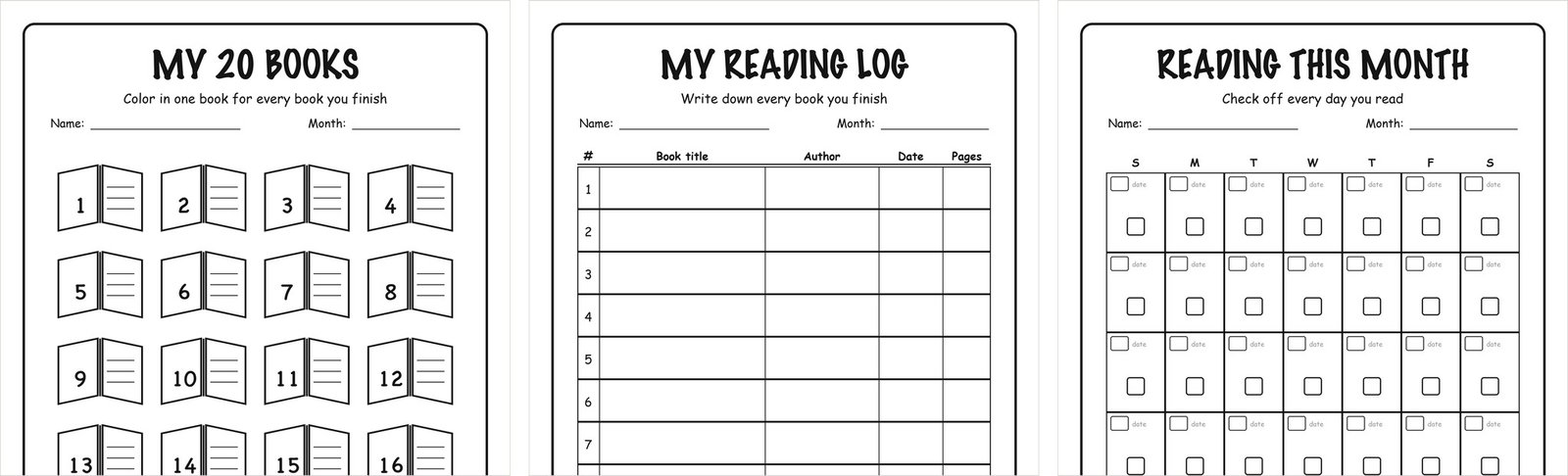
All 7 reading logs
Every page below has its own Download PDF and Print button.
Which reading log fits your child
Choose on two questions: can the child write yet, and what are you actually counting — books, days, or minutes.
A pre-writer needs a page with nothing to fill in, so the color-in log is the only one of the seven that works there. A child in first or second grade can manage a title and an author, but not a book report, so the elementary table stops at five columns. And when the count comes from a teacher rather than from you, it is almost always minutes, which is a different page again.
- Ages 3-5, cannot write yet — the color-in log with 20 book shapes.
- Ages 6-11, writing short lines — the title-and-author table, or the star rating log.
- Counting days instead of books — the monthly calendar log.
- Homework with a minutes target — the weekly minutes log with a grown-up initial box.
- Summer, no school structure — the 30-book challenge chart.
- Anything else — the blank log, where you write the column headings.
A color-in log for kids who cannot write yet (ages 3-5)
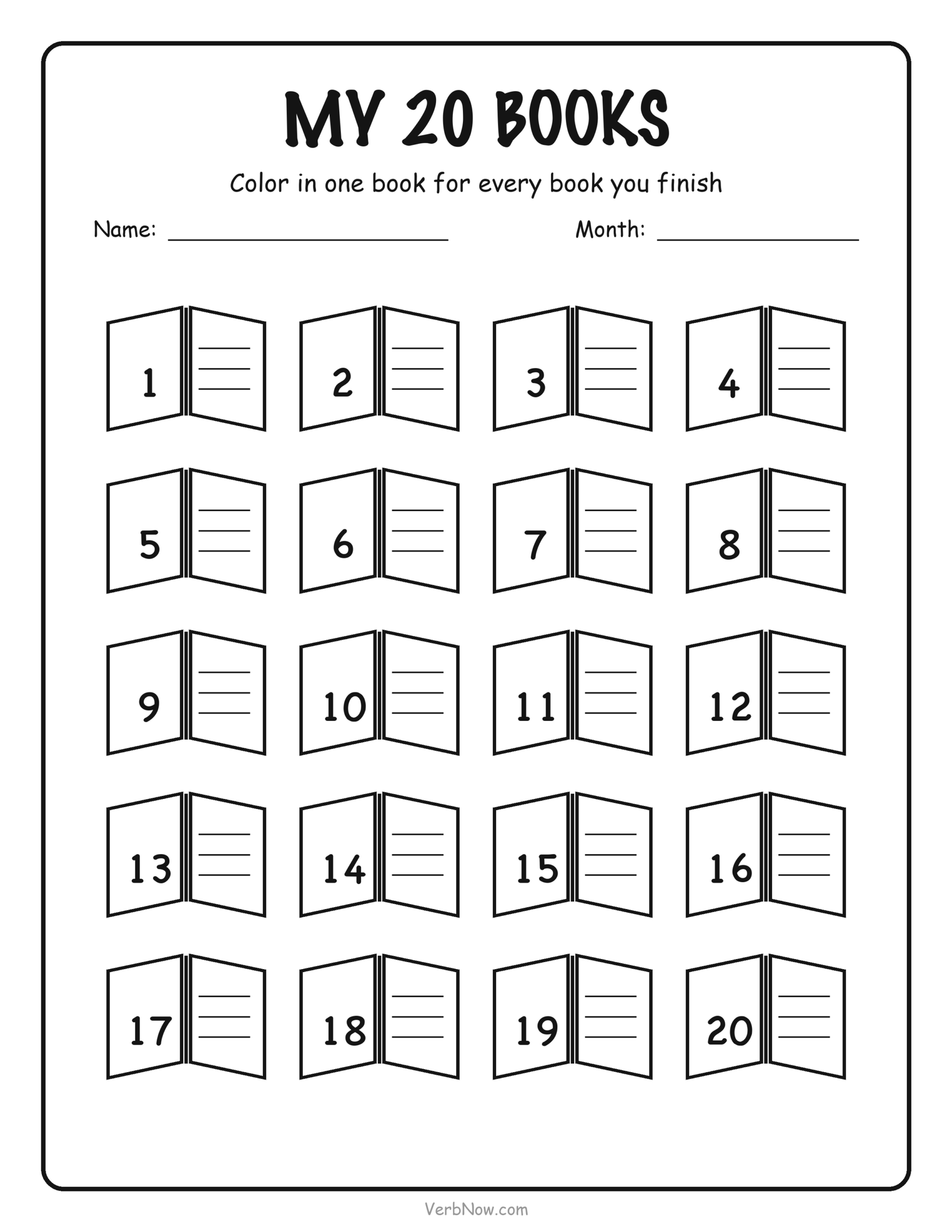
This page holds 20 numbered open-book shapes and asks for no writing at all — one book gets colored for each book finished.
Each shape is drawn about 1.4 in wide and 1.1 in tall, which is large enough for a crayon held in a whole-hand grip rather than a pencil grip. The numbers sit on the left-hand page of each book so a child can also count how many are left, and the only line to fill in is the name at the top, which most preschoolers can copy or have written for them.
The title-and-author log for elementary school (ages 6-11)
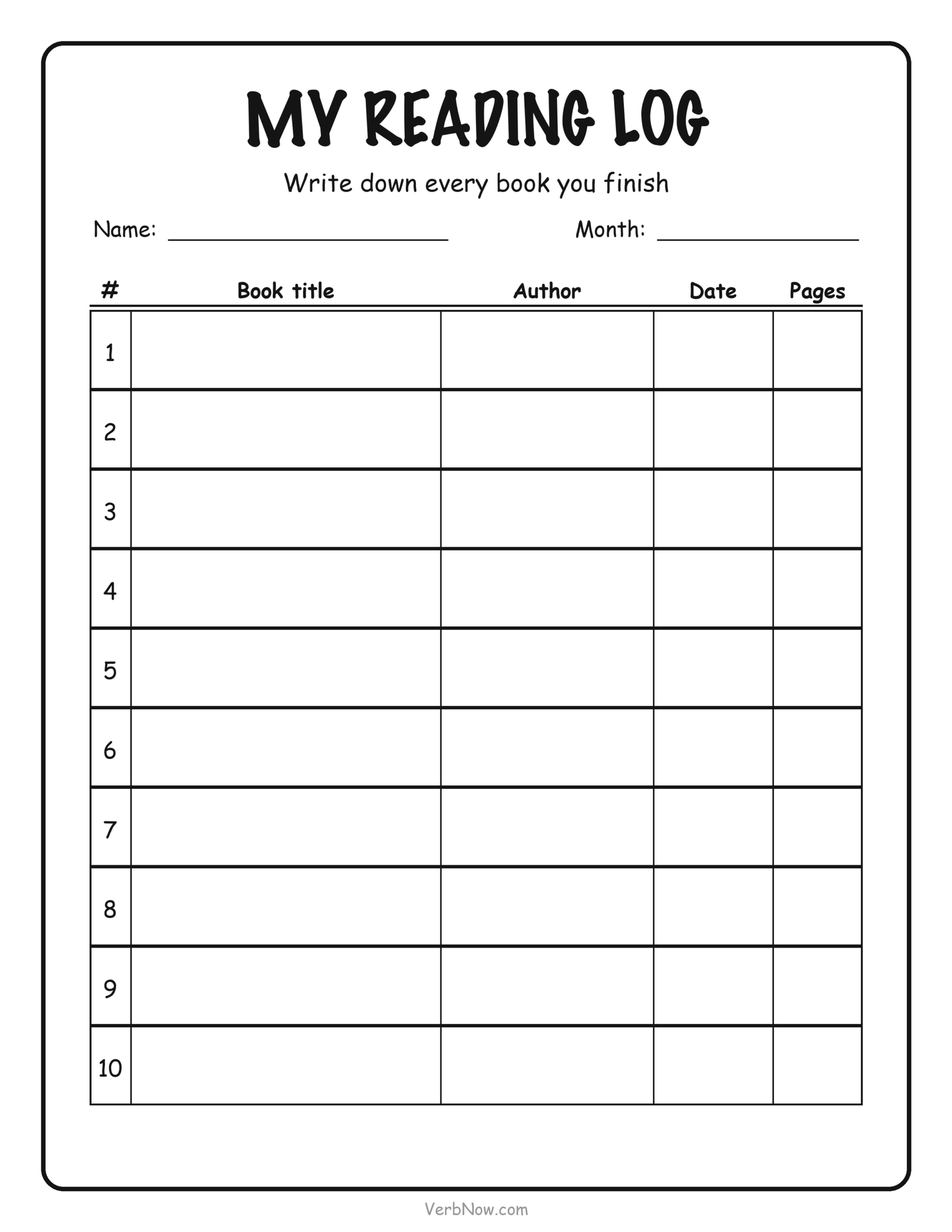
The elementary log is a ten-row table with five columns: number, book title, author, date finished, and pages.
Ten rows is the deliberate limit. Twenty rows on one page would push each row down near 0.35 in, which is under the line height most primary handwriting paper uses, and a child writing a book title in that space runs out of room halfway through. The title column is the widest of the five because titles are the longest thing on the row, and the pages column is the narrowest of the four writing columns because it never holds more than three digits.
Track the days, not the books
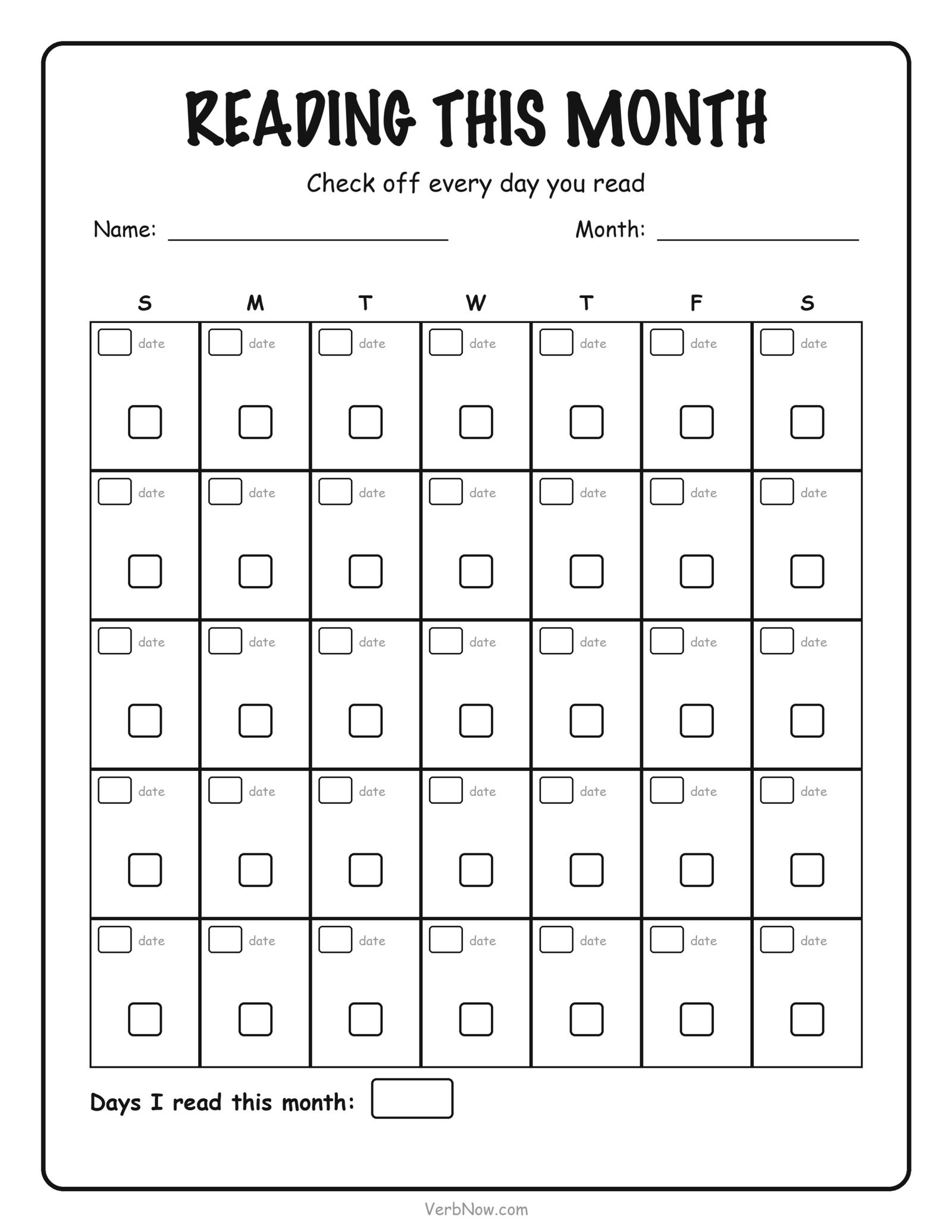
The monthly log is a calendar of 35 day squares, each with a small box for the date and a larger box to check off when reading happened, plus a total at the bottom.
This one measures a habit rather than a finish line, which matters for a child reading a long chapter book — three weeks can pass with nothing to write on a book log while the reading is going fine. Each square is drawn about one inch across so the check box is large enough to mark with a crayon, marker, or sticker.
Let the child rate the book (1-5 stars)
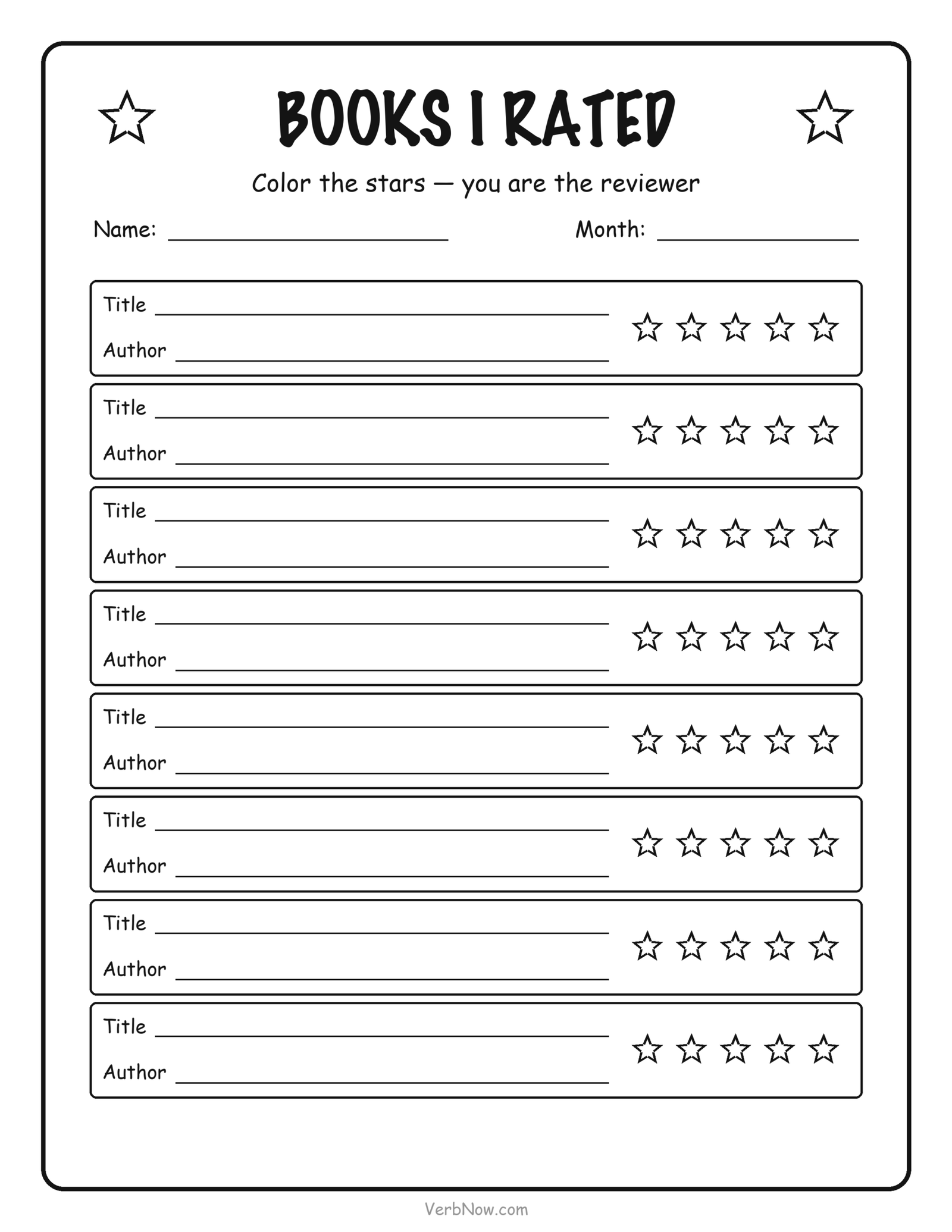
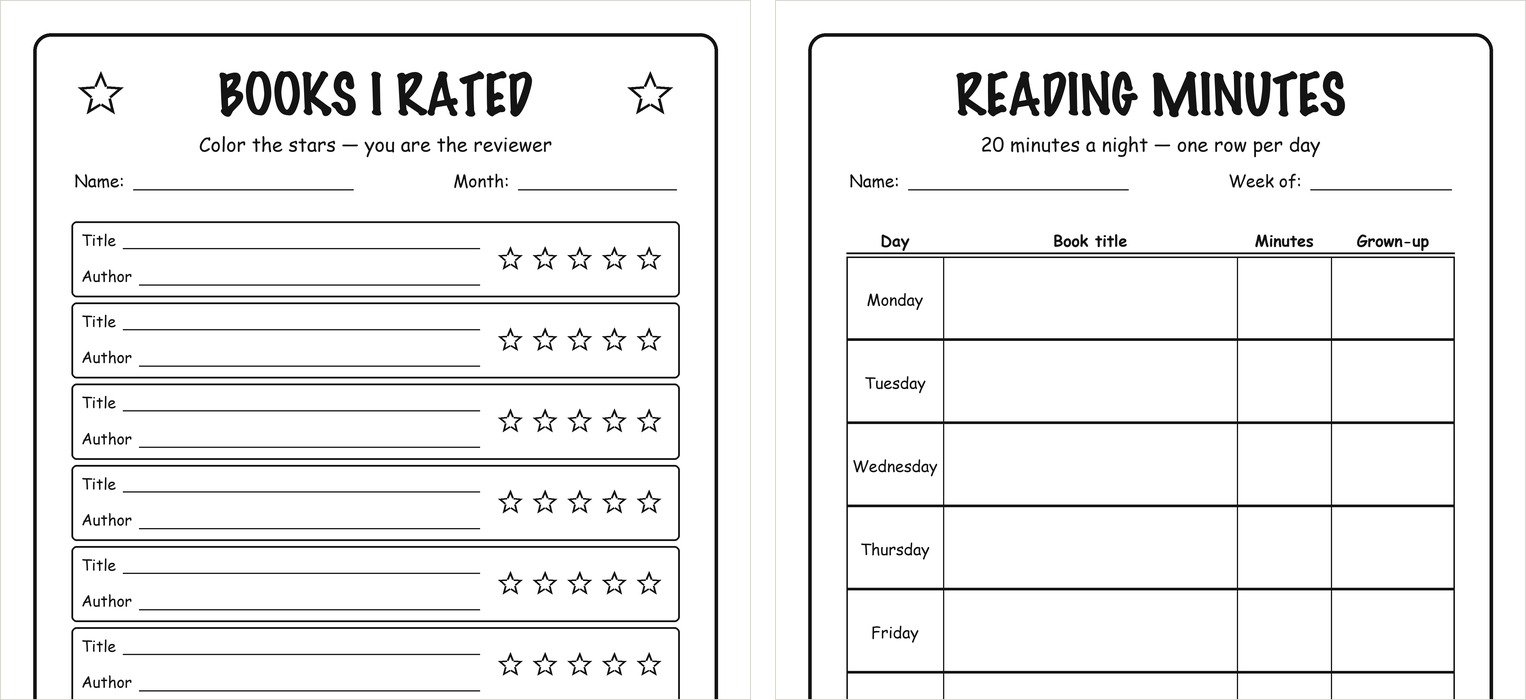
This log gives eight book entries, each with five empty stars to color in — the child is the reviewer, not the record keeper.
The stars are drawn as outlines rather than boxes so the page rewards a decision instead of a tick, and the title and author lines sit to the left of them so the rating is the last thing filled in. Eight entries at about 0.86 in of row height leaves both write-on lines usable for a second grader, which a twelve-entry version would not.
A 30-book summer reading challenge
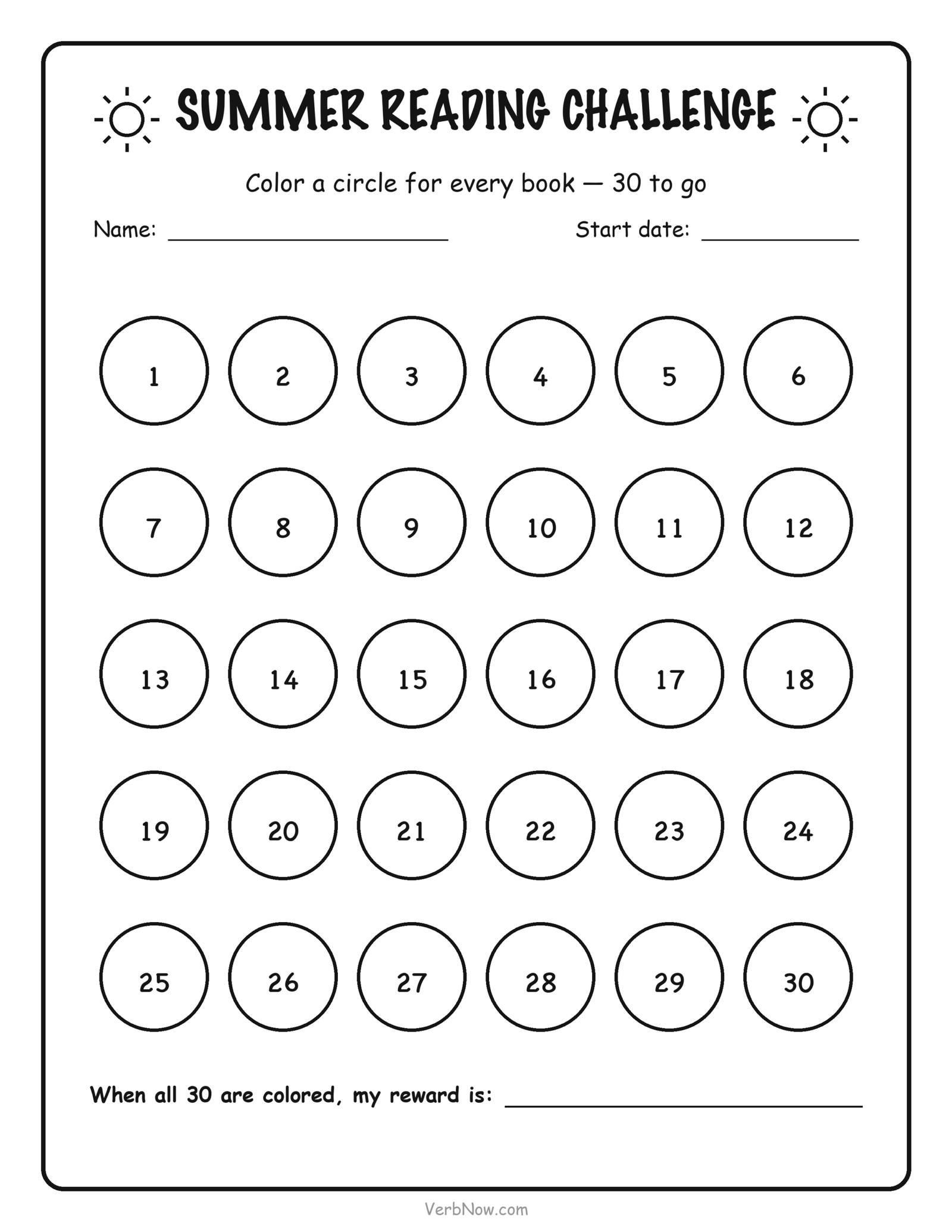
The summer chart is 30 numbered circles to color, one per book, with a line at the bottom for the reward agreed on before starting.
Thirty is the count set on purpose for a summer break of roughly ten weeks — three books a week is reachable for a range of ages when picture books, early readers, and chapter books all count. Each circle is just under an inch across, and the reward line is on the same sheet so the goal and the prize are never on two pieces of paper.
The 20-minutes-a-night log teachers ask for
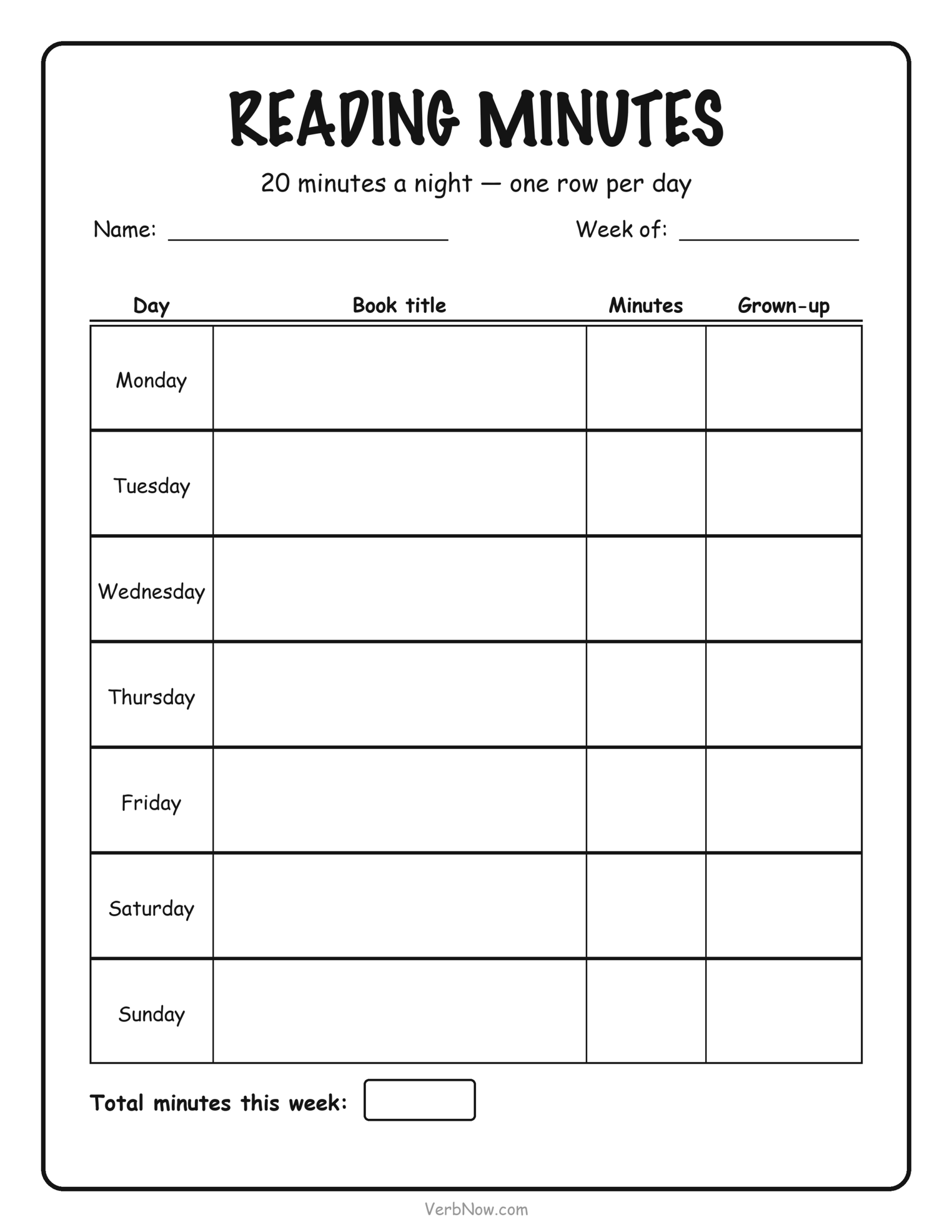
The minutes log has one row per weekday plus the weekend, with columns for book title, minutes read, and a grown-up initial, and a weekly total box underneath.
This is the format school reading homework usually asks for, so the grown-up column is a full 1.4 in wide rather than a narrow tick box — initials need more room than a check mark. Rows are close to an inch tall, which is what makes the title column writable by the child rather than by the parent.
A blank log you label yourself
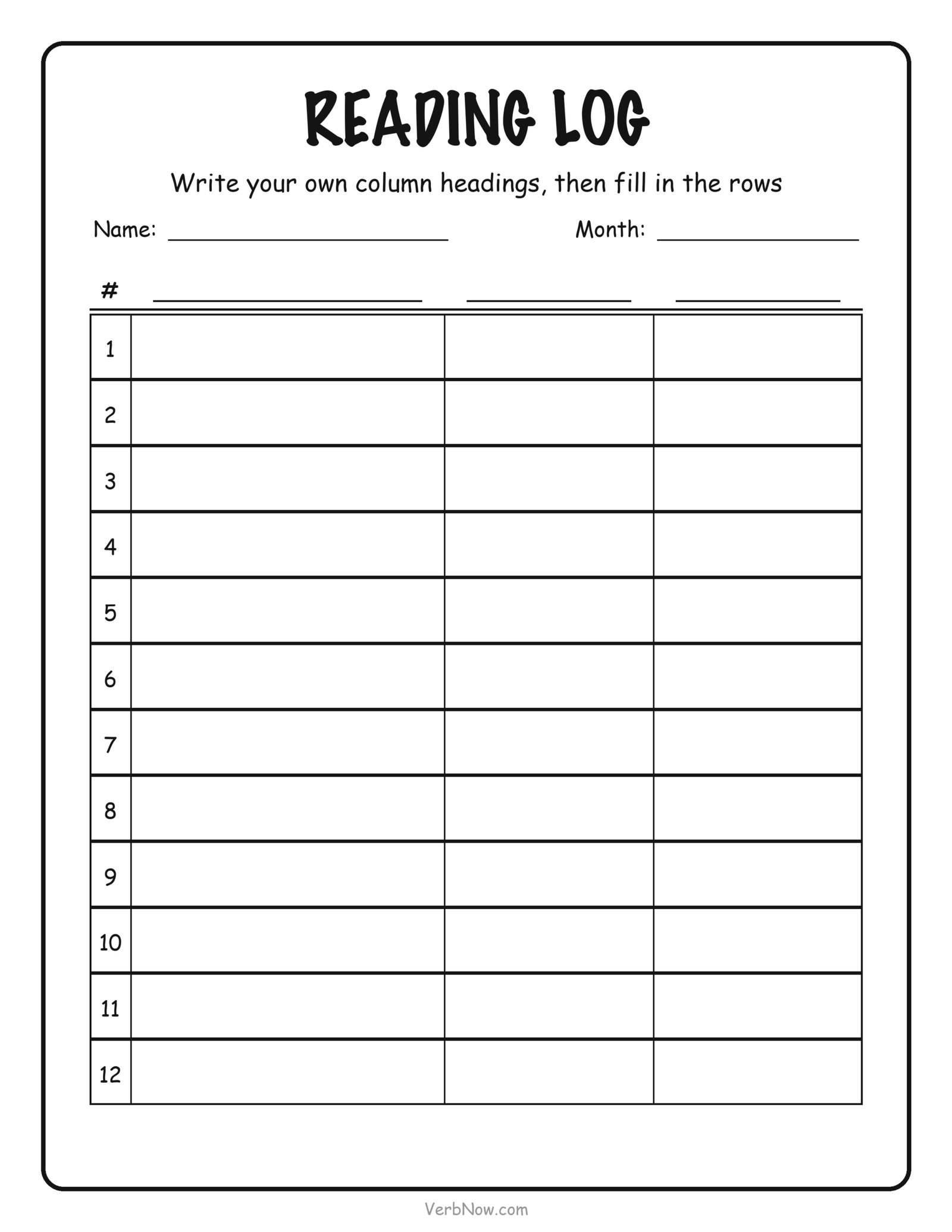
The blank log has three empty column headings and twelve ruled rows, with only the row numbers printed.
Classroom requirements vary in ways no fixed template covers — some ask for a genre, some for a parent signature, some for a page range. Writing the headings by hand takes ten seconds and beats crossing out a printed column. Twelve rows fit here because blank columns hold shorter entries than a full book title does.
How to print and use these
All 7 pages are US Letter (8.5 × 11 in) with half-inch margins and print in pure black and white, so no color ink is used. For repeat use, slide the monthly calendar or the minutes log into a plastic sleeve and fill it in with a dry-erase marker — the boxes are drawn large enough to wipe clean. The color-in log and the summer challenge are meant to be kept, so print those on plain paper and put them somewhere the child walks past.
Reading log FAQ
What should a reading log for a 4 year old look like?
It should have nothing to write on. A four-year-old can color a shape, count how many are filled, and see progress across a page, but writing a book title is still slow and frustrating work. The color-in log here uses 20 book shapes for exactly that reason.
How many books should a child log in a month?
There is no correct number, and a log that sets one too high stops being used by week two. The pages here hold 20 books, 30 books, 35 days, or 7 days precisely so you can pick a target that already matches how your child reads rather than one that has to be chased.
Should I track books or minutes?
Track minutes when a school sets the requirement, and books when the child sets the goal. Minutes suit a reader working through one long chapter book, where a book count would sit unchanged for weeks; book counts suit picture books and early readers, where finishing happens often enough to feel like progress.
Do reading logs make kids dislike reading?
A log becomes a chore when the writing is harder than the reading. That is a format problem, not a logging problem — a pre-writer handed a five-column table is being asked to do handwriting practice, not reading. Match the page to what the child can already do and the log takes seconds.
Can I reuse one reading log every month?
Yes. The monthly calendar, the minutes log, and the blank log all have a Month or Week of line instead of printed dates, so one printed copy in a plastic sleeve works all year with a dry-erase marker. The color-in log and the summer challenge are single-use by design, since the point is a finished page.
Reading logs sit next to the other tracking charts here: the printable chore charts cover recurring jobs, the routine charts cover the order of a morning or bedtime, and the behavior charts and reward charts track progress toward a goal. If reading itself is still being built rather than tracked, start with how to teach kids to read.