This collection has 17 free resources: 10 printable puzzle sets (word searches, mazes, and themed puzzle packs for topics like music, food, sports, and several holidays), 2 dedicated maze and word-search hubs with answer keys, and 4 idea-list articles for keeping kids busy without any printing at all — music, art, space, and road-trip activities, each broken down by age.
The puzzle sets need nothing but a pencil, which is what makes them different from VerbNow’s coloring pages: a maze or word search fits in a bag for a waiting room or a long car ride, and every one includes an answer key so an adult doesn’t have to solve it first to check the work. The idea-list articles are the opposite kind of resource — no printing, just concrete activities sorted by age (2-9 for music, 3-10 for art and space) for whenever screen time needs a break.
For the full maze collection, see the maze coloring pages (with answer keys); for word puzzles, the word search collection covers the same format. Every printable is US Letter, black and white, and free to download with no signup.
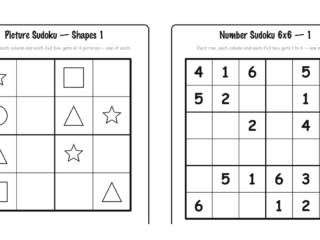
This set has 12 free printable sudoku puzzles for kids plus 2 answer key pages. Six are 4×4 picture sudoku — 3 built from shapes (circle, square, triangle, star) and 3 from animals (cat, dog, fish, bird) — so a child who cannot read numbers yet can still solve them. Three more are 4×4 number …
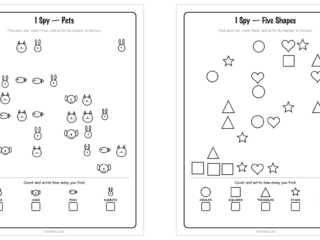
This set has 9 free I spy printables plus 1 answer key. Each page scatters pictures across a US Letter sheet and gives you a row of boxes at the bottom: find each thing, count how many there are, write the number in its box. Across the 9 pages there are 210 pictures drawn from …
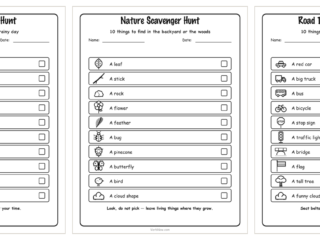
This set has 8 free scavenger hunt printables covering 8 different places: indoors on a rainy day, the backyard or woods, the car, the grocery store, the park, a bedroom that needs cleaning up, plus a color hunt and an A-to-Z alphabet hunt. Six of the pages list 10 things to find with a picture …
Nine nature activities for kids aged 3–10, sorted by age, needing nothing more than a garden, park or pavement — each with a number to notice. Plus free printable nature, tree and bug colouring pages.
Nine science activities for kids aged 3–10, sorted by the age they work at, using kitchen ingredients — each with a measurable moment. Plus free printable science, planet and volcano colouring pages.
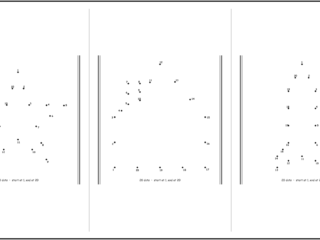
This collection has 14 free dot to dot printables, and every single one connects dots numbered 1 to 20 — no page skips numbers or stretches past 20. Four are rated easiest (star, rainbow, kite), eight are medium (house, tree, fish, sailboat, umbrella, flower, mug, cat face), and two are harder (butterfly, rocket), so the …
Best for ages 2–9. Musical activities do more for young children than most parents expect — steady-beat games are linked to the same skills reading depends on. And none of the activities below require anyone in the house to be musical. Ages 2–4: beat before melody Copy the clap. Clap a short pattern, they copy …
Best for ages 4–11, and worth preparing before you leave. The single biggest factor in how a long drive goes is not what you bring — it is whether it comes out at the right moment. Everything handed over in the first thirty minutes is gone by the first service station. The rule that makes …
Best for ages 4–10. Space is one of the few topics where a four-year-old and a ten-year-old can do the same activity and both get something out of it — the younger one because it is big and glowing, the older one because the numbers are genuinely astonishing. These are the space activities that work …
Best for ages 3–10. The art activities that actually hold a child’s attention are the ones with a clear finish line — something they can hold up at the end. Open-ended “just make something” sessions work for a handful of children and lose the rest inside five minutes. Below are activities sorted by the age …