
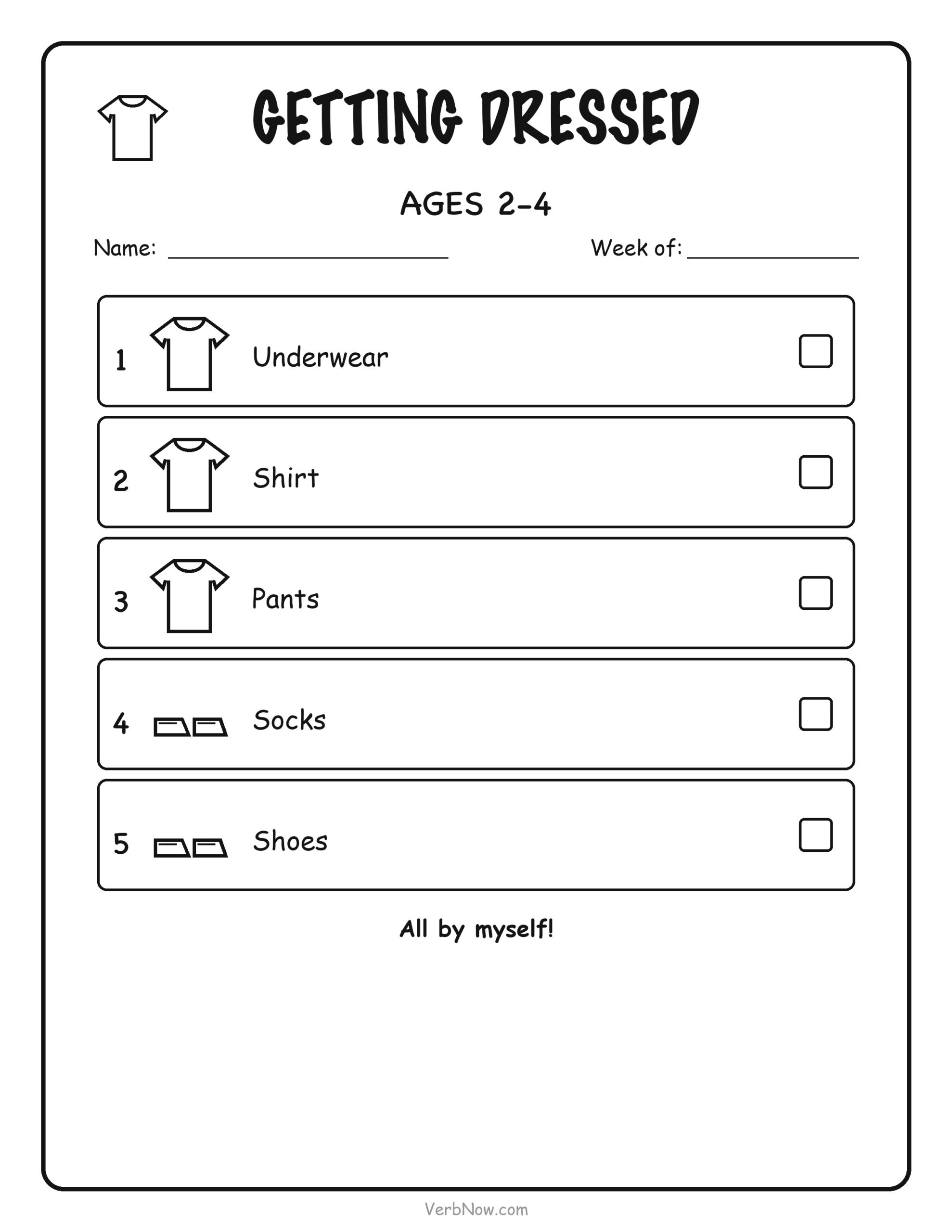
This set has 10 free printable routine charts: morning charts for toddlers and for older kids, two bedtime charts, an after-school chart, a weekly grid, a clock-face version, a blank write-your-own chart, a getting-dressed checklist, and a sheet of 16 cut-out visual schedule cards. All black and white on US Letter, free to download with no signup.
The design rule behind the whole set: a routine chart works when the child can read it without you. That is why the toddler charts use large pictures and no more than six steps, while the 6-12 charts switch to words and stretch to eight. The chart is meant to replace the reminding, not add to it.
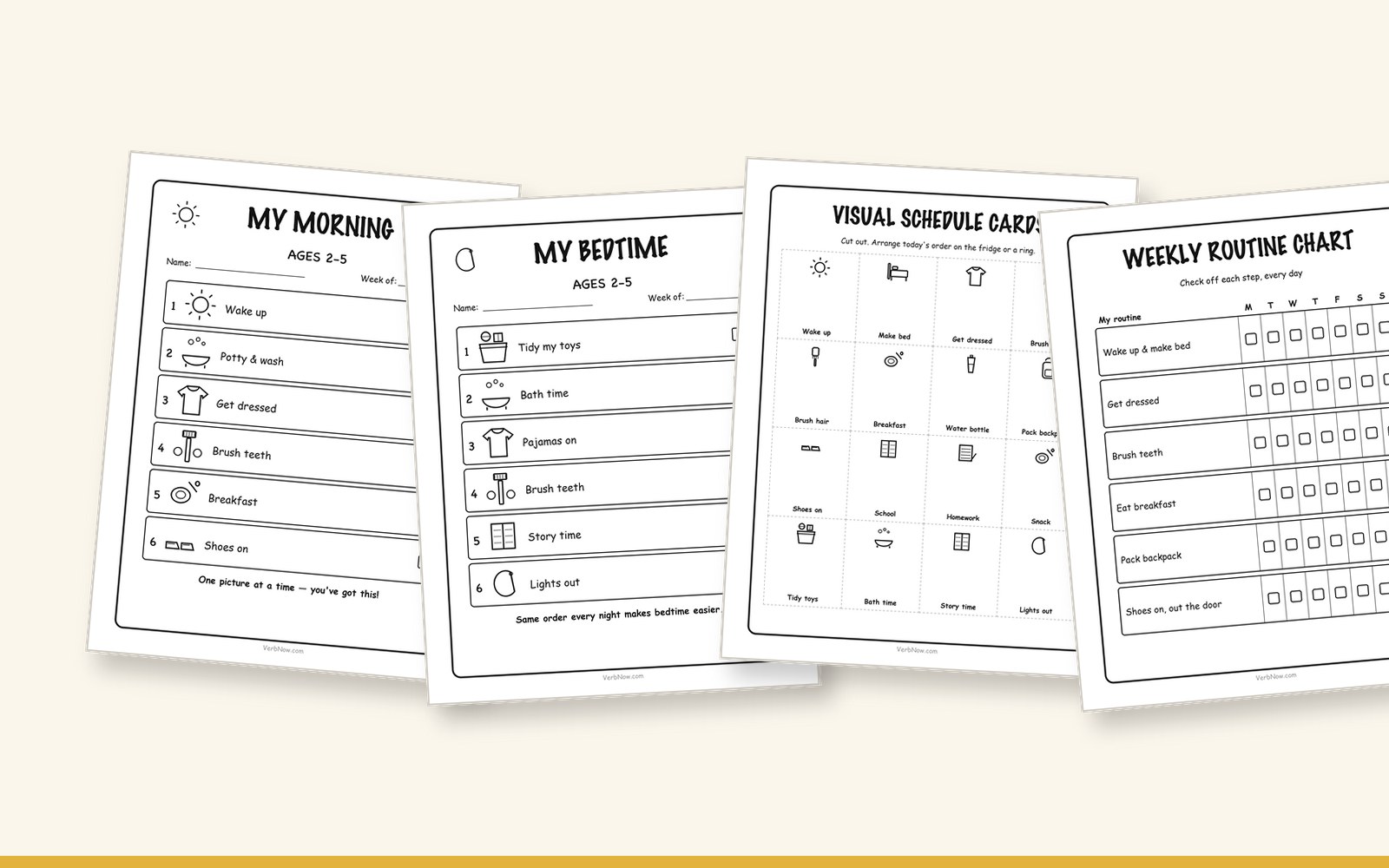
All 10 routine charts
Charts are ordered by time of day — morning first, then after school, then bedtime, followed by the blank and cut-out versions. Every page has its own Download PDF and Print button.
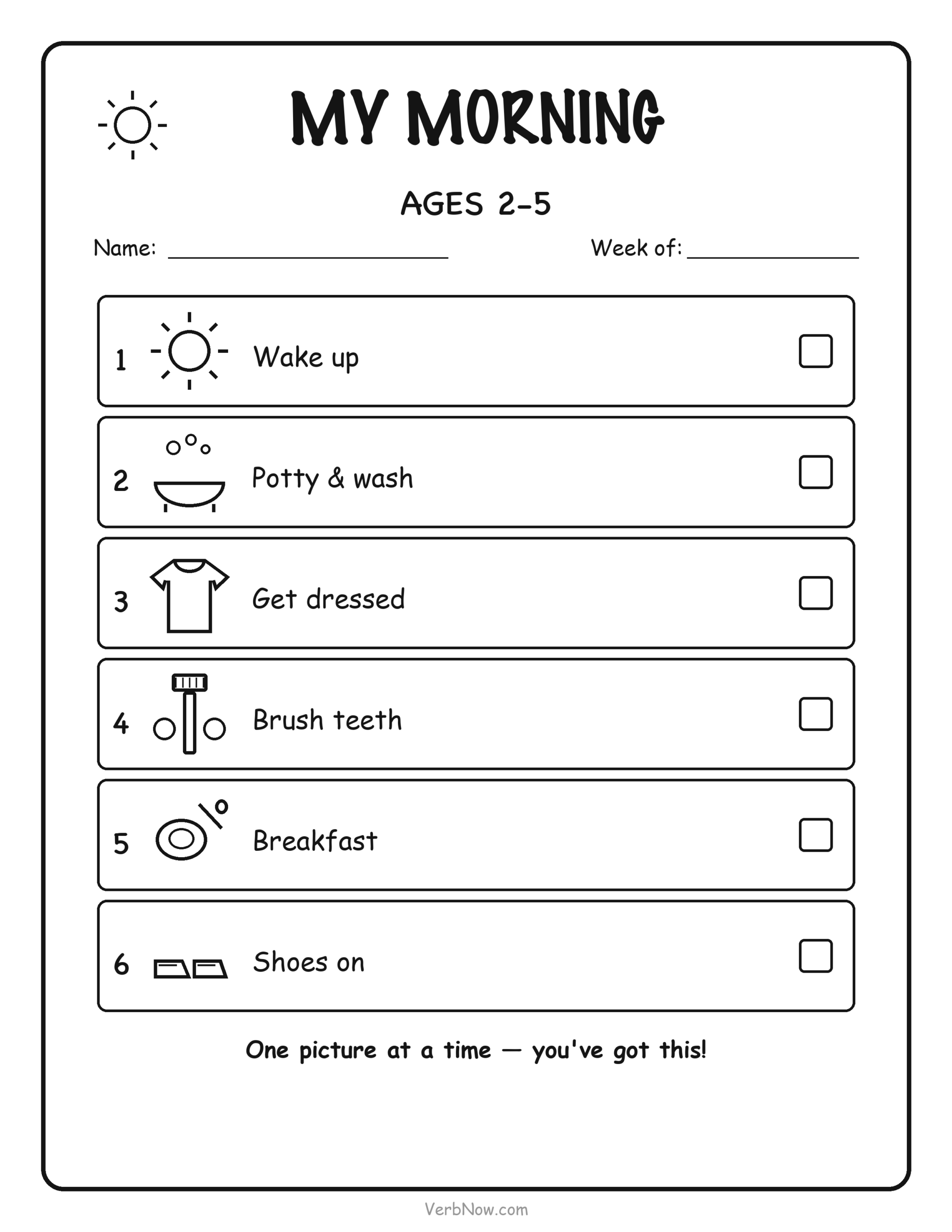
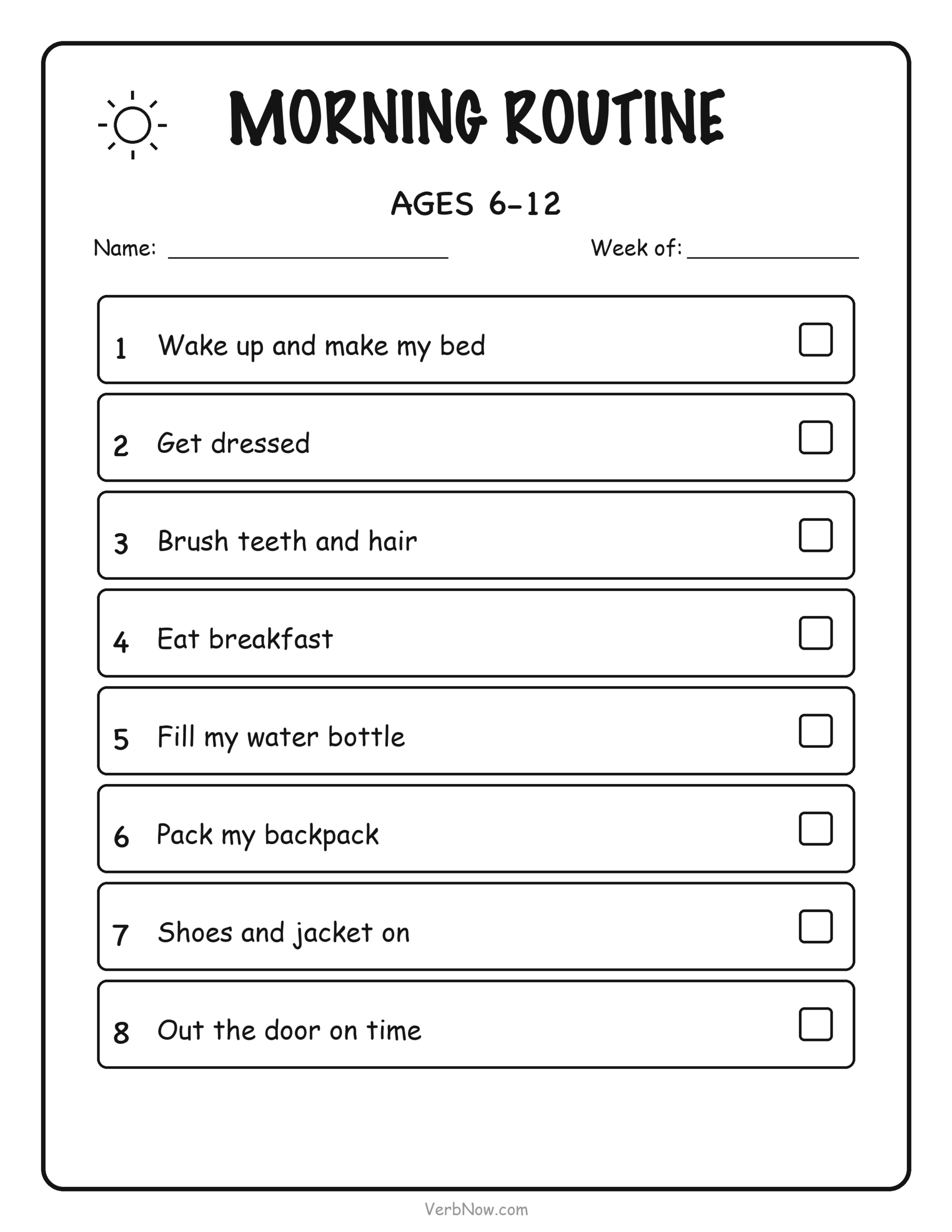
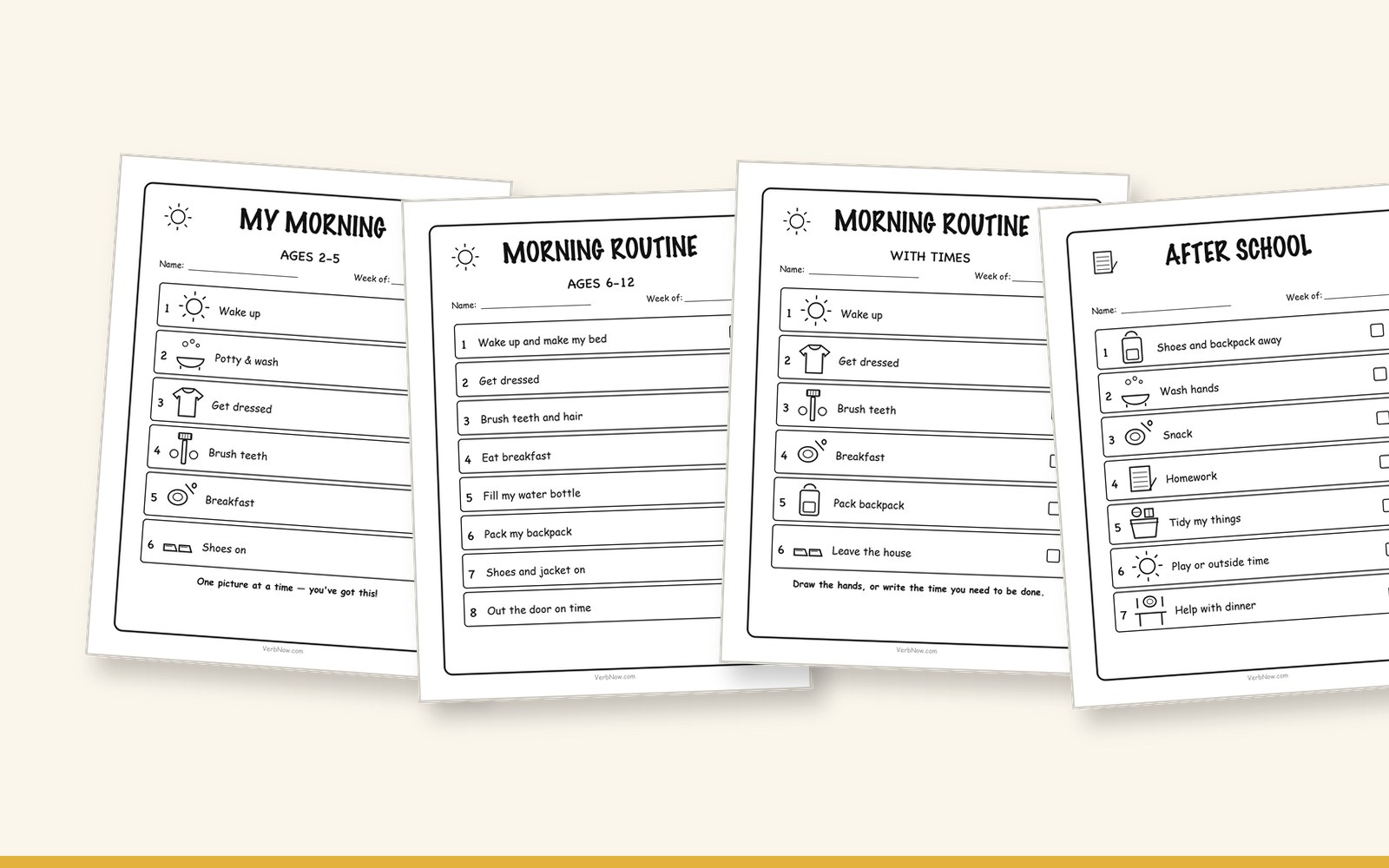
Morning routine charts (pictures for ages 2-5, words for 6-12)
The toddler version has six picture steps: wake up, potty and wash, get dressed, brush teeth, breakfast, shoes on. Each icon is drawn large enough to read from across the room, because a two-year-old checks the chart from wherever they are standing. The 6-12 version has eight written steps and adds the things that actually cause the morning scramble — filling the water bottle, packing the backpack, being out the door on time.
Bedtime and after-school charts
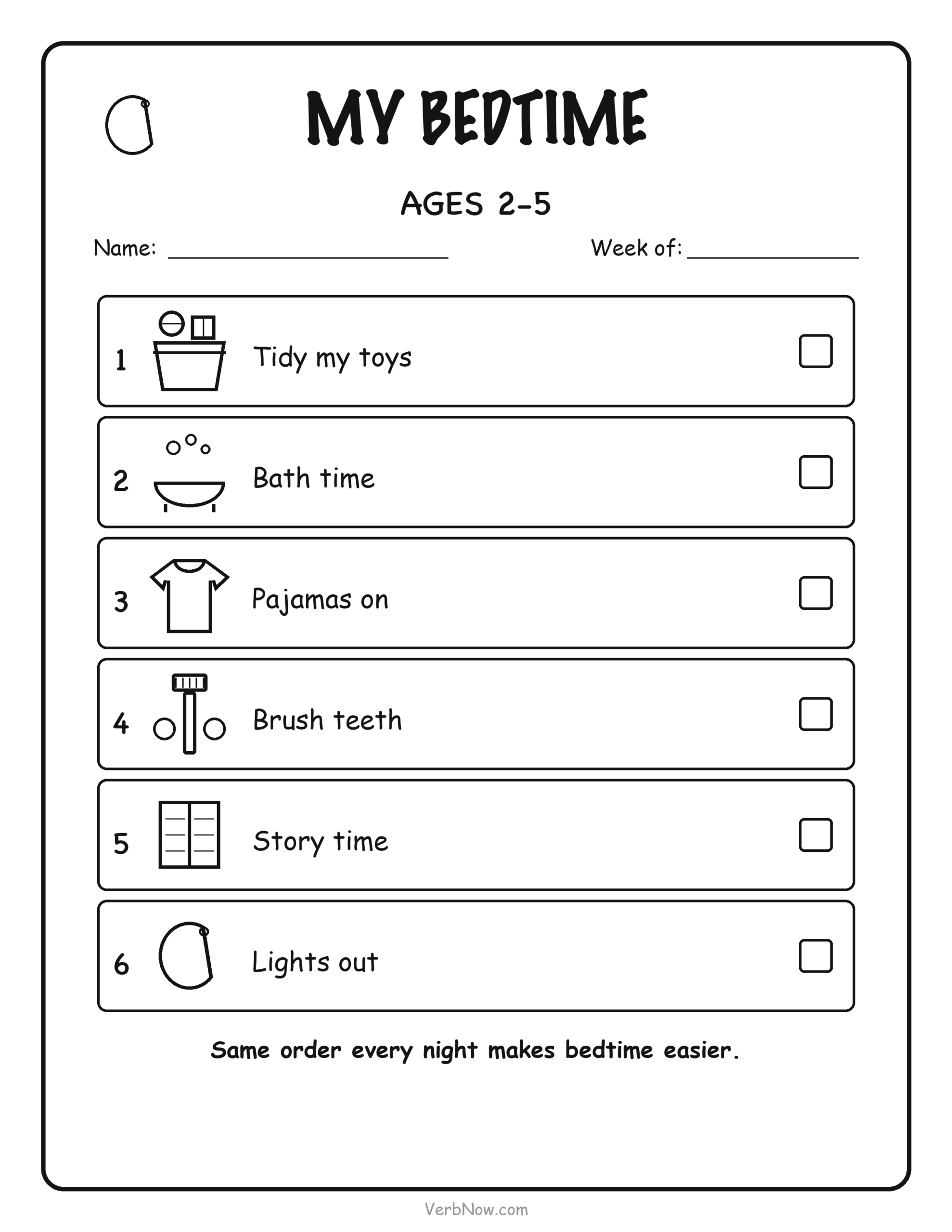
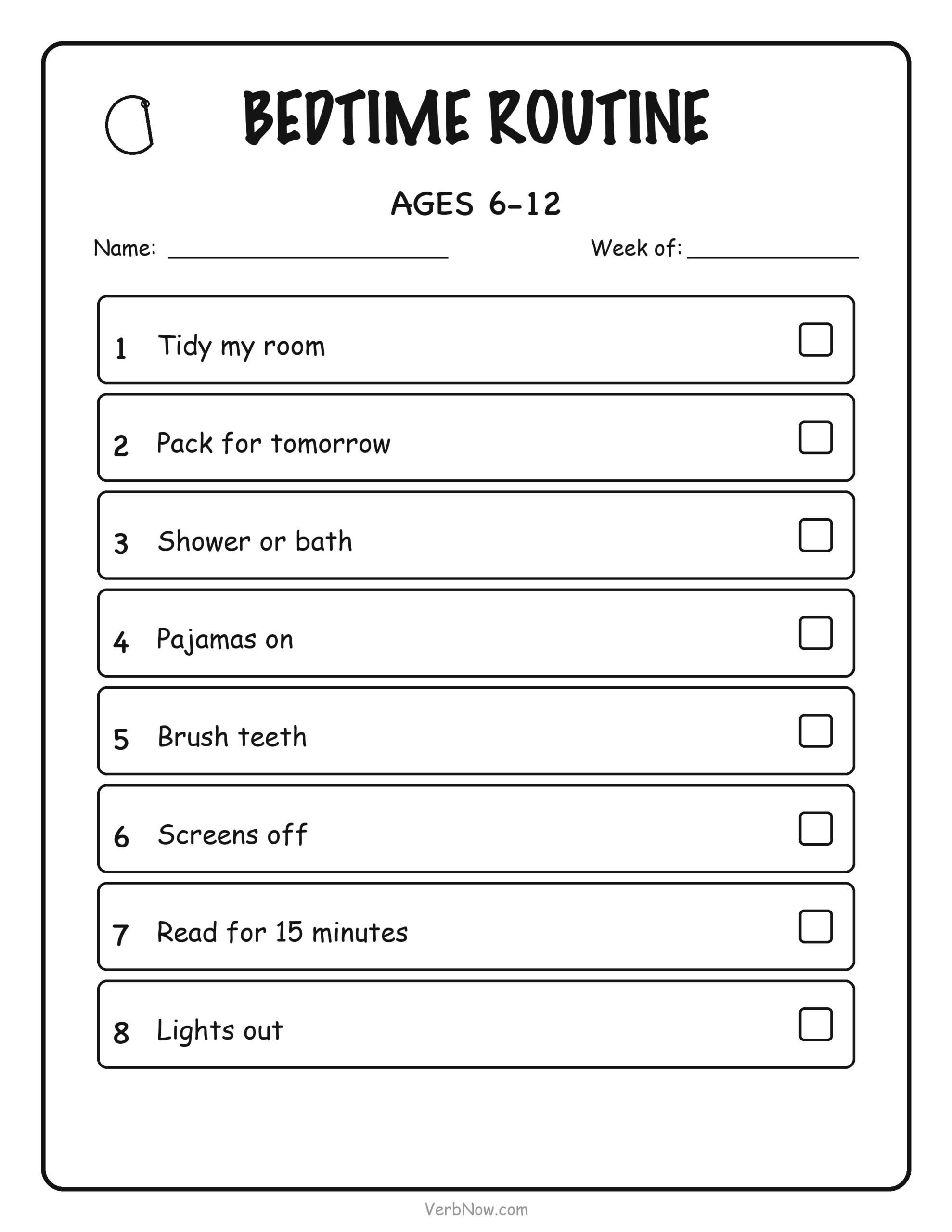
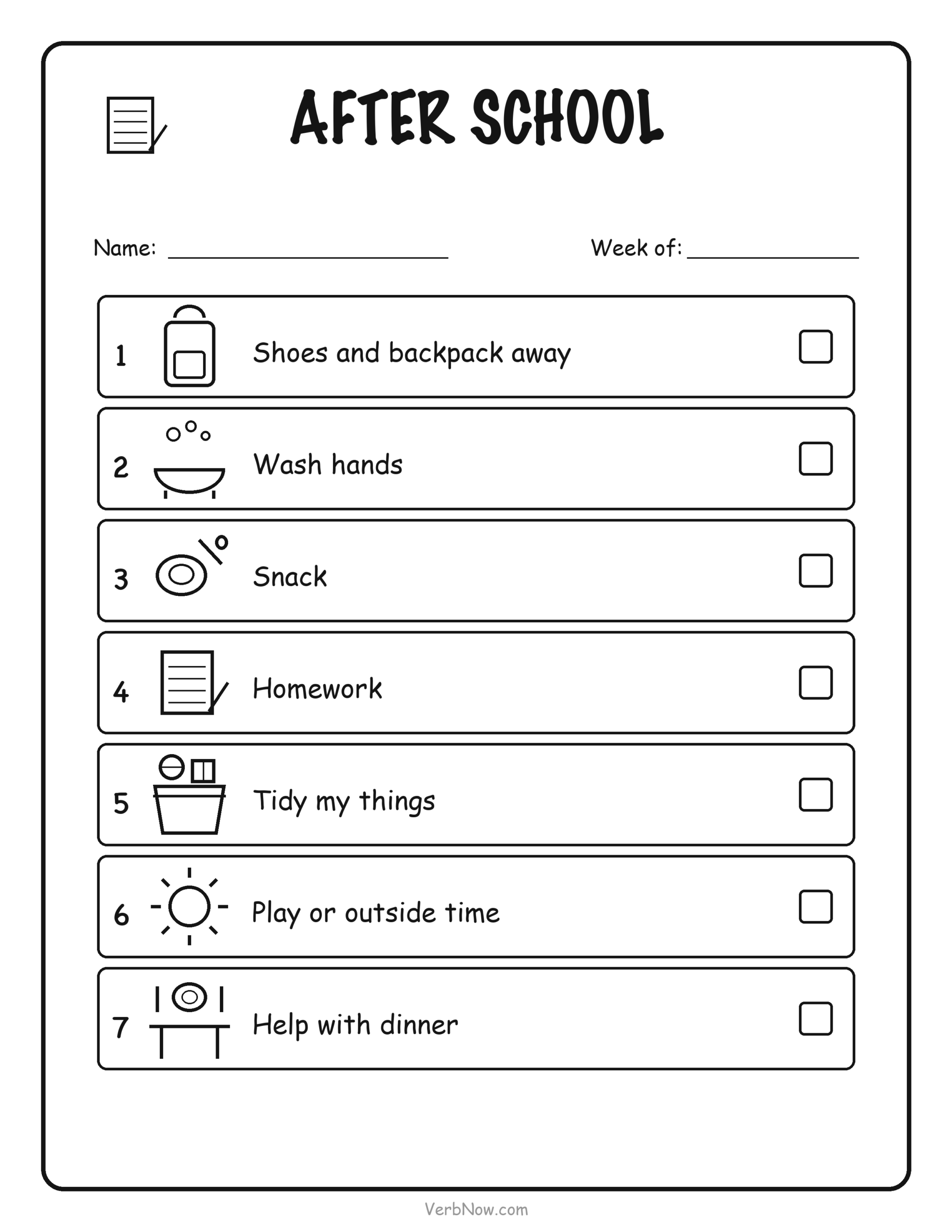
Bedtime comes in the same two formats. The picture version runs tidy toys → bath → pajamas → teeth → story → lights out; the older version adds packing for tomorrow and screens off, which is usually the step that decides how the rest of the evening goes. Want a deeper bedtime-only set — a minute countdown, a shorter toddler version, screen-free wind-down cards, a tween checklist and a weekly tracker? See the full bedtime routine chart collection. The after-school chart covers the gap between the door and dinner: backpack away, wash hands, snack, homework, tidy, play, help with dinner.
Weekly grid, clock version and blank chart
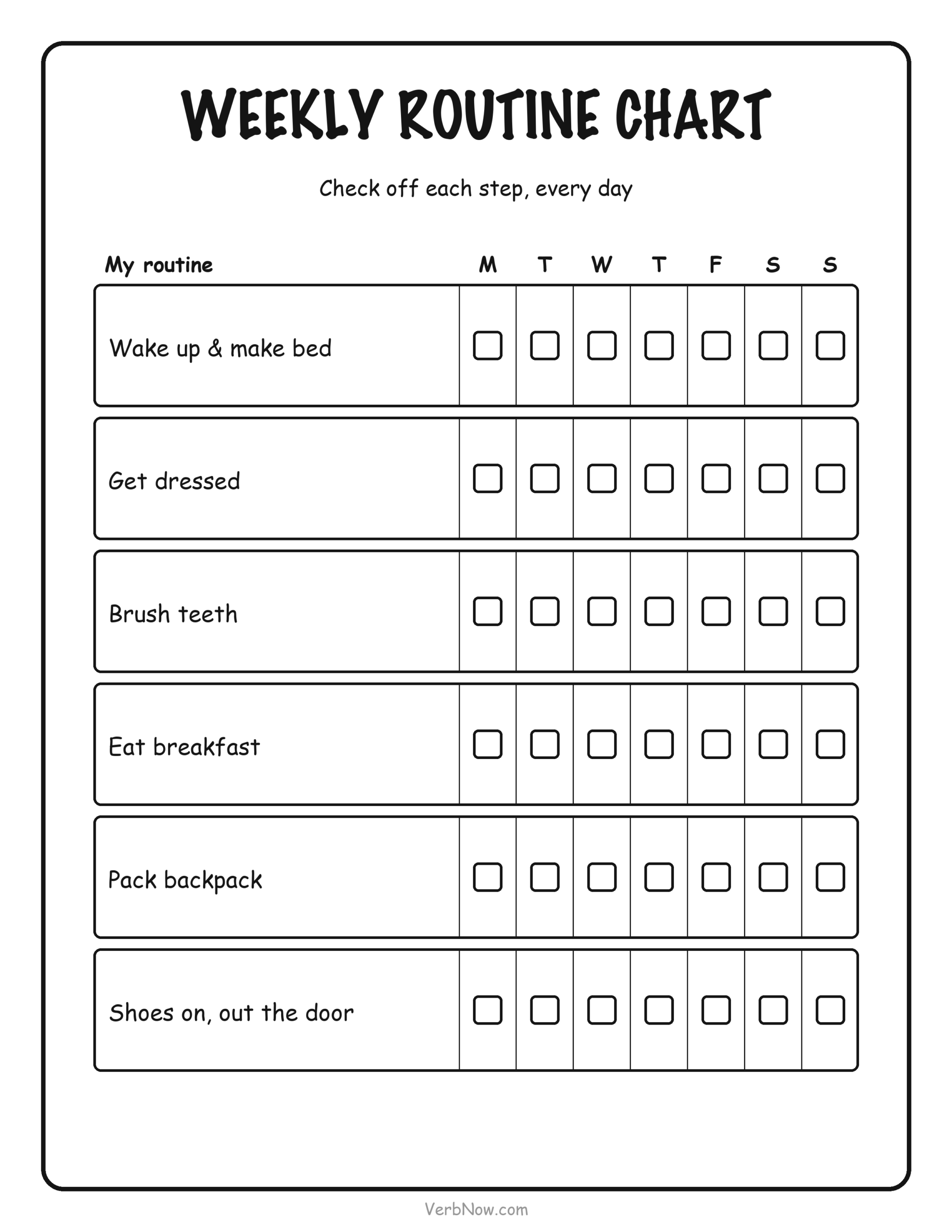
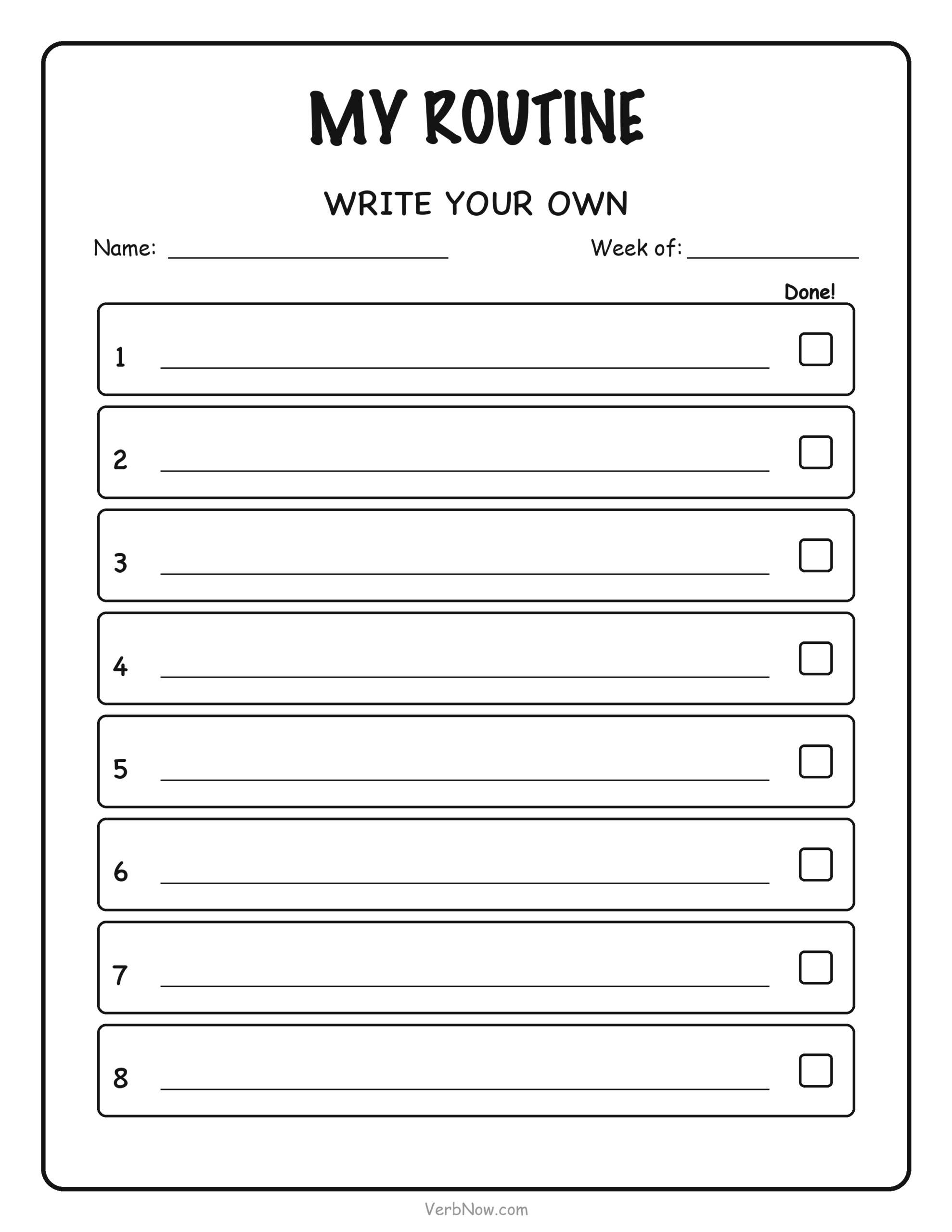
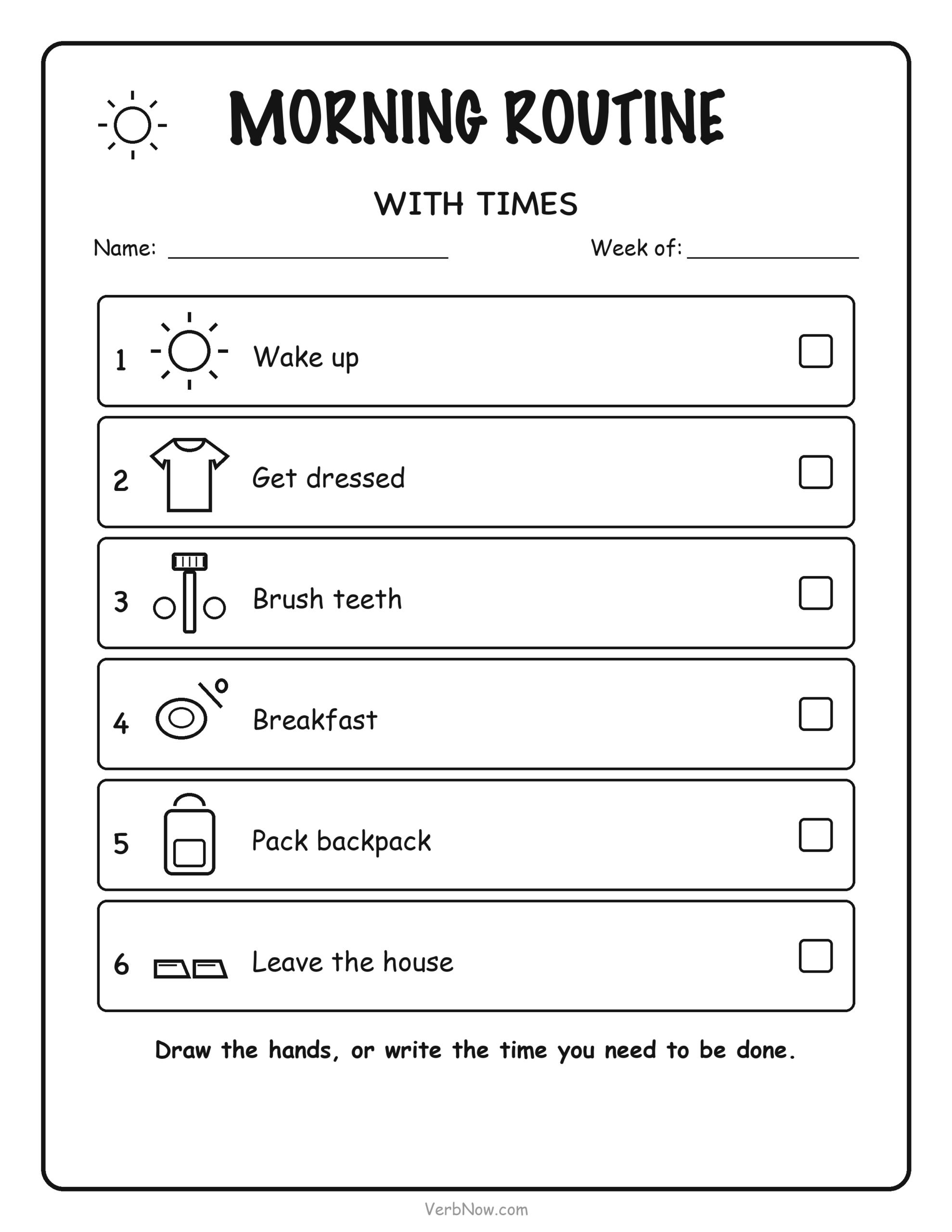
The weekly chart puts six routine steps against all seven days, so a whole week fits on one sheet — useful when you want to see the pattern rather than the single day. The clock version adds a blank clock face beside each step: draw the hands, or write the time that step needs to be done by. The blank chart has eight empty rows for families whose routine does not look like anyone else’s.
Visual schedule cards
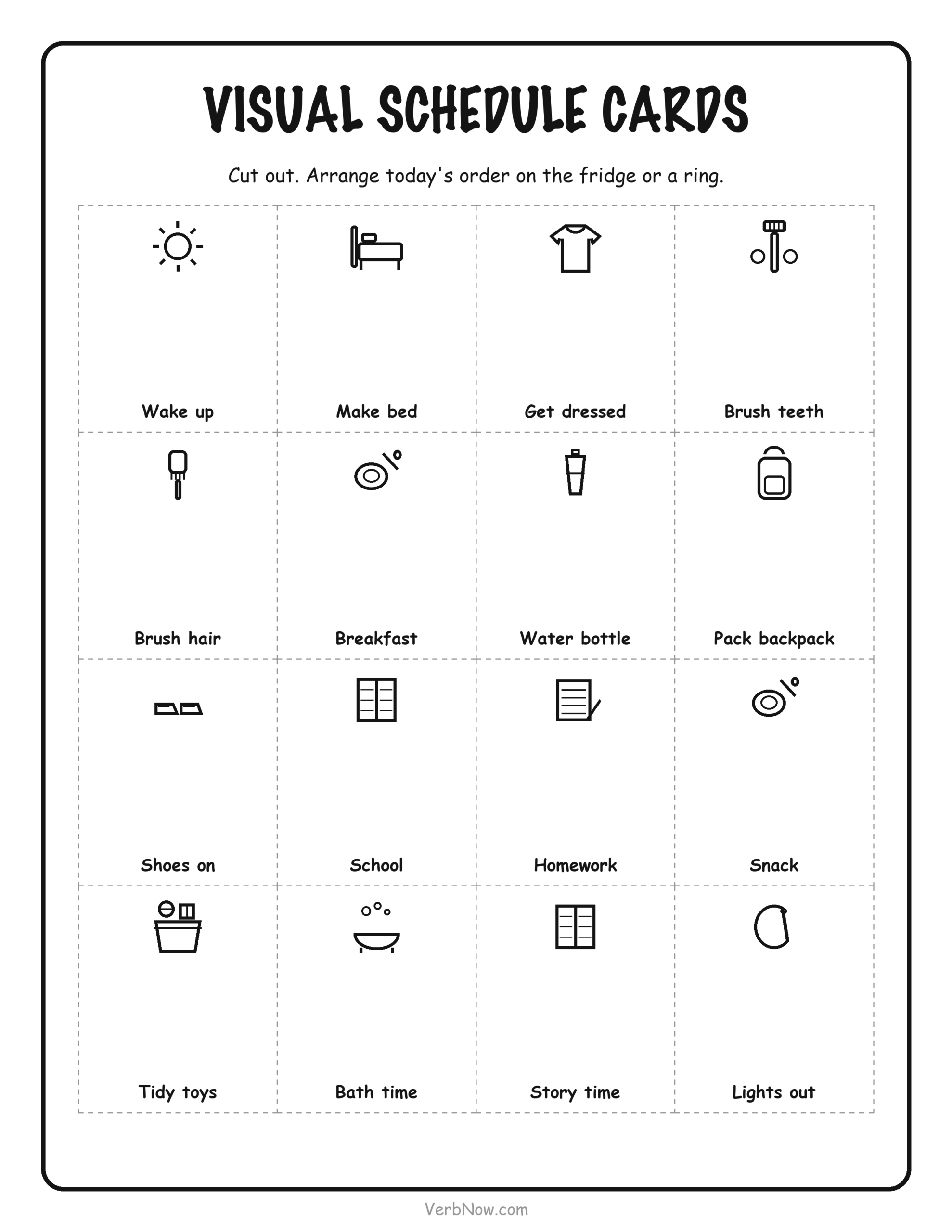
The card sheet holds 16 cut-out cards — wake up, make bed, get dressed, brush teeth, brush hair, breakfast, water bottle, backpack, shoes, school, homework, snack, tidy toys, bath, story, lights out. Cut them apart and let your child arrange today’s order on the fridge, or punch a hole and put them on a ring. Rearranging the cards is often what makes a routine stick: the child builds the sequence instead of being told it.
How to print and reuse these
All 10 pages are US Letter (8.5 × 11 in) with half-inch margins and print in pure black and white — no color ink needed. For daily reuse, laminate the chart or slide it into a plastic sleeve and check off with a dry-erase marker; the boxes are drawn large enough to wipe clean. The cards are sturdier on cardstock, but plain paper works.
FAQ
What age can a child start using a routine chart?
Around age 2, with the picture version. Pictures work before reading does, which is why the toddler charts here have no more than six steps and no words a child needs to decode.
How many steps should a routine chart have?
Six for ages 2-5, eight for 6-12. Beyond that the chart stops being a glance and becomes a list, which is the point where kids stop using it.
Should I use a morning chart and a bedtime chart at the same time?
Yes, and they work better as a pair — the bedtime chart includes packing for tomorrow, which removes two or three steps from the morning.
What if our routine doesn’t match the charts?
Use the blank chart or the cut-out cards. The cards let you build a different order for school days and weekends without printing anything new.
Routines pair naturally with chores and rewards: our printable chore charts handle the recurring jobs, and the reward charts track progress toward a prize. For the first week of school, the back to school printables include a school-morning version of this chart.