
This set has 5 free printable bedtime charts, and none of them repeat the two bedtime charts already in the general routine chart pack. This one goes deeper: a minute-by-minute countdown, a chart just for the youngest toddlers, a screen-free wind-down grid, a tween checklist kids run without reminders, and a weekly tracker that scores the whole week instead of one night. All black and white on US Letter, free to download with no signup.
The design problem each page solves is the same one: a bedtime chart only helps if a child can see themselves getting closer to lights out, not just a list of steps to get through. The countdown chart makes that visible with a minute count at every stop; the weekly tracker makes it visible across seven nights instead of one.
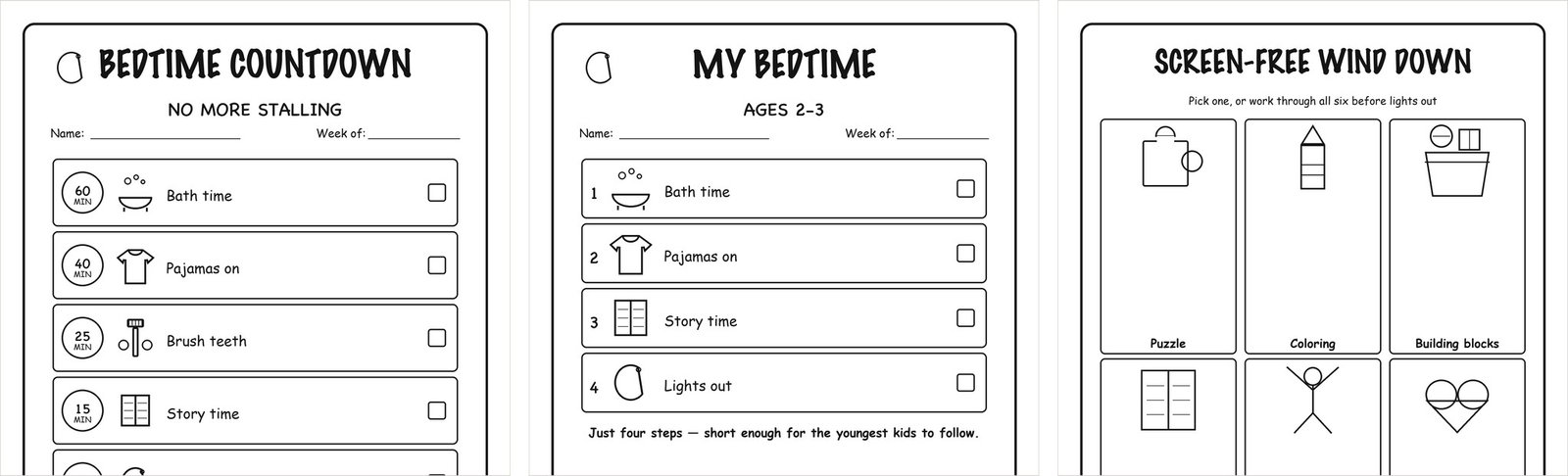
All 5 bedtime charts
Every page below has its own Download PDF and Print button.
The countdown that ends the stalling
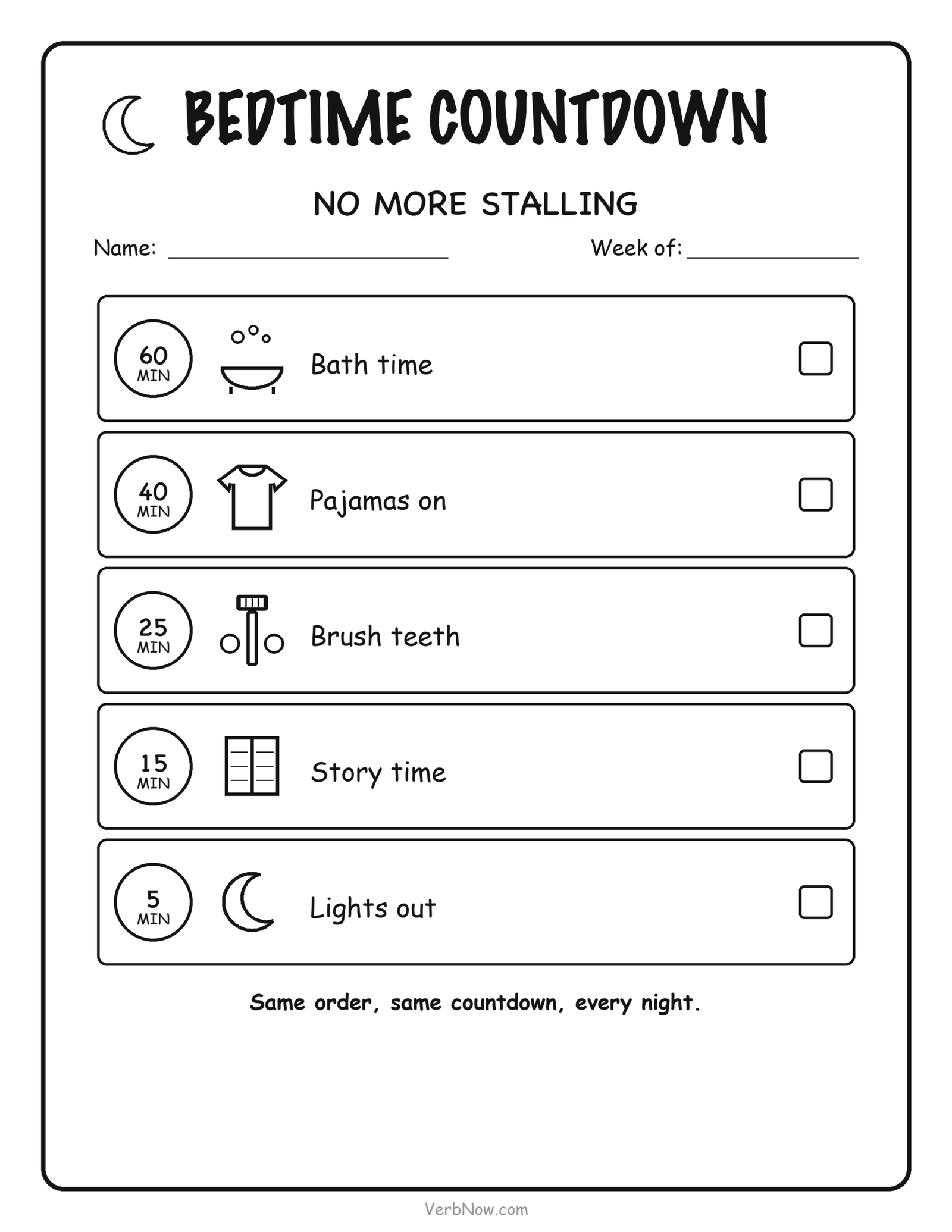
The countdown chart marks five stops — 60, 40, 25, 15 and 5 minutes before lights out — instead of a plain numbered list of steps.
Each stop pairs a large minute badge with one task: bath at 60, pajamas at 40, teeth at 25, story at 15, lights out at 5. I drew the minute badge at the same size as the checkbox on purpose, so the number is the first thing a child’s eye lands on, not the task name — the count is what tells them how close they are, which a step list on its own does not.
A shorter routine for the youngest toddlers (ages 2-3)
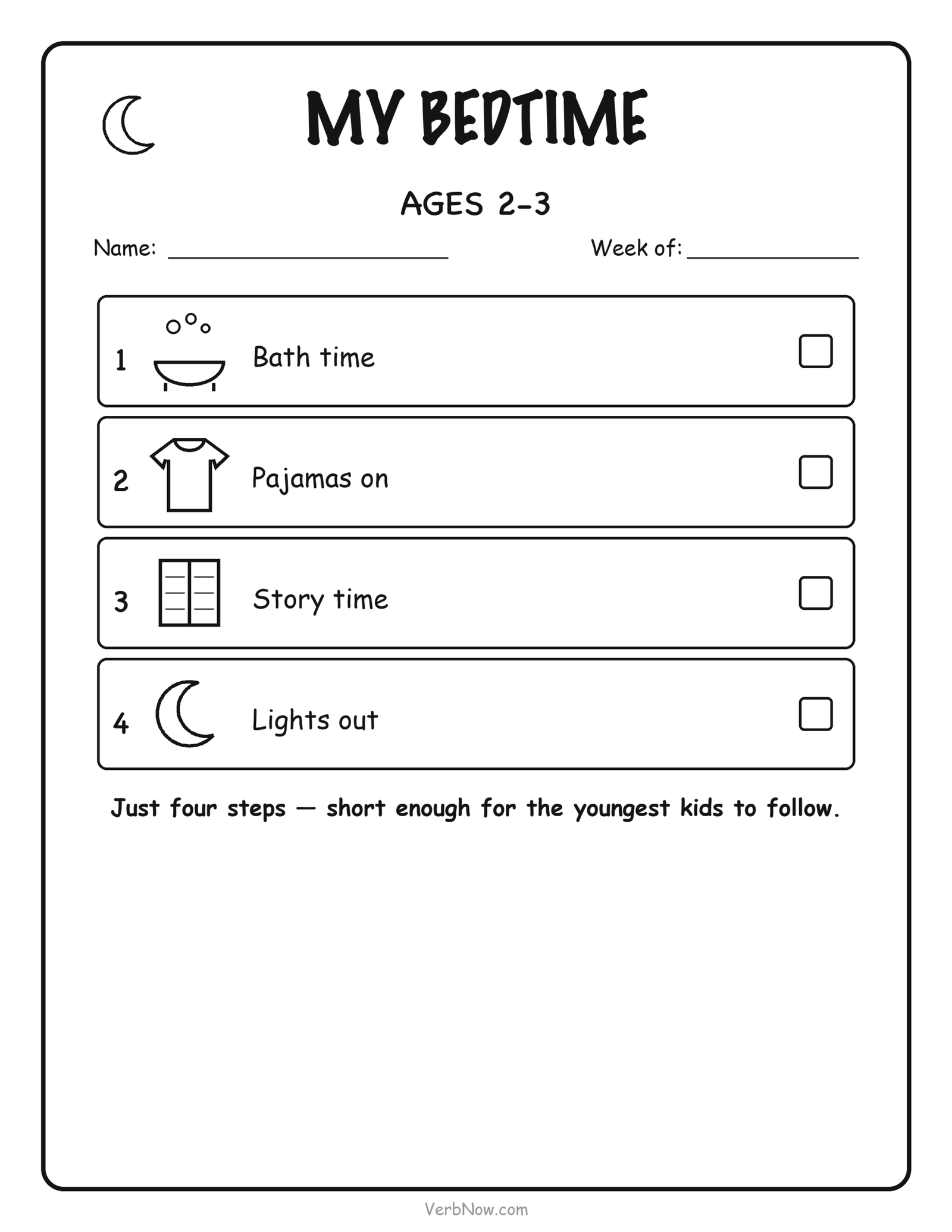
This version has four steps — bath, pajamas, story, lights out — two fewer than the ages 2-5 bedtime chart in the main routine pack.
At two and three years old, a six-step chart is often still longer than a child can hold in mind from start to finish. Dropping to four large-icon steps keeps the chart usable at the age where the routine is just starting to form, rather than stretching it to cover a wider age range.
Screen-free wind-down, picked by the child
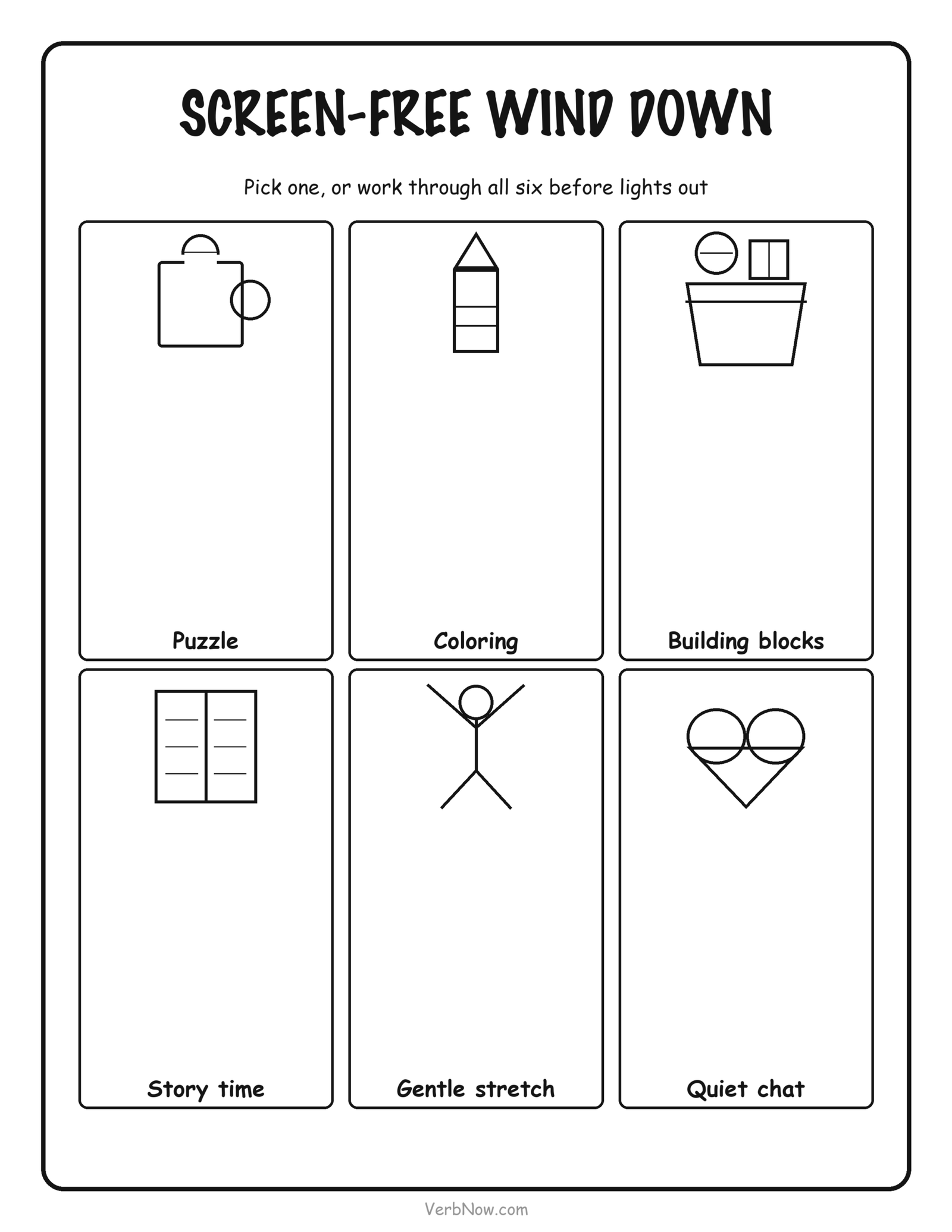
This chart swaps a fixed step order for six screen-free activities — puzzle, coloring, building blocks, story time, a gentle stretch, or a quiet chat. Pick one, or work through all six before lights out.
A menu works differently than a checklist: the child is choosing an activity, not being told to do a task, which is a smaller ask right when screens are the thing being taken away. The set intentionally leaves out anything that plugs in.
A bedtime checklist tweens run themselves (ages 9-12)
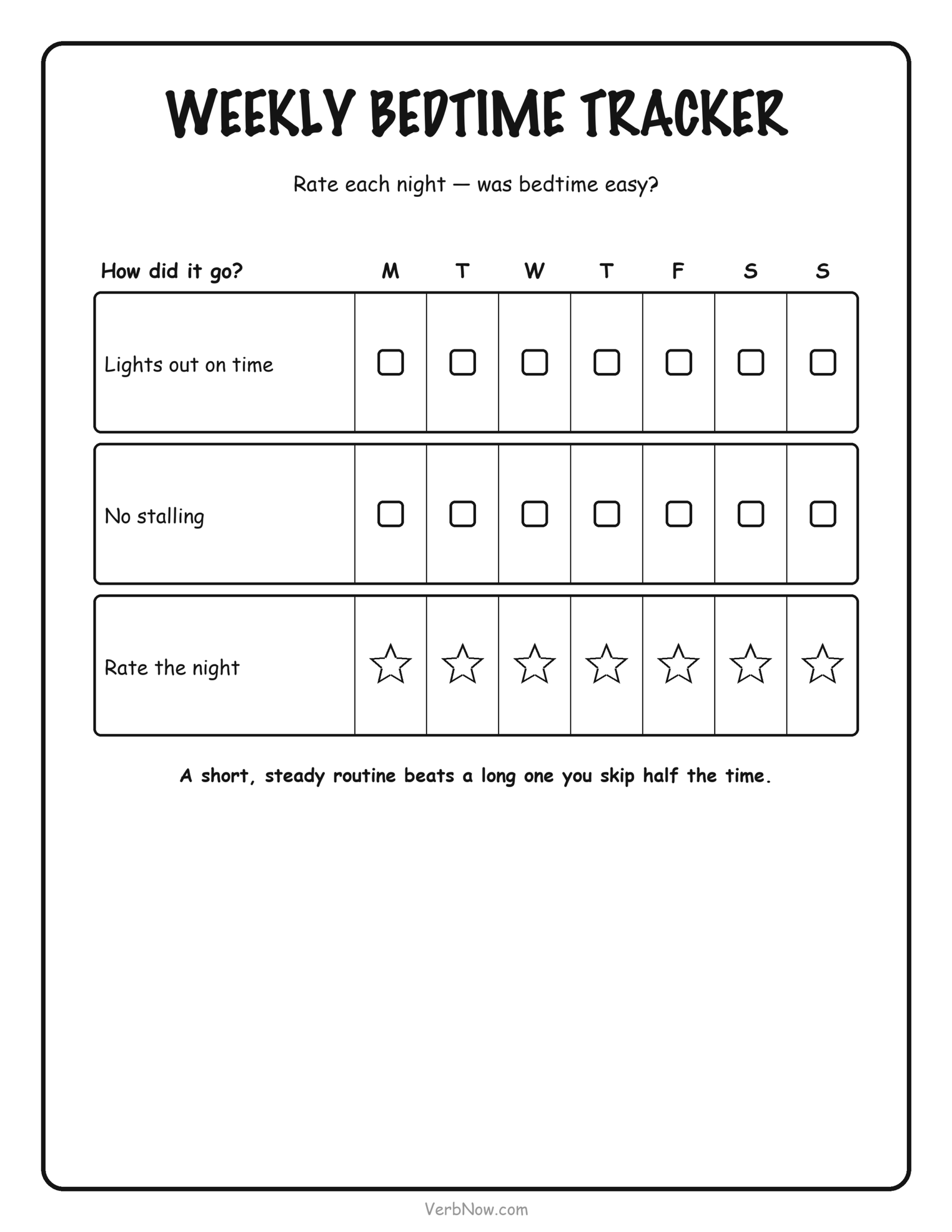
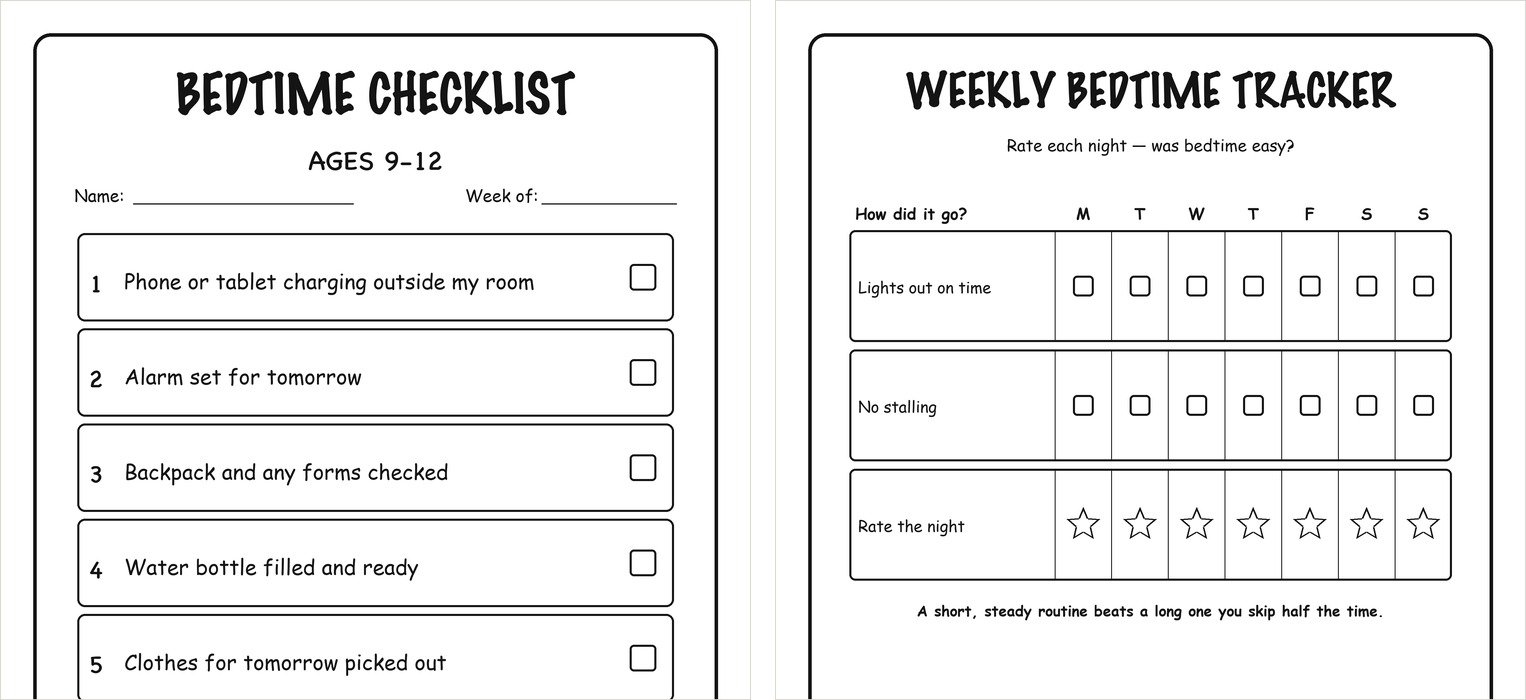
This checklist skips the hygiene steps already covered in the ages 6-12 bedtime chart and focuses on six independence tasks instead: phone or tablet charging outside the bedroom, alarm set for tomorrow, backpack and forms checked, water bottle filled, clothes picked out, lights out at an agreed time.
By nine or ten, most kids can run their own bedtime without someone calling out each step — what usually breaks down at this age is the screen and next-morning prep, not the brushing and washing. This checklist is self-checked, not parent-checked, and covers the specific pieces that tend to cause tween bedtime friction.
Track the whole week, not just one night
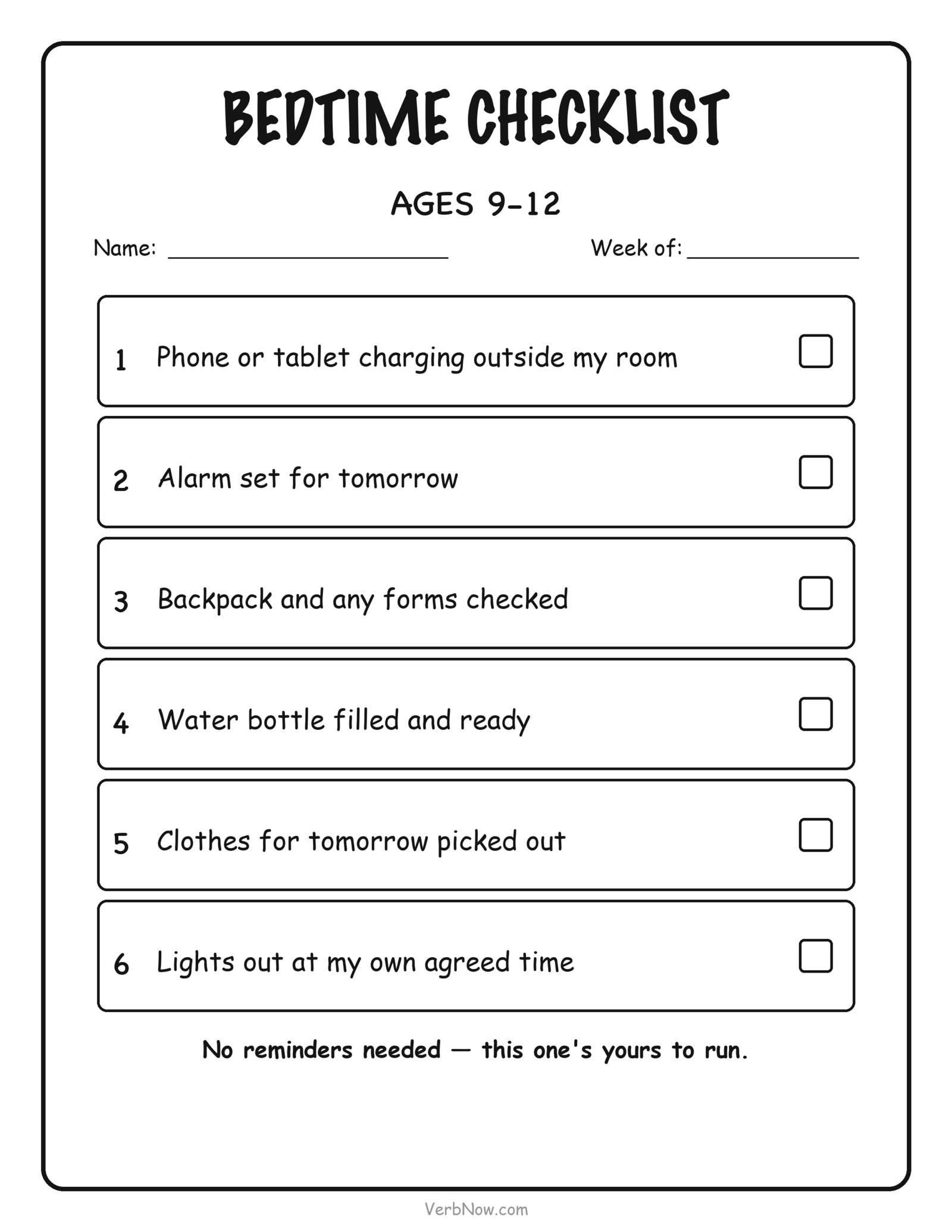
The weekly tracker rates three things across all seven days — lights out on time, no stalling, and a star rating for the night — instead of listing steps to check off.
Used alongside the countdown chart, the two measure different things: the countdown chart tracks the process on any single night, and the weekly tracker tracks the outcome over time, which is where a pattern actually shows up.
How to print and use these
All 5 pages are US Letter (8.5 × 11 in) with half-inch margins and print in pure black and white — no color ink needed. For repeat use, laminate the chart or slide it into a plastic sleeve and check off with a dry-erase marker; the boxes are drawn large enough to wipe clean.
FAQ
Why does my child keep stalling at bedtime?
Stalling is easier when the end point is invisible — a step list does not show how much is left. The countdown chart makes the remaining time visible at every stop, which is what the numbered list format is missing.
What time should the bedtime countdown start?
The chart here starts at 60 minutes before lights out, which fits a bath-based routine for most ages 2-9. Families without a bath step can start the countdown later and skip that stop.
How do I get screens out of the bedtime routine?
Replace the screen with a choice, not a single mandatory task. The screen-free wind-down chart offers six activities to pick from, so the child is choosing something instead of just losing something.
Does a 9-12 year old still need a bedtime chart?
Yes, but not the same chart as a younger child. The tween checklist here is self-checked and focused on independence tasks — phone charging, alarms, next-day prep — rather than hygiene steps a nine-year-old already does on their own.
How many weeks before a bedtime routine actually sticks?
There is no fixed number, which is why the weekly tracker scores a full week instead of a single night — a short, steady routine you keep up is more useful to track than one long night that goes perfectly once.
This set pairs naturally with the full routine chart pack, which covers mornings, after-school and two everyday bedtime charts. For the recurring jobs beyond bedtime, see our printable chore charts, and the reward charts track progress toward a prize.