
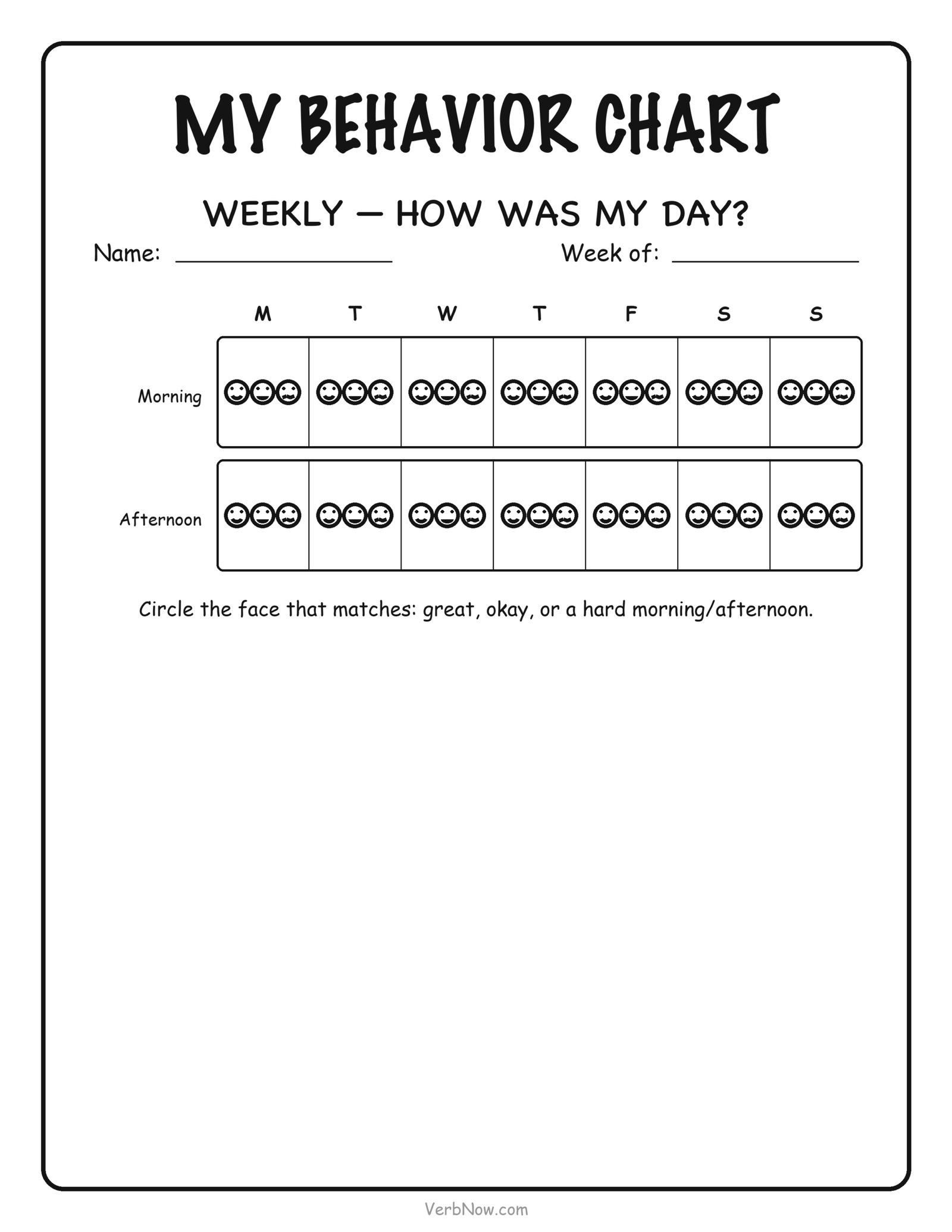
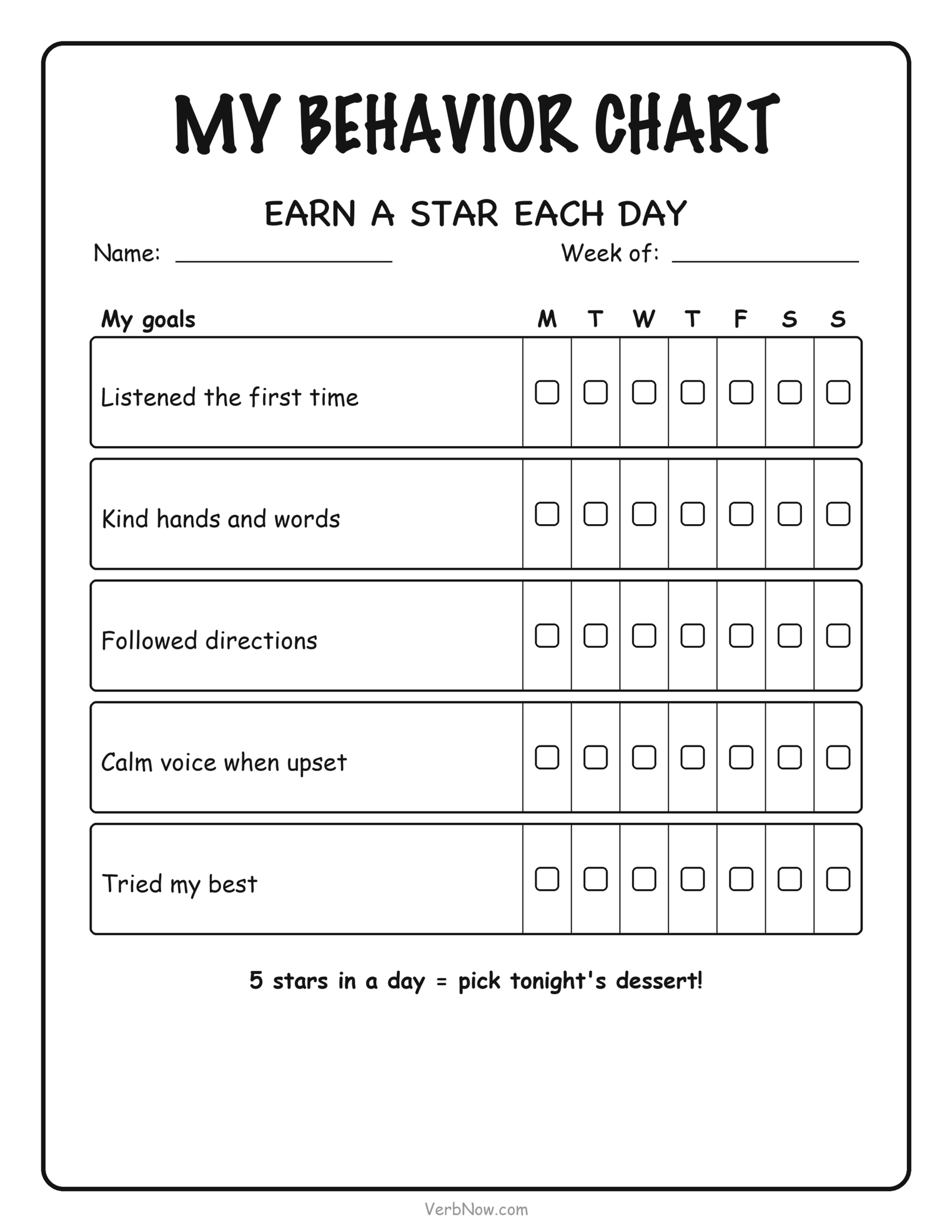
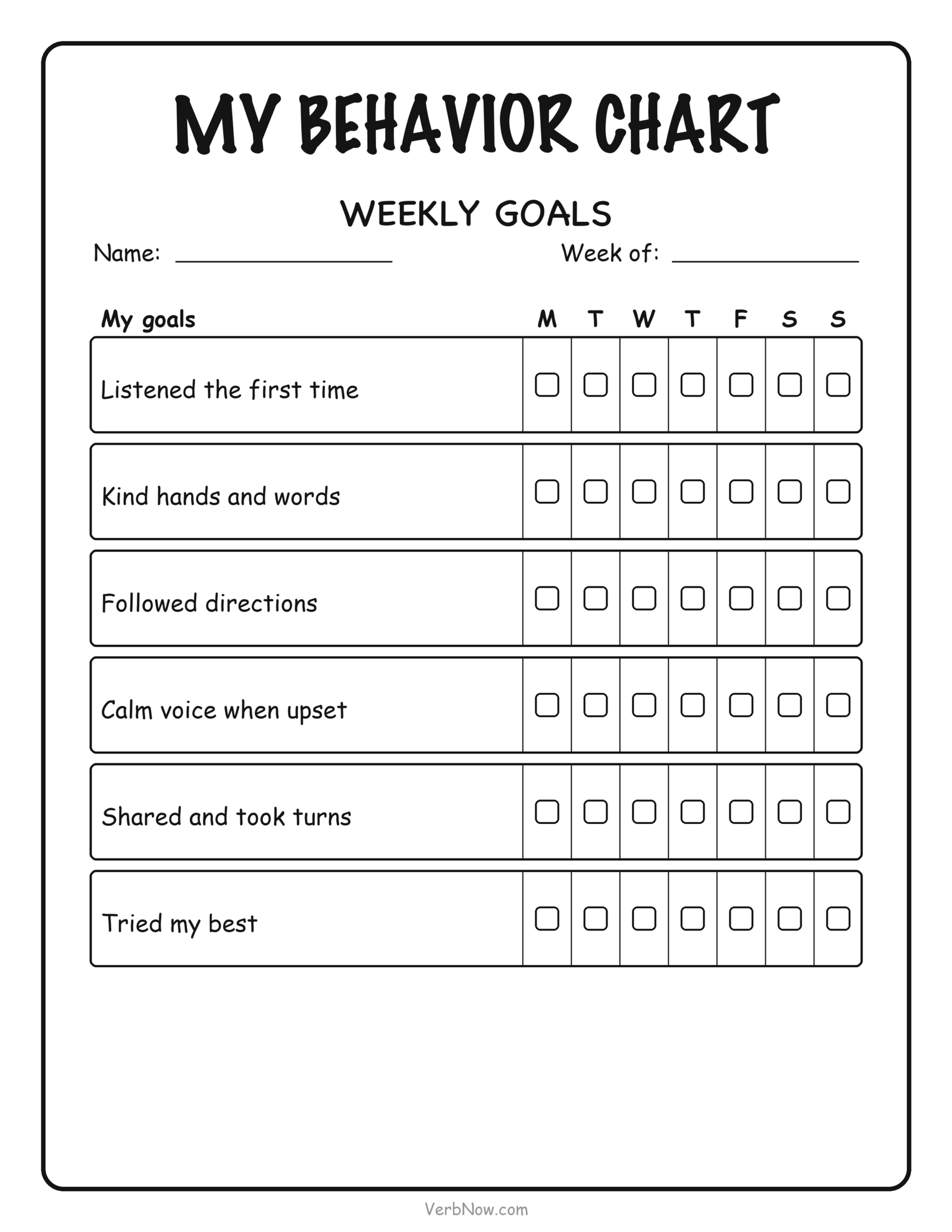
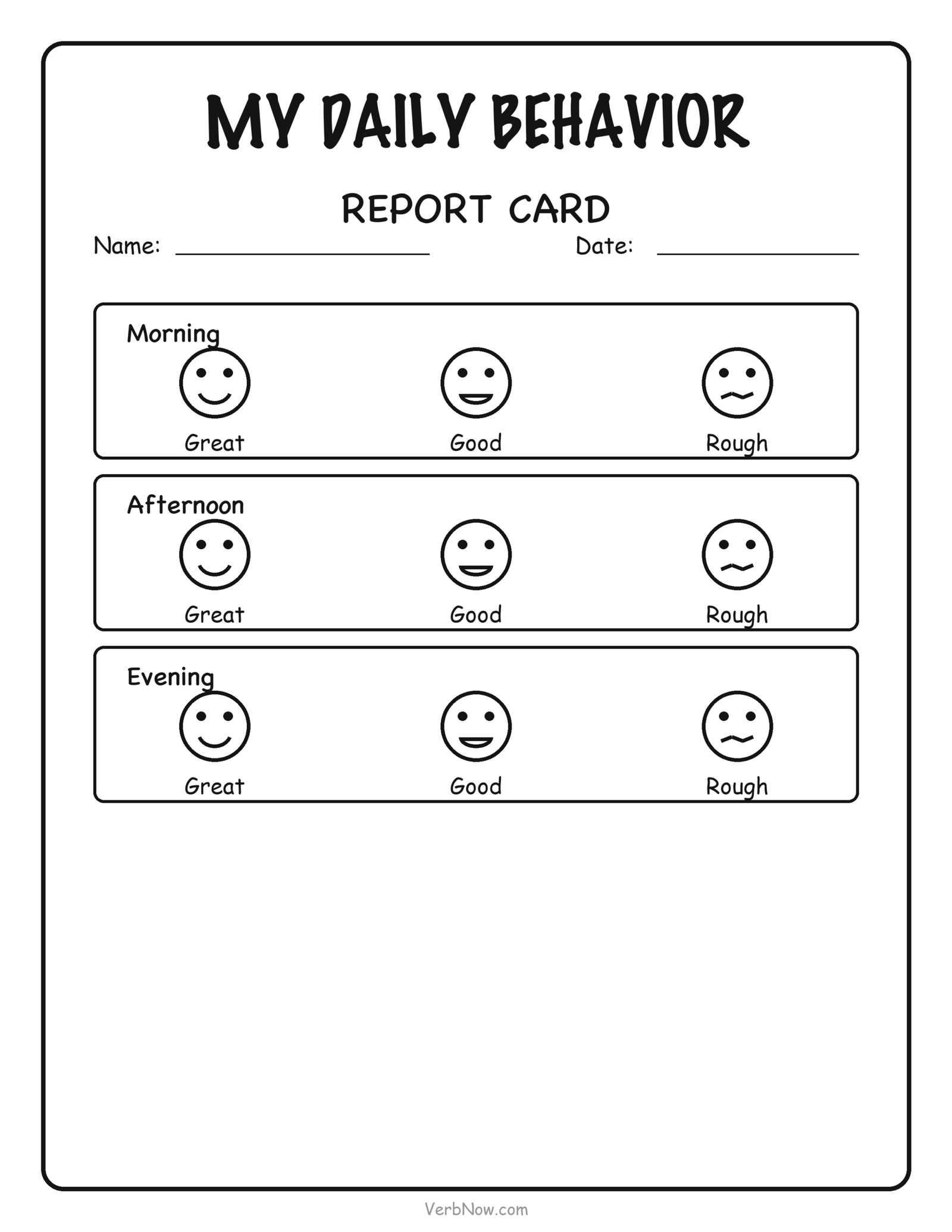
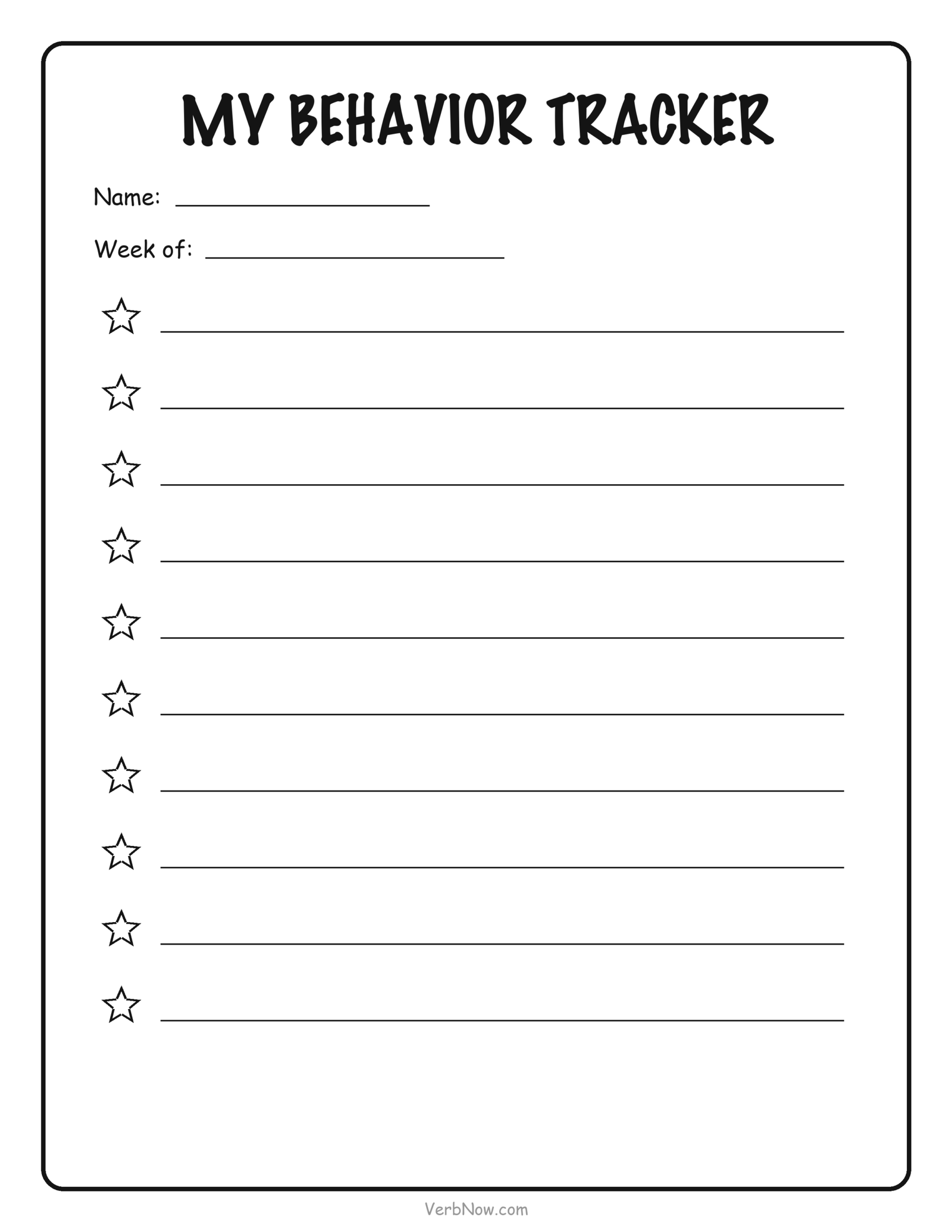
This collection has 7 free behavior chart printables in different rating styles: a smiley-face weekly chart split into morning and afternoon, a traffic-light daily chart, a star-reward chart tied to 5 specific goals, a plain weekly goals chart with checkboxes, a 3-block daily report card, a simple blank tracker, and a responsibility chart with a weekly points column. Every page is black and white on US Letter, downloads as a free PDF, and needs no signup.
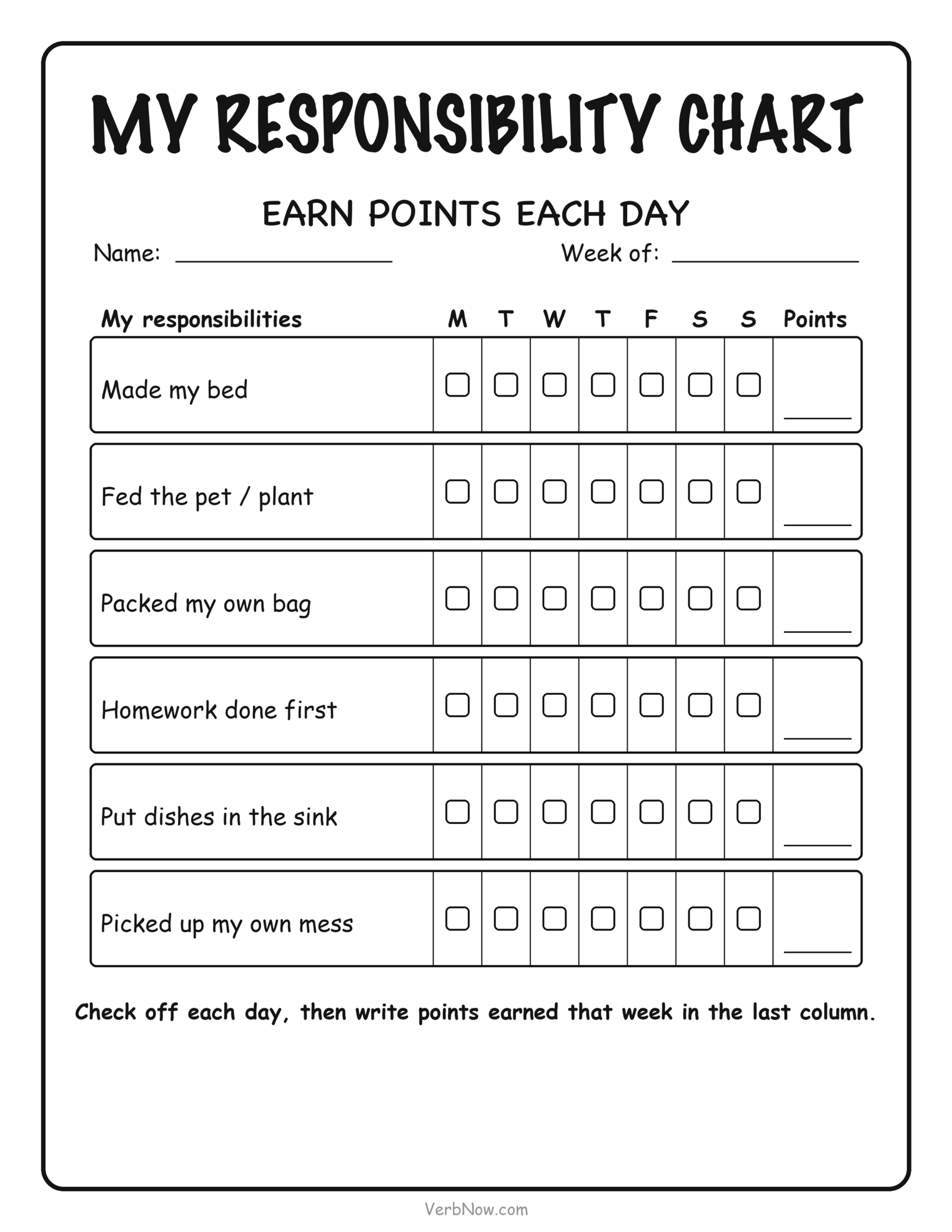
The seven charts split into two groups by what they’re actually measuring: the smiley, traffic-light, and daily-report-card pages rate the whole morning/afternoon/evening at once — useful for a general “how was today” conversation. The star-reward, weekly-goals, and responsibility pages instead track specific named behaviors or tasks (“kind hands and words,” “made my bed”) one at a time — useful when a family or classroom is working on 1-2 particular habits rather than the day as a whole. The responsibility chart is the only one of the three that adds a weekly points column instead of just a checkmark, for families who want to tie chores or habits to a points-based reward system.
What’s in this collection
7 pages: smiley weekly (AM/PM), traffic light daily, star-reward weekly, plain weekly goals, daily report card (3 time blocks), a simple blank tracker, and a responsibility chart with a points column. Each has its own Download PDF and Print button in the grid below.
Whole-day rating vs. specific-goal tracking
The smiley, traffic-light, and report-card charts work best when the goal is an open conversation about the day rather than a single measurable behavior — a “rough” afternoon doesn’t have to mean anything specific went wrong. The star-reward, weekly-goals, and responsibility charts work better once a family has already named the exact behaviors or tasks they’re working on, since each row is its own goal tracked independently across the week.
How the traffic light and report card charts work
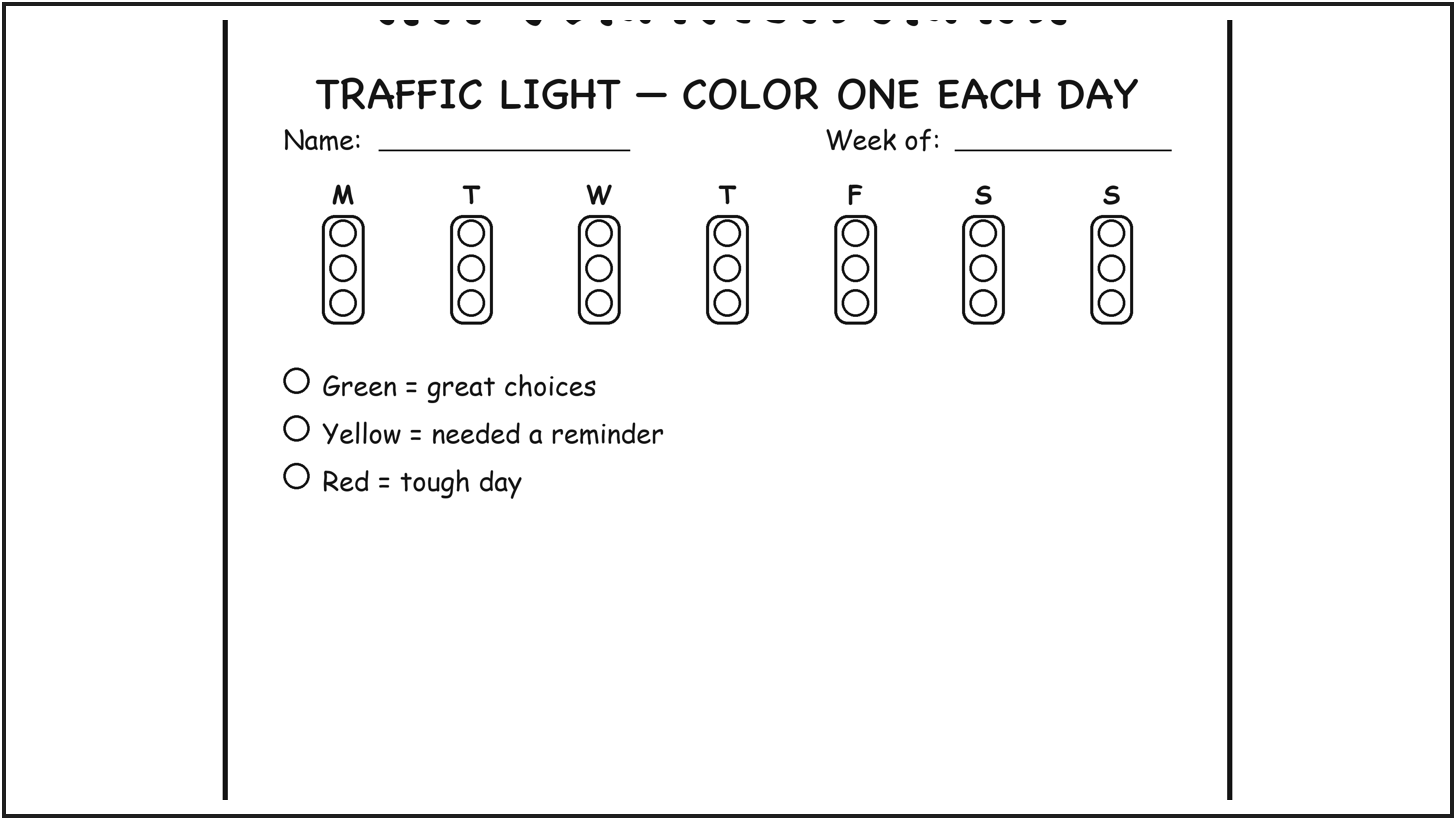
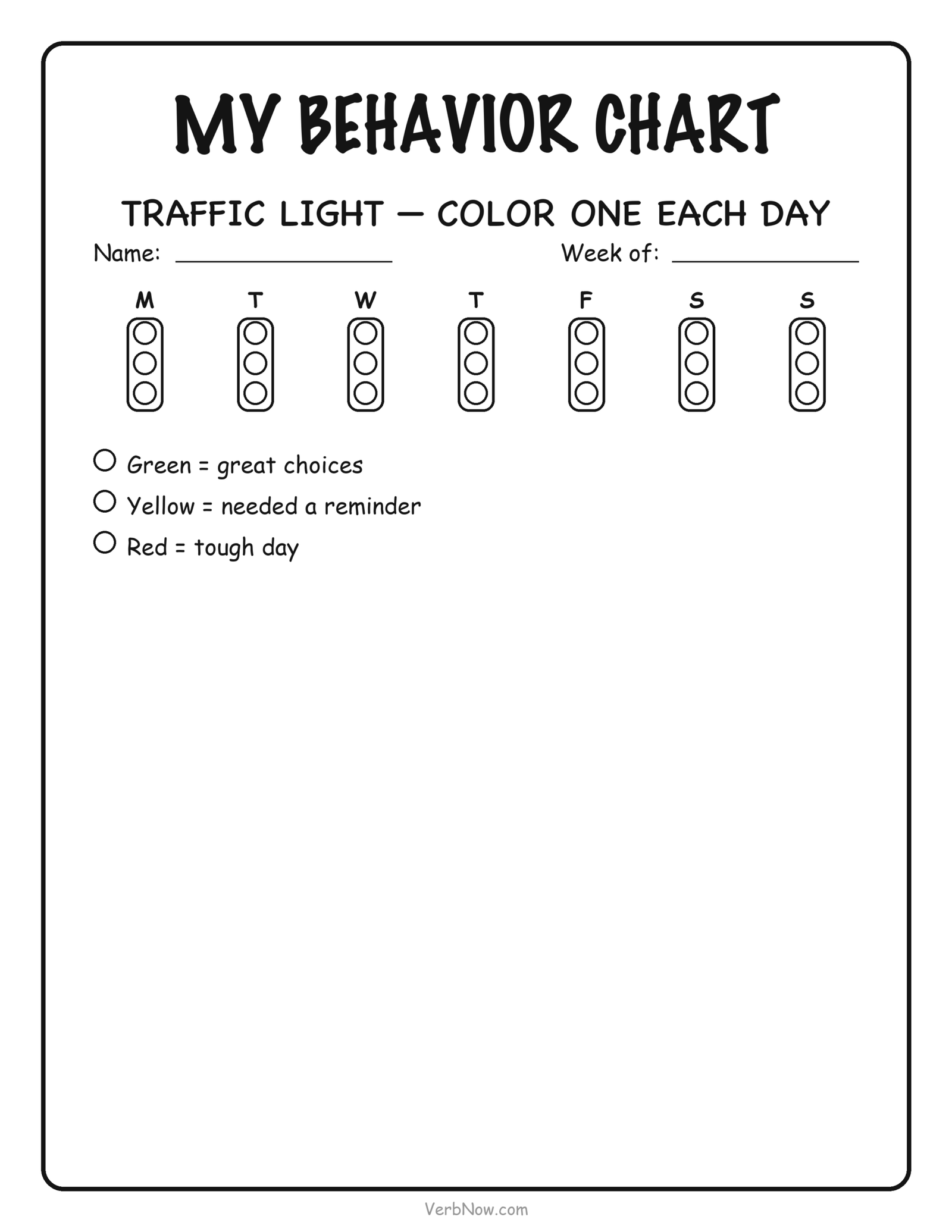
The traffic light chart gives each day 3 small circles (green, yellow, red) inside a light-shaped outline — color in the one that matches, no writing required, which makes it usable for kids who aren’t reading fluently yet. The daily report card splits a single day into morning, afternoon, and evening, each with 3 faces (great, good, rough) to circle — useful for spotting whether a rough patch is a whole-day thing or tied to one part of the day.
How the responsibility chart works
The responsibility chart lists 6 specific responsibilities (made my bed, fed the pet or plant, packed my own bag, homework done first, put dishes in the sink, picked up my own mess) with a checkbox for each day of the week, plus a Points column at the end of each row. Check off the responsibility as it’s done each day, then write in the points earned that week — the point value itself is up to each family, so the same chart works whether points mean a small allowance, screen time, or just a running tally toward a bigger reward.
How to print these
Every page is US Letter (8.5 × 11 in), pure black and white, with the chart area inside a 0.5 in margin. Plain copy paper is fine for all 7.
FAQ
What’s the difference between a behavior chart and a chore chart?
A chore chart tracks whether specific tasks got done (make the bed, feed the pet). A behavior chart tracks how a child handled the day emotionally and socially — listening, kindness, managing frustration — which is a different thing to measure even though the weekly-grid layout looks similar.
What’s the difference between the responsibility chart and the other charts here?
The responsibility chart is closer to a chore chart than a behavior chart — its 6 rows are specific tasks, not feelings or social behavior — but it adds a weekly Points column the other charts don’t have, for families who want to tie tasks to a points-based reward.
How often should a behavior chart be reviewed?
Daily charts (traffic light, report card) work best reviewed at the end of each day while it’s still fresh. Weekly charts (smiley, star-reward, weekly-goals, responsibility) work best reviewed once at the end of the week to spot a pattern, not day by day.
What age are these charts good for?
The traffic light and smiley-face charts need no reading, so they suit preschool through early elementary. The weekly-goals, report-card, and responsibility charts have short phrases to read and suit early elementary and up.
Do I need to sign up to download these?
No. Every page here is a free PDF with no signup or email required.
For more home routine printables, the chore charts for kids and reward chart printables use a similar weekly-grid format in this silo.