
This collection has 41 free flower coloring pages, and the first twenty are unusual for a free set: each one is a named botanical sheet with the species written across the top — anemone, apple blossom, aster, begonia, bouvardia, buttercup, camellia, carnation, cherry blossom, corn poppy, crocus, daffodil, dahlia, forget-me-not, freesia, gardenia, gerbera, gladiolus and more. The remaining twenty-one are garden scenes and simpler pages for younger children. Every page is black and white on US Letter, downloads as a free PDF, and needs no signup.
That split is the thing to notice before printing. The named sheets are drawn at botanical-illustration density — overlapping petals, veined leaves, gaps a millimetre or two wide — which is why they suit adults and older children with fine pencils, and frustrate a five-year-old. The garden pages sit at the other end: thick outlines, a sun, a fence, room to scribble.

What’s in this collection
Twenty named botanical sheets, nine garden scenes with birds and insects, seven easy pages for young children and five dense floral patterns — 41 in total, in the grid below. Each has its own Download PDF and Print button, so you can take one page instead of the whole set.





Twenty named flowers, alphabetically
Each of these twenty sheets shows one species in bloom with its name lettered in script at the top of the page. They run alphabetically from alstroemeria through gladiolus, which makes them usable as a study set rather than only as decoration: a child can color the page and learn what the flower is called at the same time. Detail is high — the dahlia and the forget-me-not pages in particular pack dozens of small petals into one head.
Garden scenes with birds, bees and butterflies
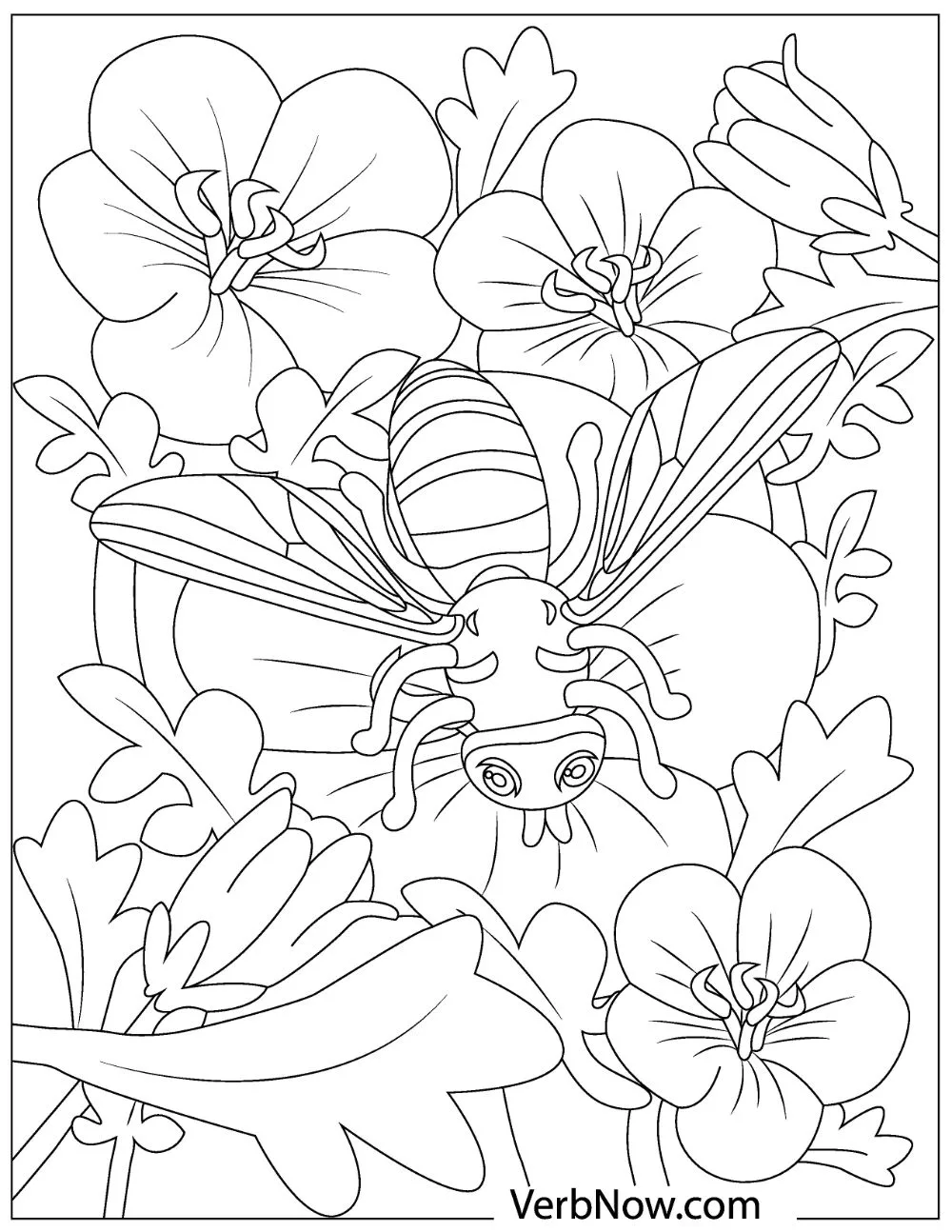
Nine pages put flowers into a setting: a ladybird on a leaf, a bee crossing an open bloom, butterflies rising over a meadow, a bird on a branch of blossom, a birdhouse surrounded by a flower bed, a cat sitting among daisies, a pond with water lilies. These carry the same fine line as the botanical set but break the page up into areas, so they feel faster to finish.
Easy pages for young children
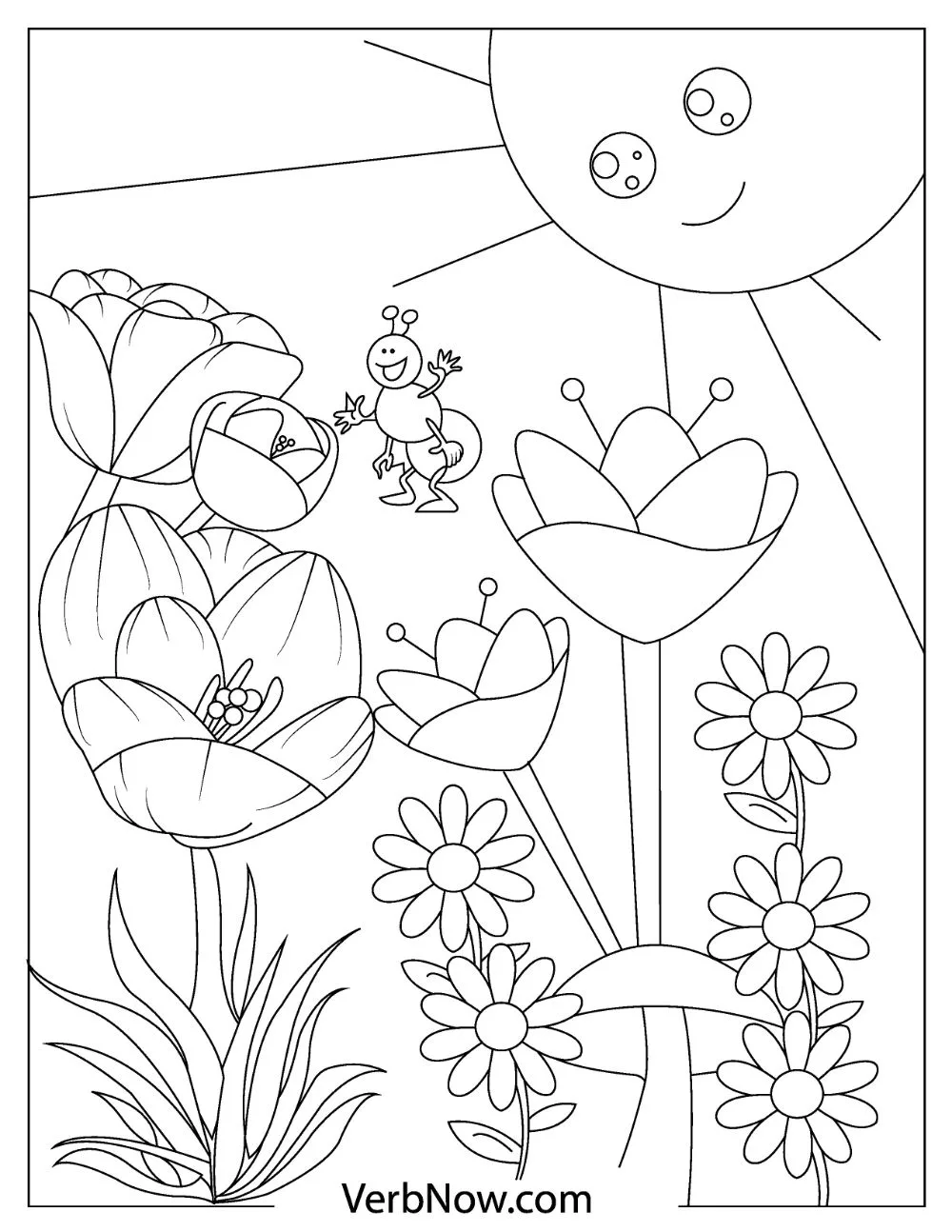
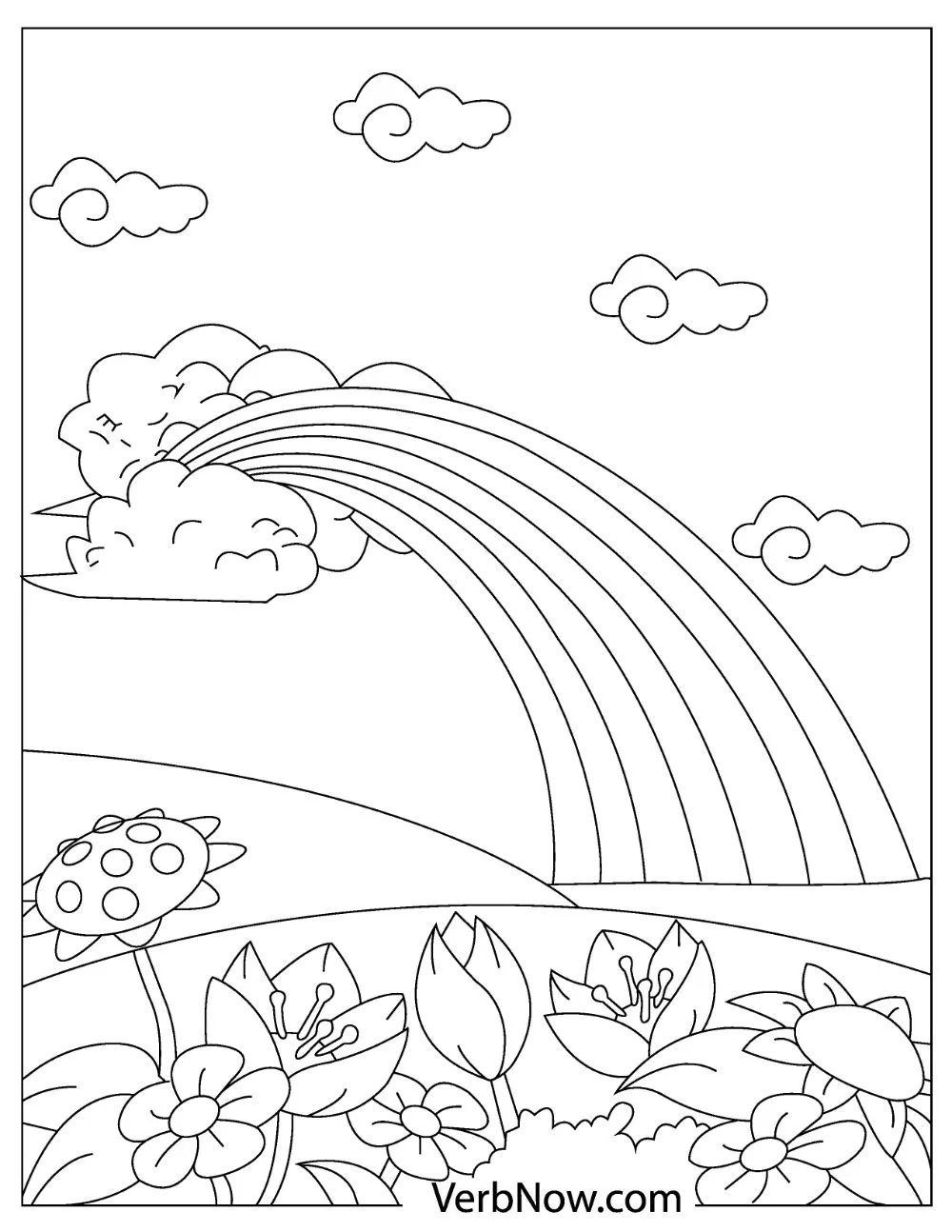
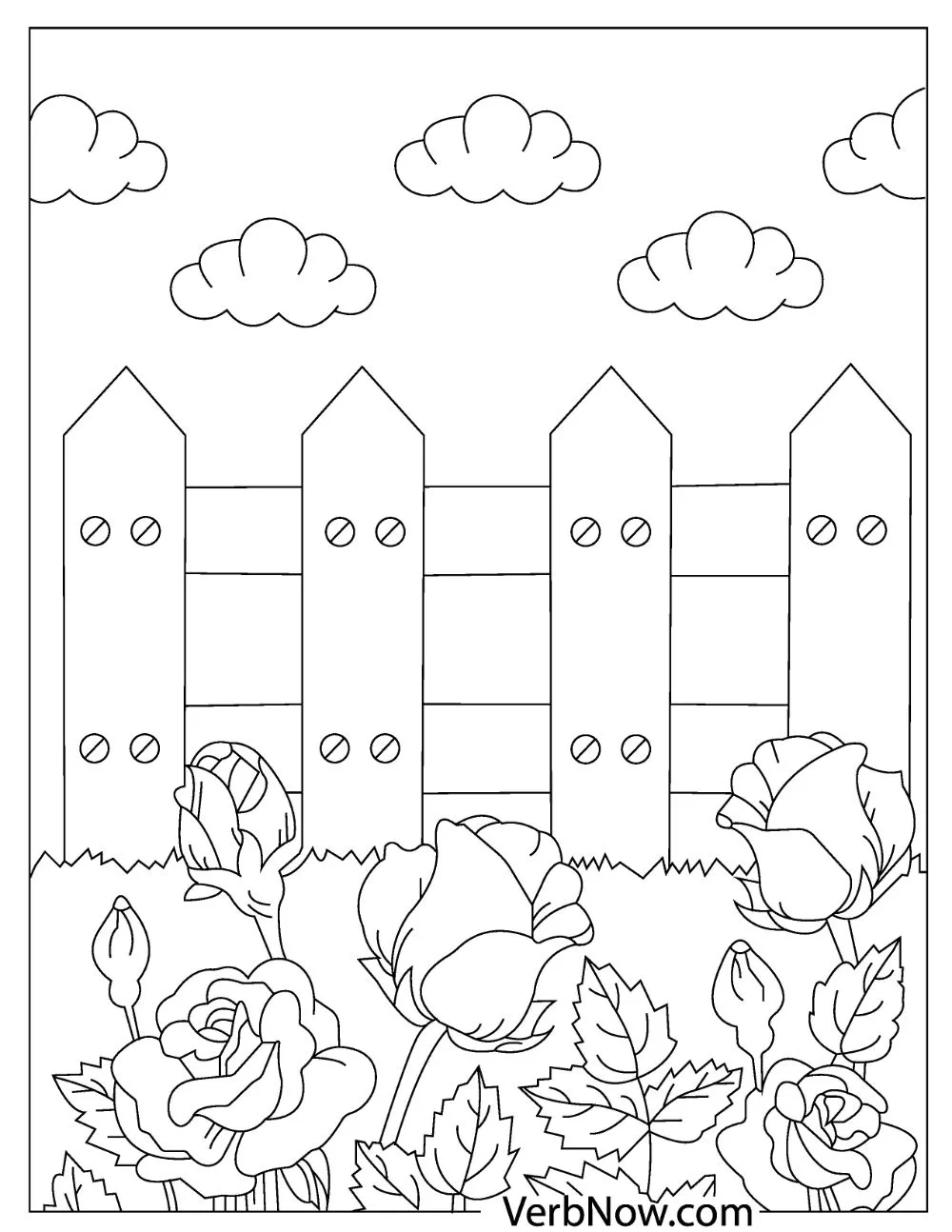
Seven pages are drawn thick and simple: tulips under a smiling sun, a row of daisies against clouds, a rainbow over a flower bed, a garden fence, a child watering a bed of tulips. Nothing on them is smaller than a crayon tip, and they are the pages to reach for if the botanical sheets are too fine.
Dense floral patterns
Five pages fill the whole sheet with flowers and nothing else: a full page of roses, a paisley-and-petal pattern, a scattered floral collage. These are the slowest pages in the set and the ones adults tend to pick for pen work.
How to print these
Every page is US Letter (8.5 × 11 in), pure black and white, with the drawing inside the printable margin. Plain copy paper is fine; choose “Fit to page” if your printer asks. Print the named botanical sheets at best quality — in draft mode the thinnest petal lines drop out, and on those pages the detail is the page.
FAQ
Are the flowers labelled with their names?
On twenty of the forty-one pages, yes — the species name is lettered at the top of the sheet. The garden scenes and the easy pages carry no text.
Which pages suit adults?
The twenty named botanical sheets and the five dense floral patterns. Both use fine lines and small enclosed spaces, and both work better with pencils or fine-tip pens than with crayons.
Are there flower pages simple enough for a preschooler?
Seven of them. Look for the pages with a sun, a rainbow or a fence in the background — those are drawn with thick outlines and large open areas.
Do I need a color printer?
No. Every page prints in black and white; the color comes from your pencils or crayons.
For related pages, the nature coloring pages put these same flowers into wider landscapes, and the animals and nature collection holds the rest of the free PDF sets in this silo.