
This collection has 10 free shape tracing worksheets, and every page follows the same layout: one large shape outlined in a dashed line to trace, plus six smaller versions of that same shape lined up below to color in. The set covers circle, square, triangle, star, heart, rectangle, oval, diamond, pentagon, and hexagon — the ten shapes most preschool and pre-k programs introduce before kindergarten. Every page is black and white on US Letter, downloads as a free PDF, and needs no signup.
Three of the ten are curved with no corners at all (circle, oval, heart), and seven are made of straight edges meeting at corners or points (square, rectangle, triangle, diamond, pentagon, hexagon, star), so a child working through the set in order gets practice switching between curves and corners instead of drilling the same kind of line over and over.
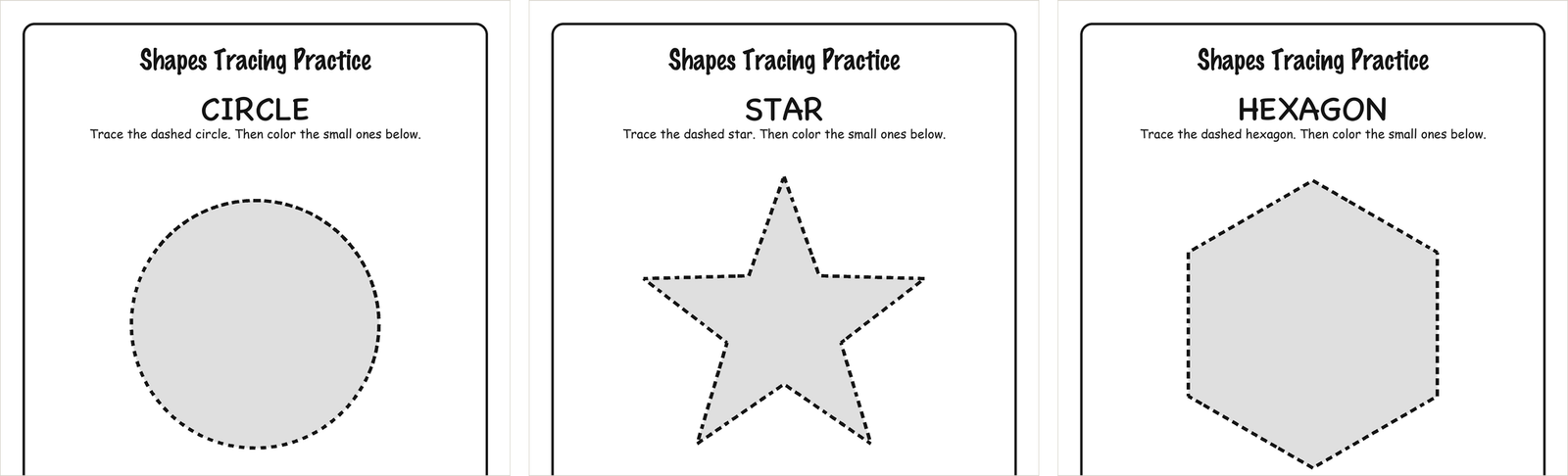
Which shapes are in this set
10 pages, one shape per page: circle, square, triangle, star, heart, rectangle, oval, diamond, pentagon, and hexagon. Each has its own Download PDF and Print button in the grid below, so a page can be printed on its own instead of the whole set.
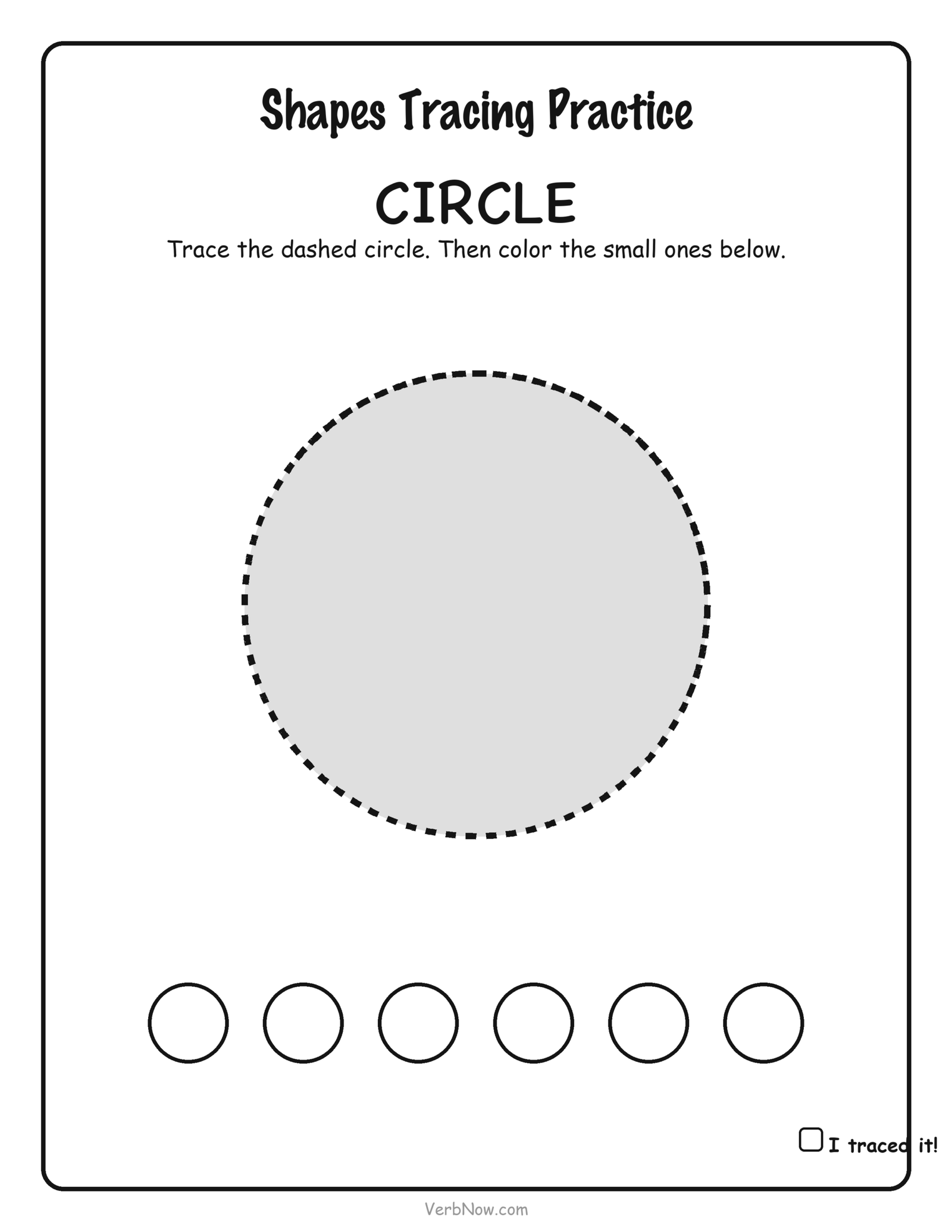
Round and curved: circle, oval, heart
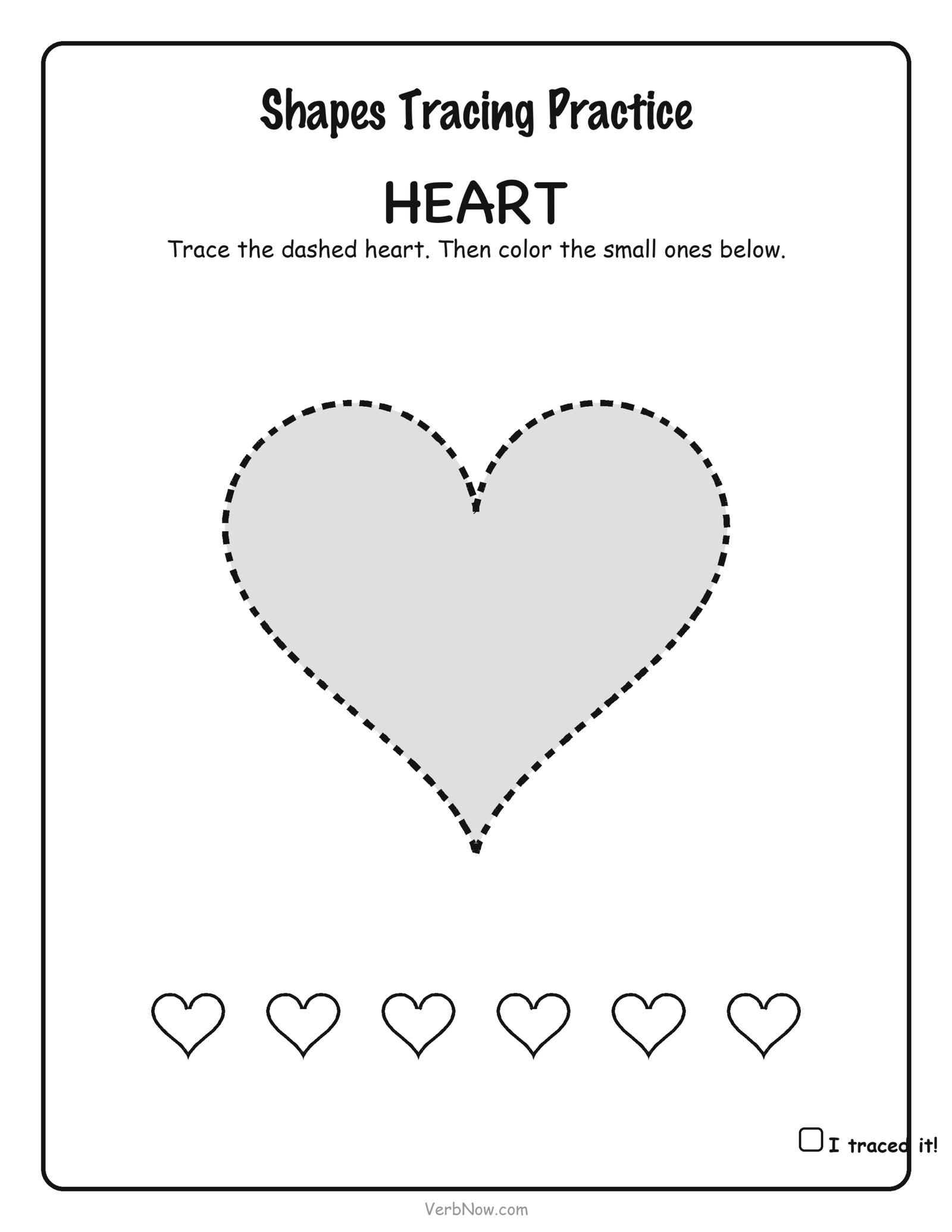
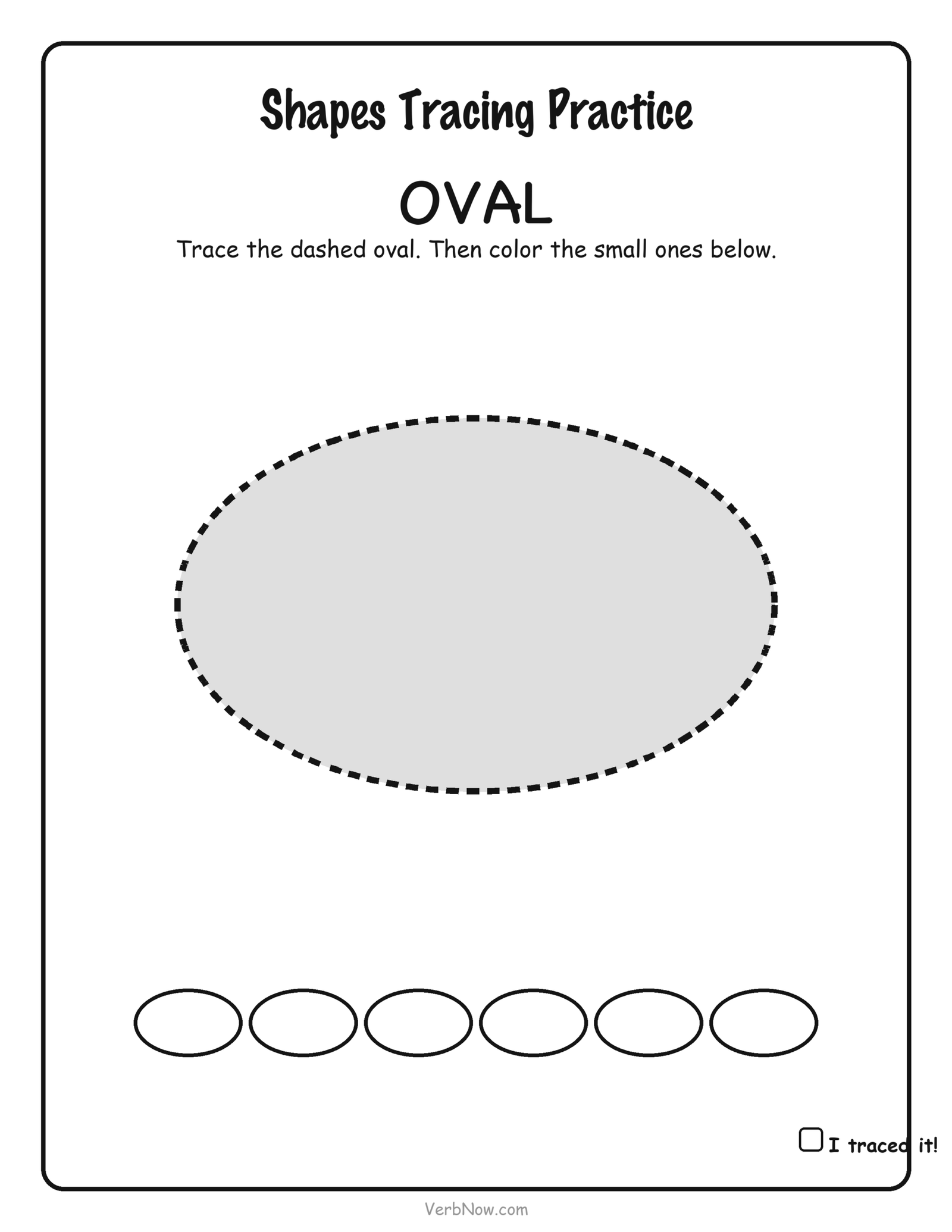
These three have no corners, so the dashed line changes direction gradually instead of turning at a point. The circle keeps one constant curve all the way around. The oval stretches that same curve wider than it is tall. The heart has the most direction change of the three — the dashed line curves up and out on both sides, cuts inward at the notch between the two lobes, then narrows to a single point at the bottom.
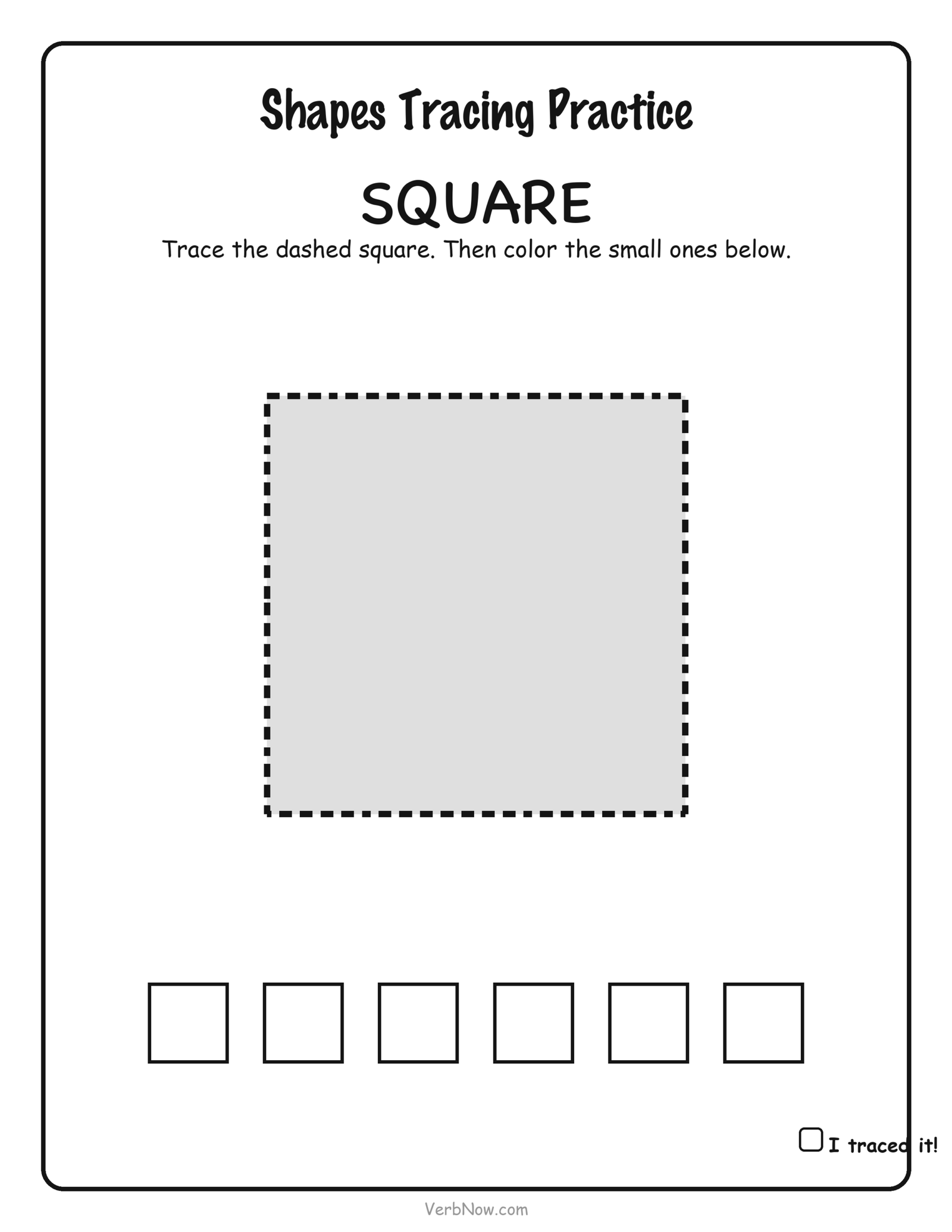
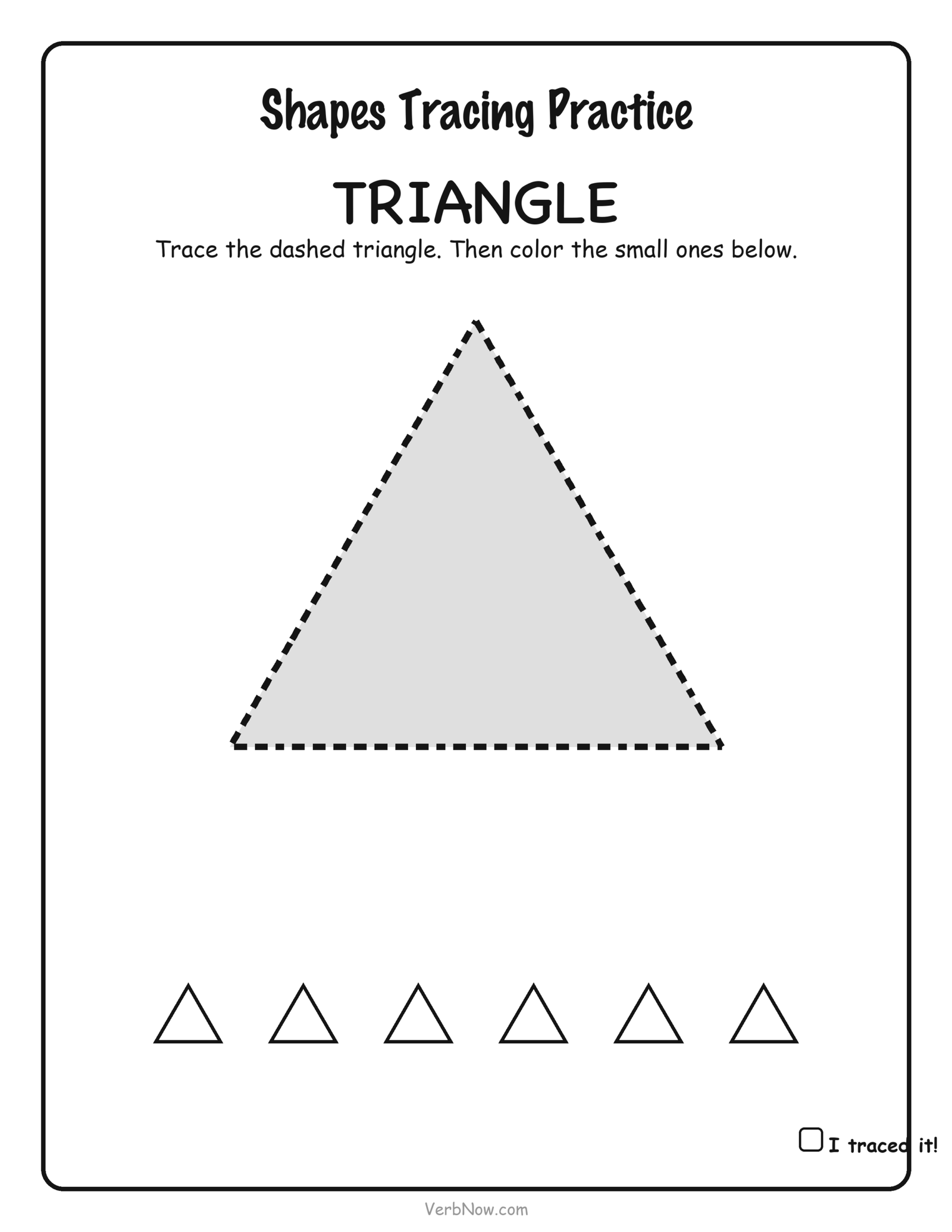
Straight-sided: square, rectangle, triangle, diamond, pentagon, hexagon, star
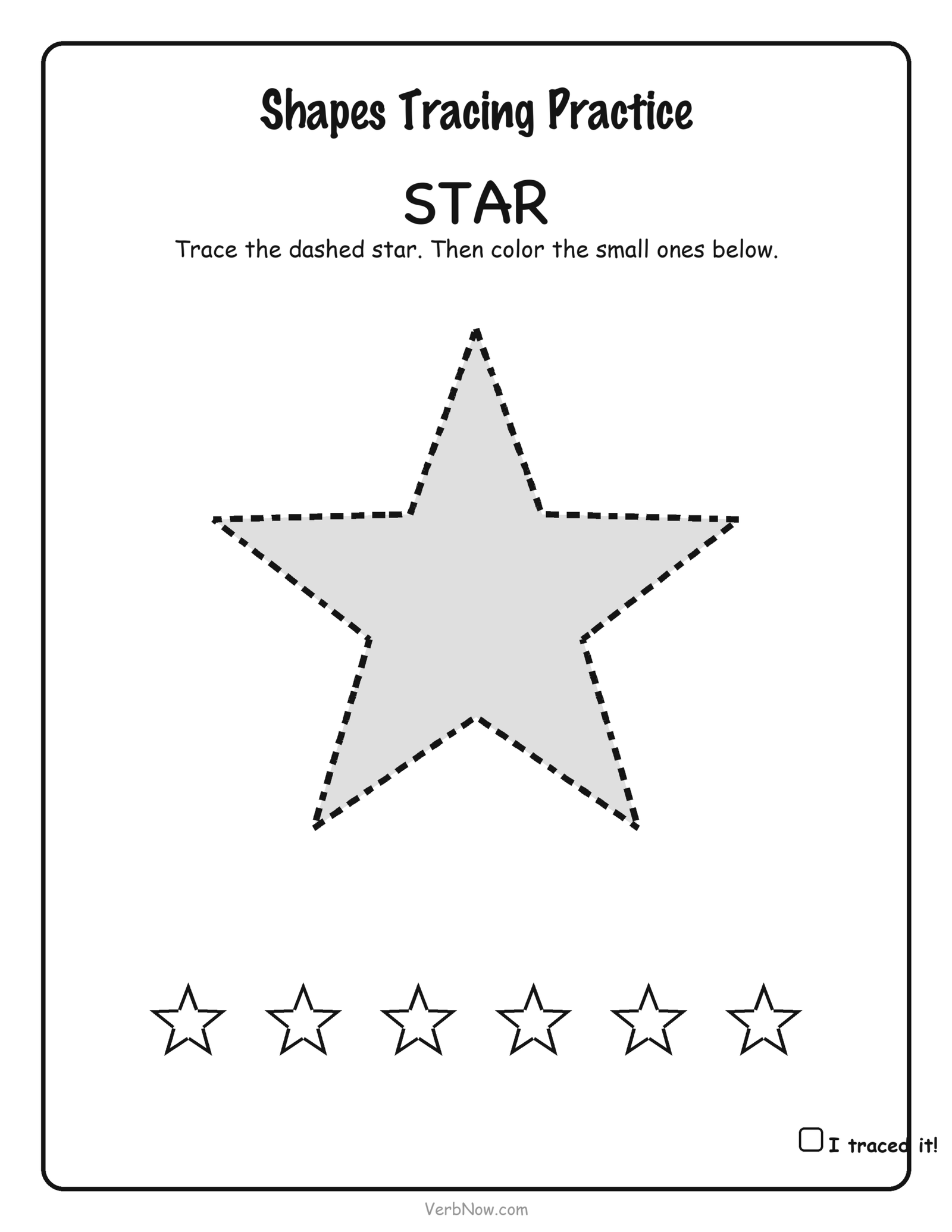
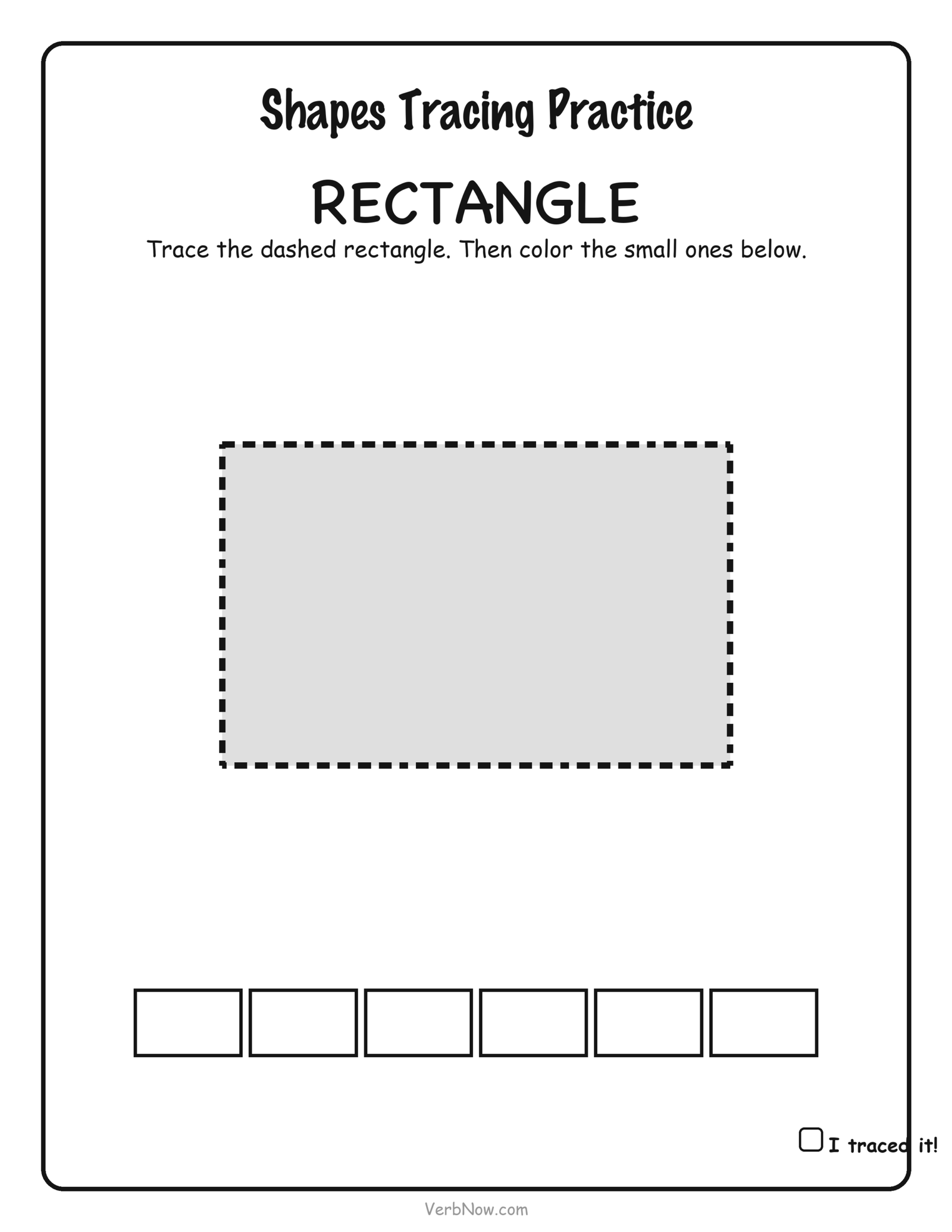
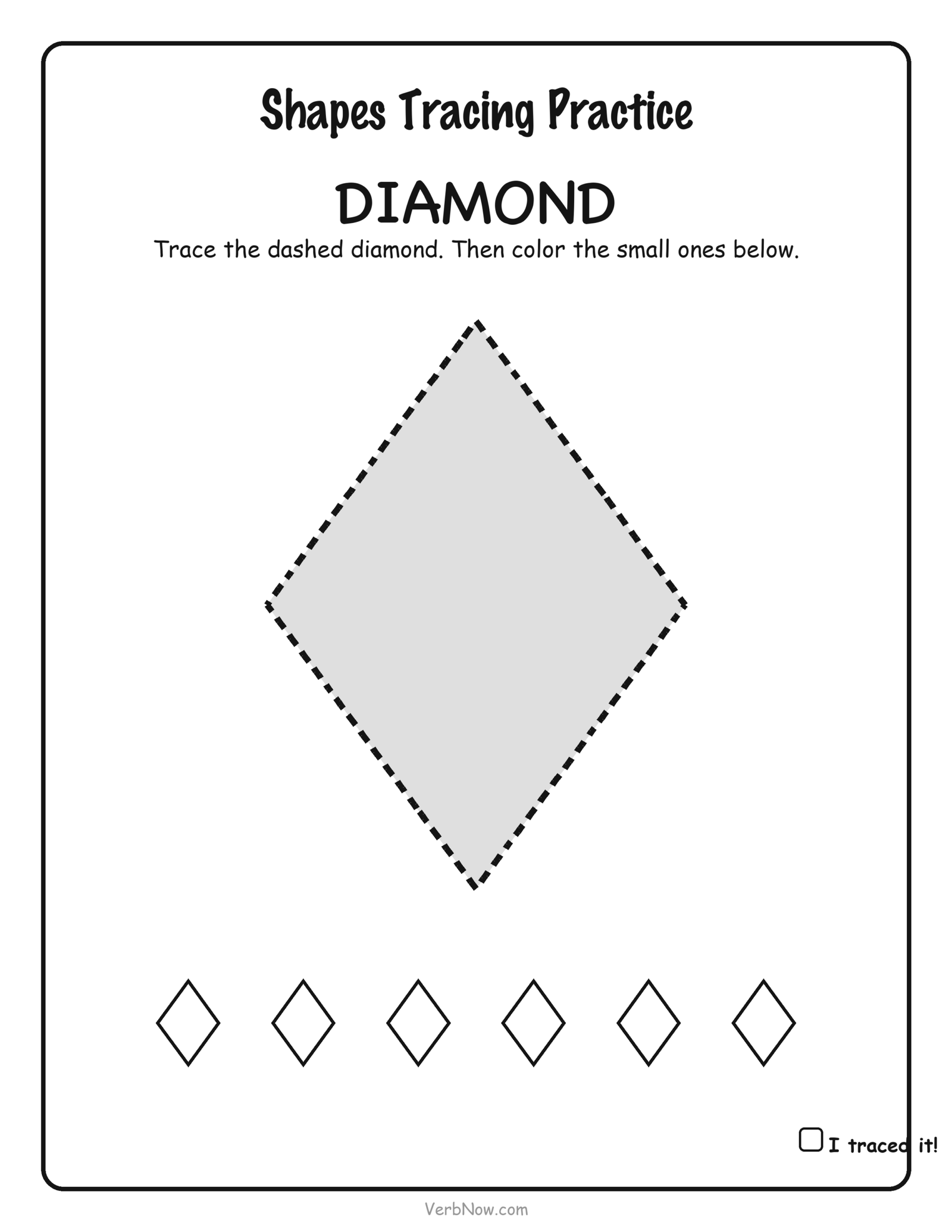
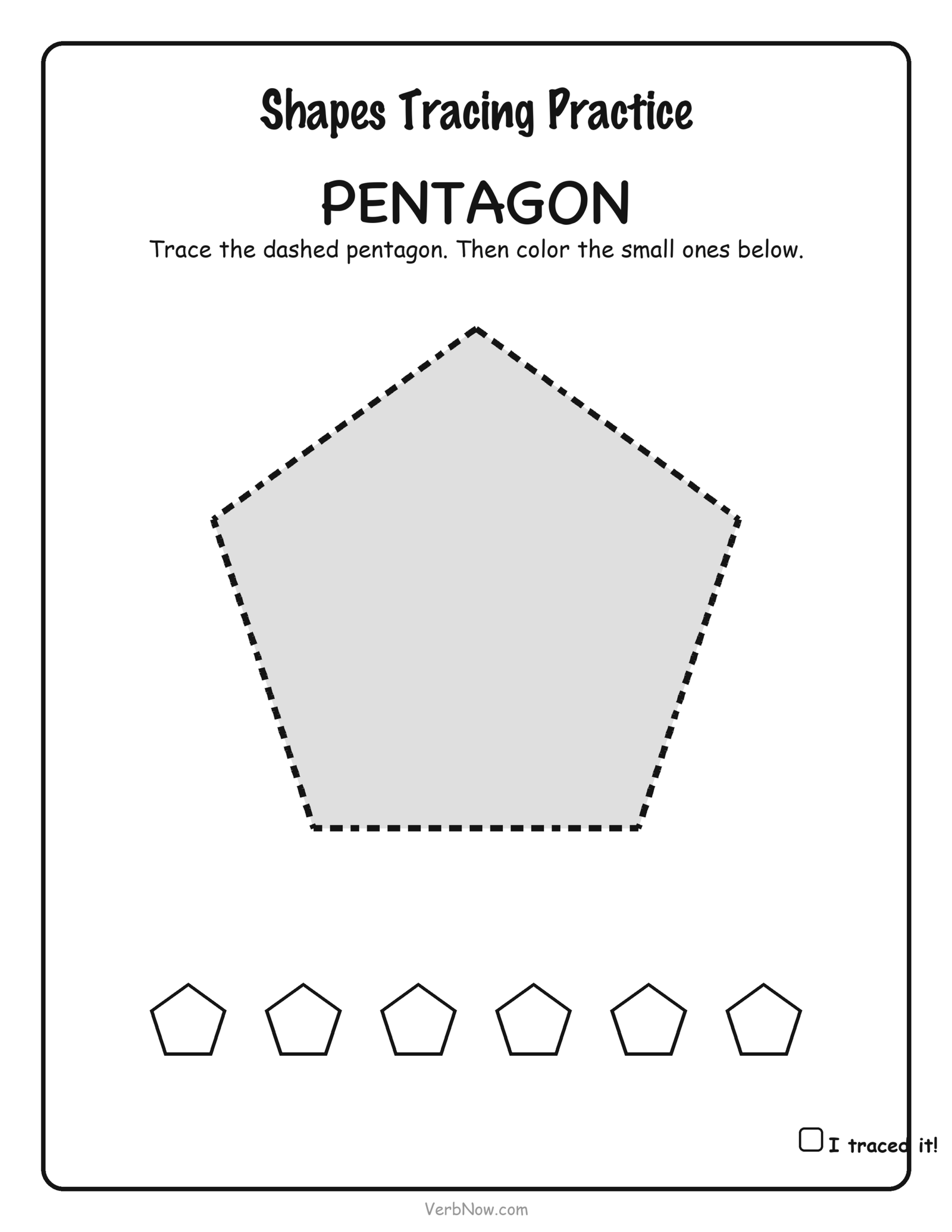
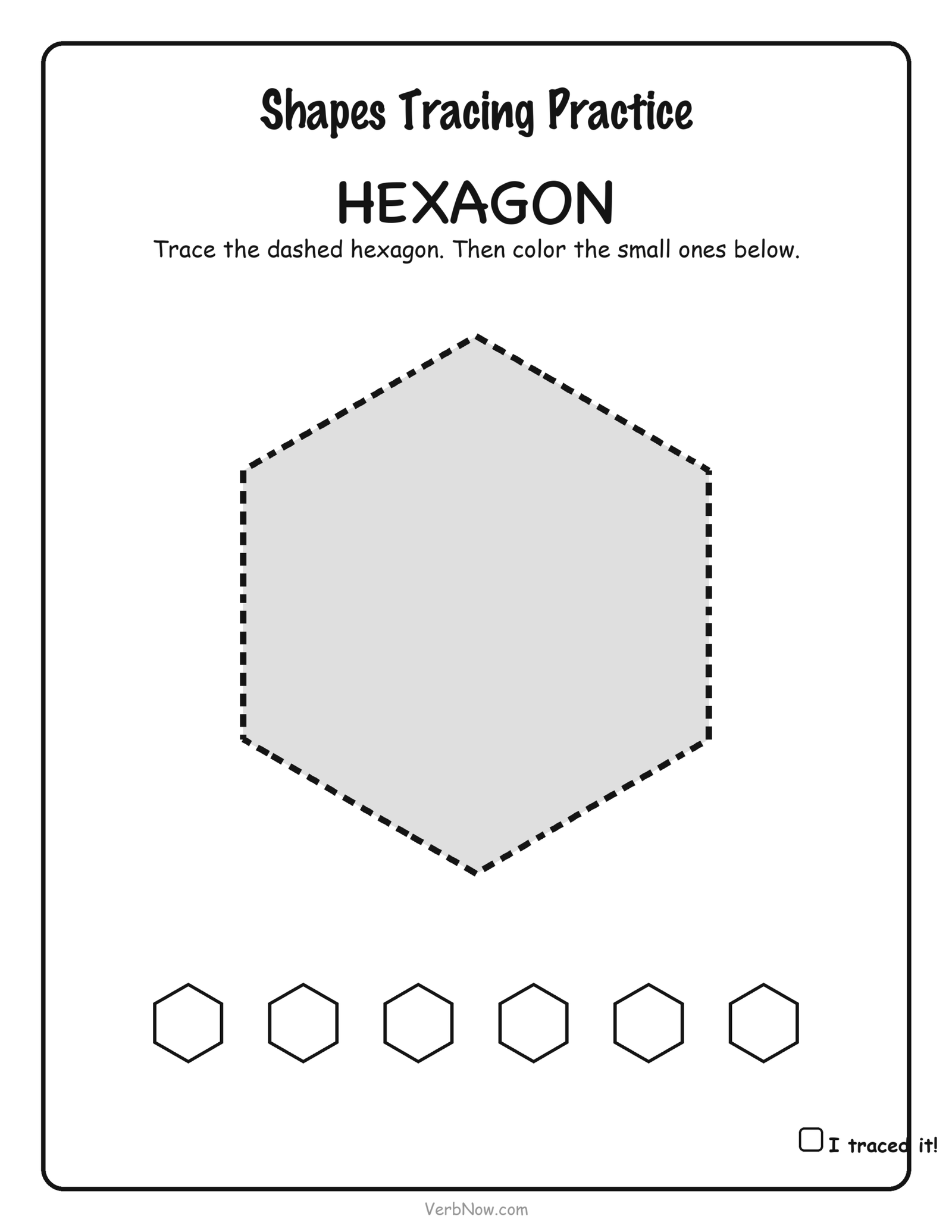
These seven are built from straight edges meeting at corners or points, and the corner count is what separates most of them: triangle has 3, square and rectangle and diamond each have 4 (a square’s four sides are equal, a rectangle’s are not, and a diamond stands on one of its points instead of a flat edge), pentagon has 5, and hexagon has 6. The star is the outlier — its 5 outer points and 5 inner corners mean the dashed line changes direction 10 times, more than any other page in the set, which is why it comes right after the four-corner shapes instead of before them.
How the trace-and-color layout works
Every page draws the same way: one large shape filled with a light gray tint and outlined in a thick dashed line sits in the upper half of the page for tracing, and six smaller outline-only versions of the same shape sit in a row below it for coloring. A checkbox in the bottom corner gives a child a place to mark the page “I traced it!” once it’s done. The gray tint is there so the shape is visible before a single pencil mark touches it — it does not count as tracing on its own.
I draw the big shape’s dashed line noticeably thicker than the six small shapes’ outlines on purpose — the size and weight difference alone tells a child which one is for tracing with a big, careful stroke and which ones are for coloring in fast.

How to print these
Every page is US Letter (8.5 × 11 in), pure black and white, with the shape sized to stay inside a 0.5 in margin. Plain copy paper works for all 10 — none of these need heavier cardstock or a fine-tip pen, since the dashed outline and the six small shapes are drawn thick enough to trace and color with a regular pencil or crayon.
FAQ
What shapes are included in this set?
Ten: circle, square, triangle, star, heart, rectangle, oval, diamond, pentagon, and hexagon. Each shape gets its own page with one large version to trace and six small versions to color.
Are these the same as shape coloring pages?
Not quite. A typical shape coloring page is a picture built out of several different shapes for a child to color in. These worksheets are single-shape practice: one shape, traced at a large size, then colored at a small size, so the page stays focused on recognizing and drawing that one shape correctly.
What age are these shape worksheets for?
The ten shapes here match what most preschool and pre-k programs cover before kindergarten. The seven straight-sided and pointed pages (square through star) work well for kindergarten too, since tracking corners is closer to the fine-motor control that age group is building toward.
Can I print just one shape instead of all 10?
Yes. Each shape has its own Download PDF and Print button in the grid above, so a single page prints on its own without pulling in the rest of the set.
Do I need to color the small shapes a specific color?
No. The six small shapes on each page are outline-only on purpose, so any crayon or marker color works — the page is designed for shape recognition, not color matching.
For more counting and number practice in this silo, see the math worksheets collection, or try the math coloring pages for color-by-number and mystery-picture practice.