
Hello, puzzle explorers! Did you know you can get smarter while looking at your favorite foods? It’s true! Our colorful food puzzles help you boost your memory and practice your matching skills.
Whether you are a beginner or a pro, you’ll find the perfect puzzle to test your brainpower here. Let’s piece together some delicious fun!
1. Welcome to the World of Food Puzzles
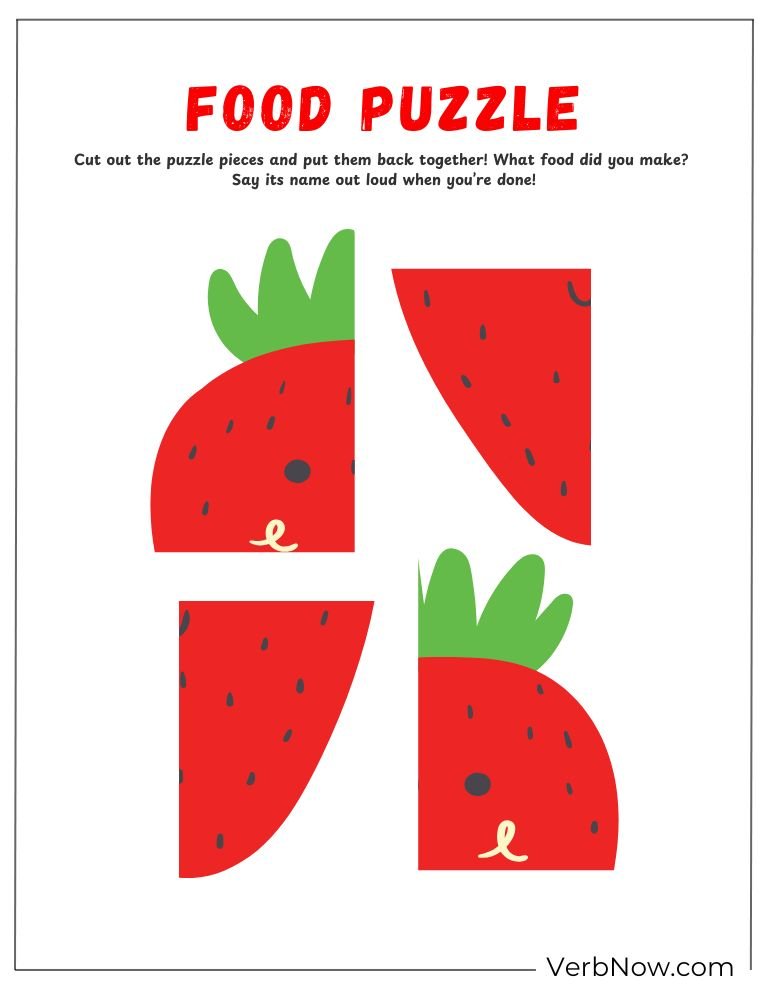
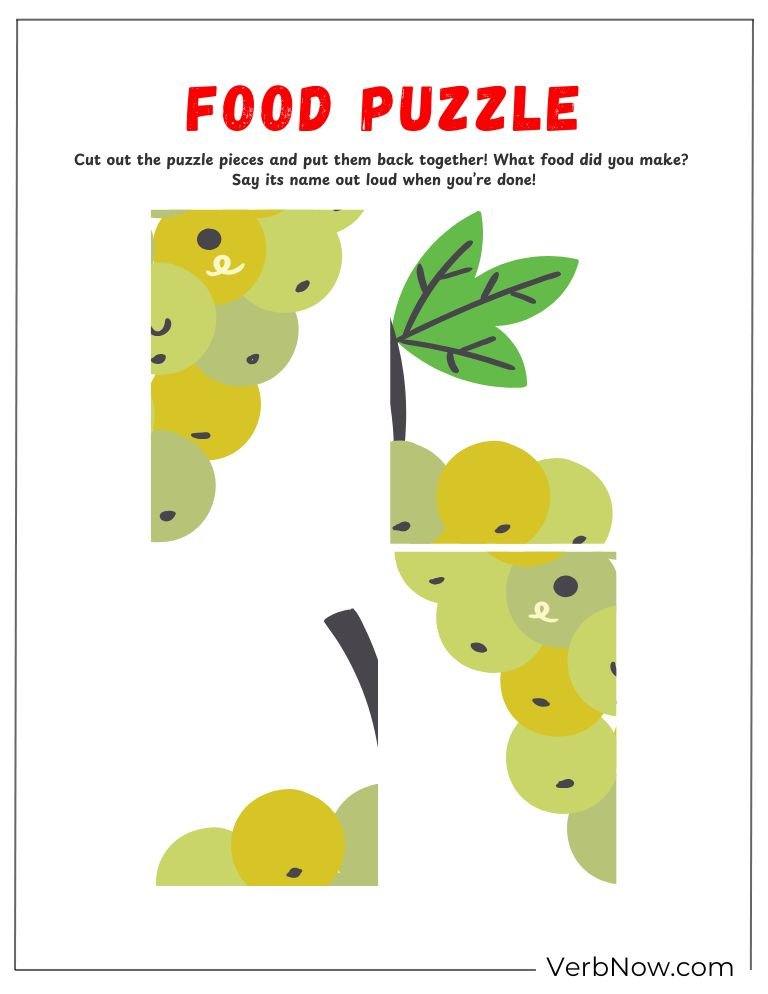
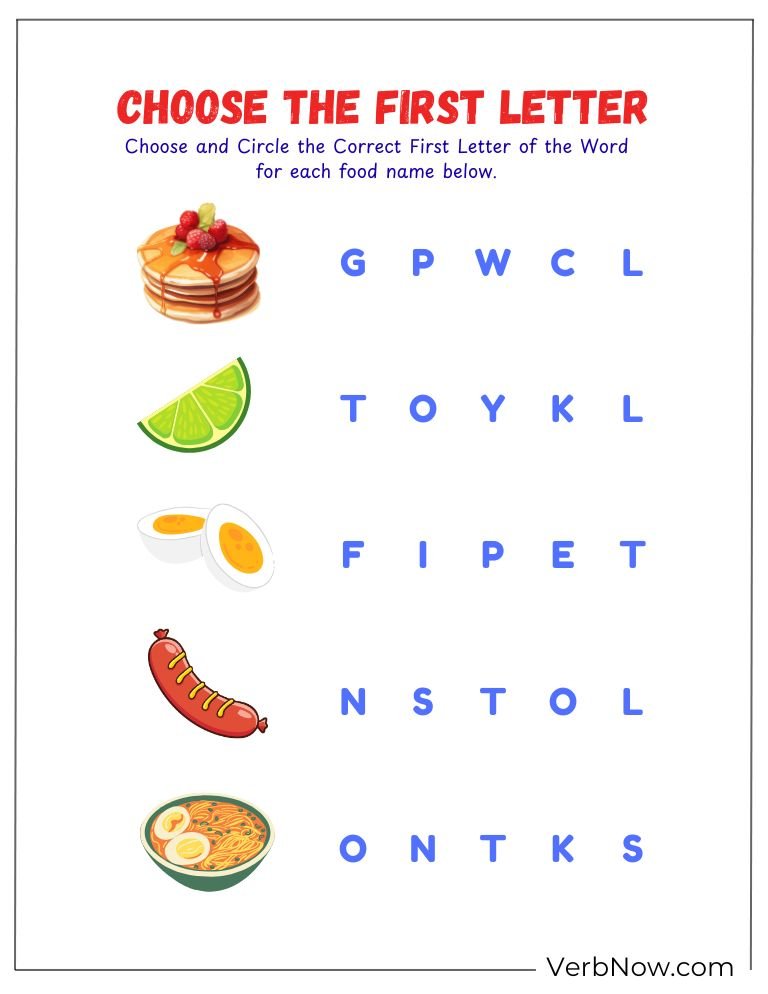
Then why are food puzzles so much fun among children? A puzzle about food is in essence any puzzle activity that involves images or shapes of food.
This could be a wooden jigsaw puzzle of a pizza. It might also be a card game with fruit. Or it could be a maze on a worksheet featuring a hungry caterpillar.
It is the relationship to real life that makes these such a great interactive toy. Children are fond of food and they realize it. When you propose to them a puzzle of apple or banana, or a burger, they at once know what it is.
This direct identification reduces the cost of entry. They do not need to learn new characters or regulations, they just need to experience the mental stimulation.
This kind of play is essential in cognitive development. Picking up, rotating, and inserting a puzzle piece into a slot practices spatial awareness. It is a brain teaser that is fun to play.
I have discovered that the level of frustration is less since the topic is “yummy”. They will be willing to hold on to the problem due to the fact that the image is attractive. It is a low stress, low stress method of teaching problem solving skills to young students.
2. Why Food Themes Work So Well for Learning
Colorful Images Improve Attention
Food game puzzles are colorful in nature. Consider the scarlet of a strawberry or the rich yellow of cheese. These colors grab a child’s attention quickly; better than dull or abstract images. I learned that getting a child to sit still is partly about using a toy that looks great.
Familiarity Breeds Confidence
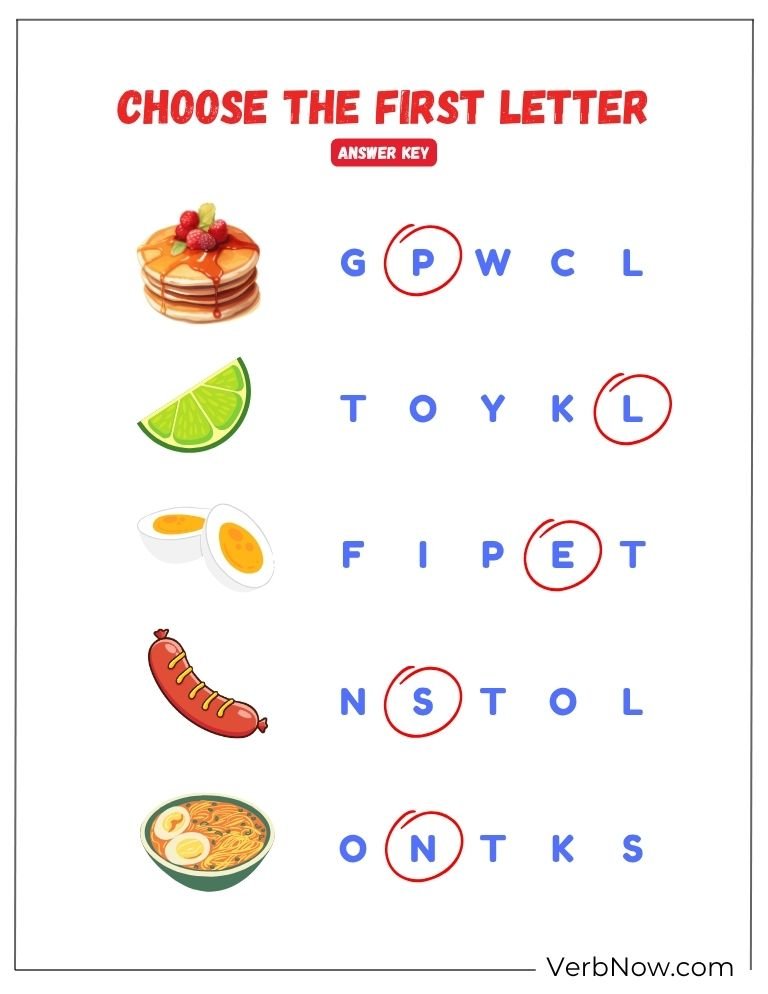
A child will know what a sandwich is when he or she looks at the picture of a sandwich. This develops vocabulary and recognition at a young age. Such confidence makes them concentrate on the mechanics of the puzzle. There is no need for them guessing what the picture was.
It also assists in child learning in other aspects. Food puzzles helped us to teach our youngest how to count. It is much better to count slices of pepperoni on a puzzle piece than it is to count black dots on a flashcard. It transforms a dull lesson into a sense activity.
Food is a powerful tool for any parent since they use the familiar context to bridge the gap between the play and formal learning.
3. Kid-Friendly Types of Food Puzzles
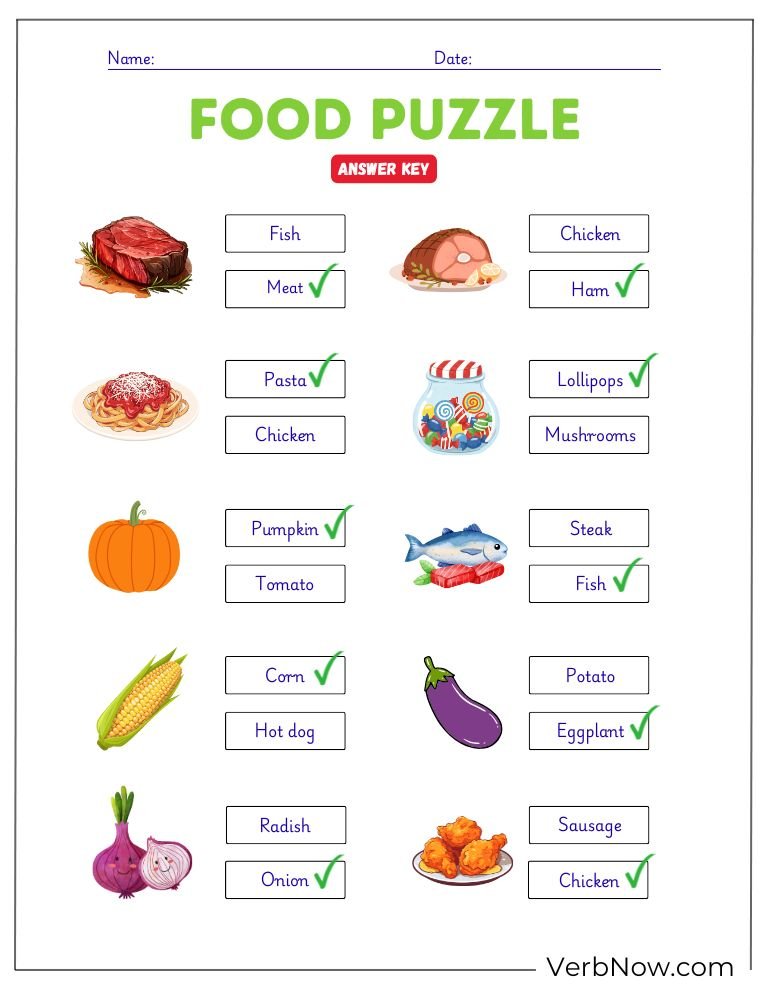
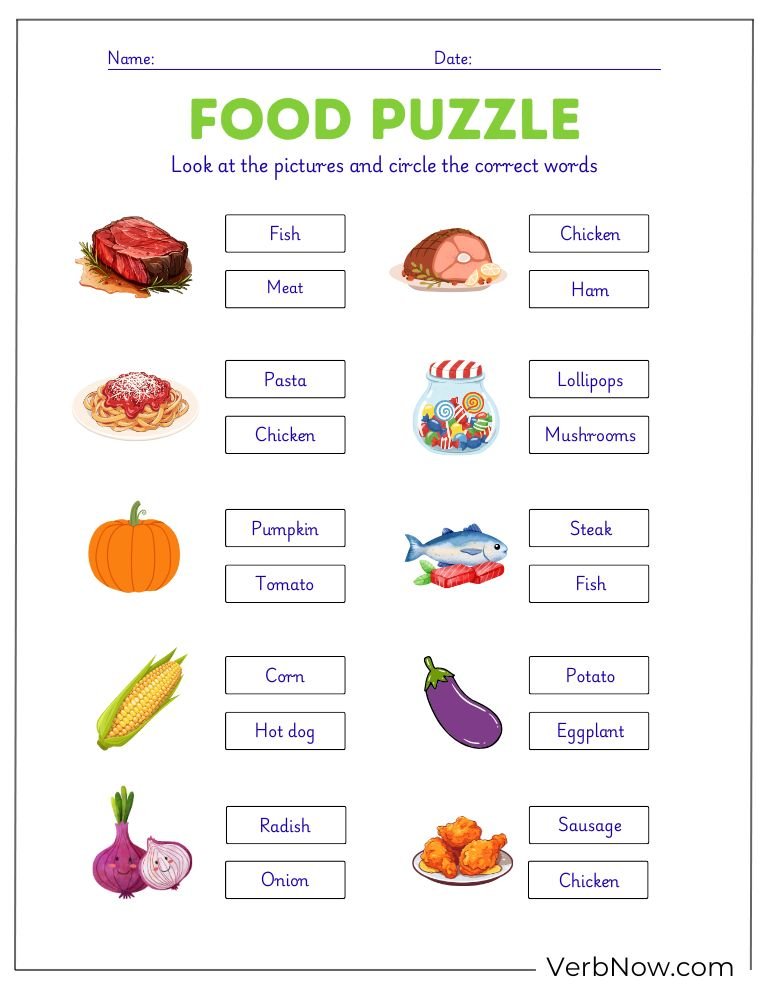
Matching Food Puzzle for Kids
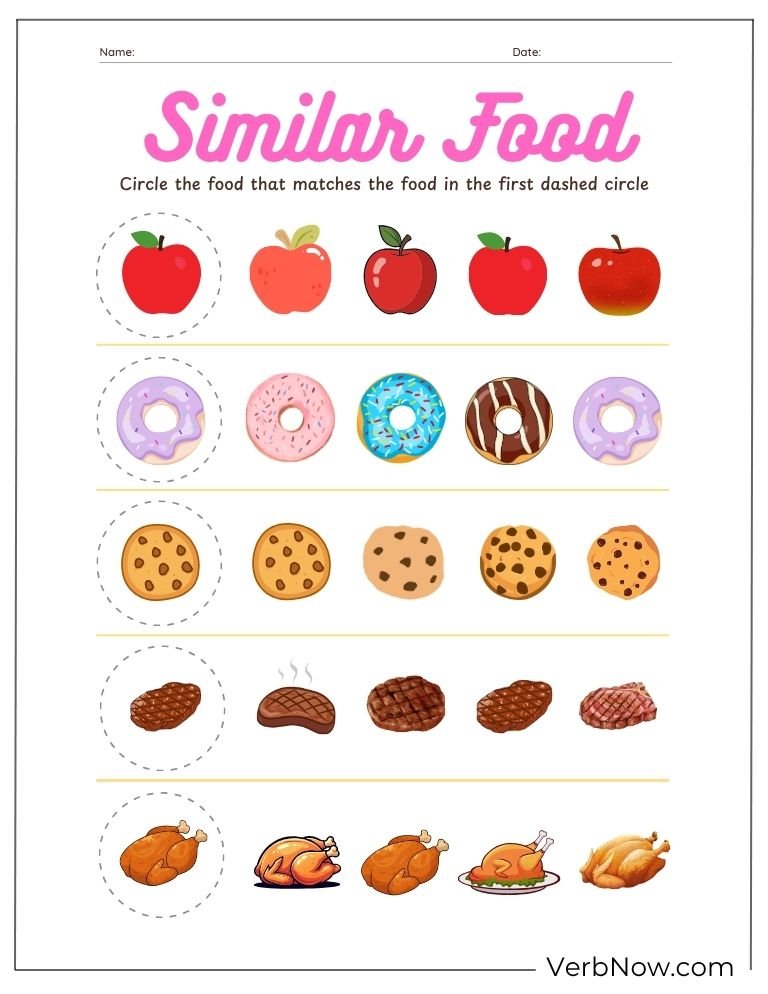
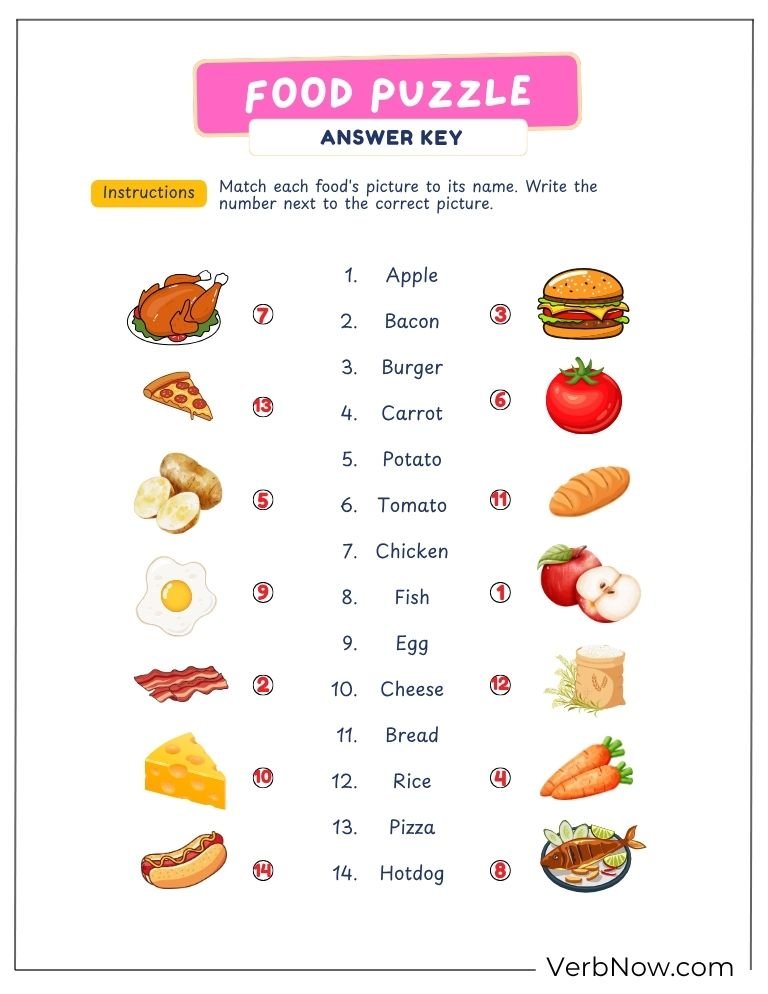
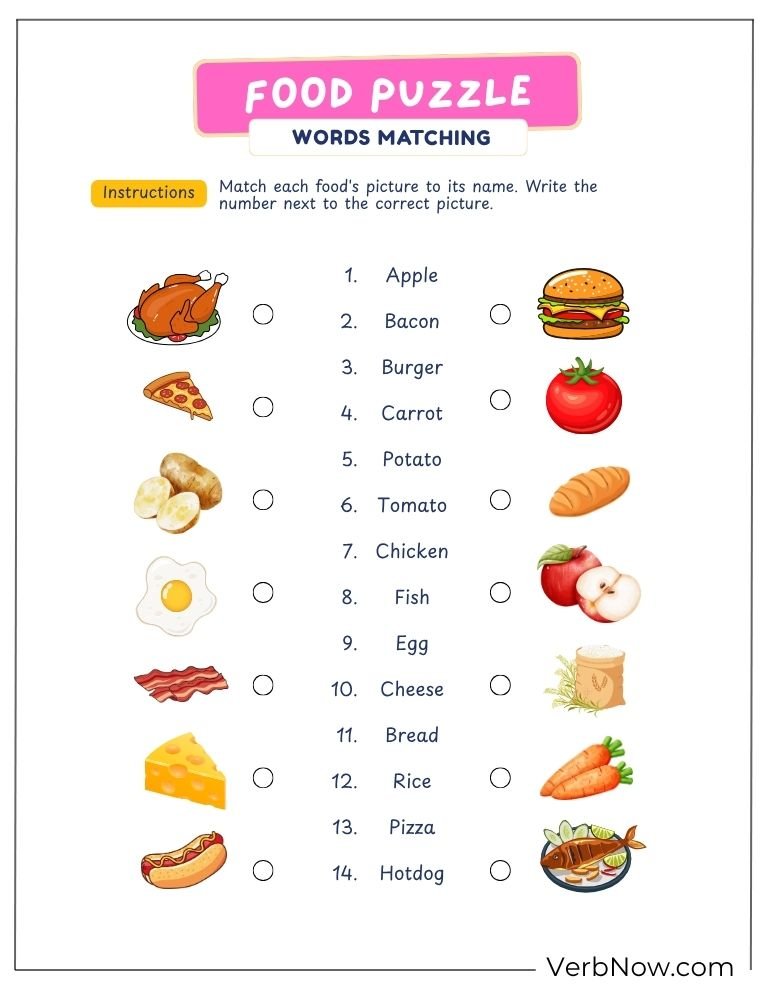
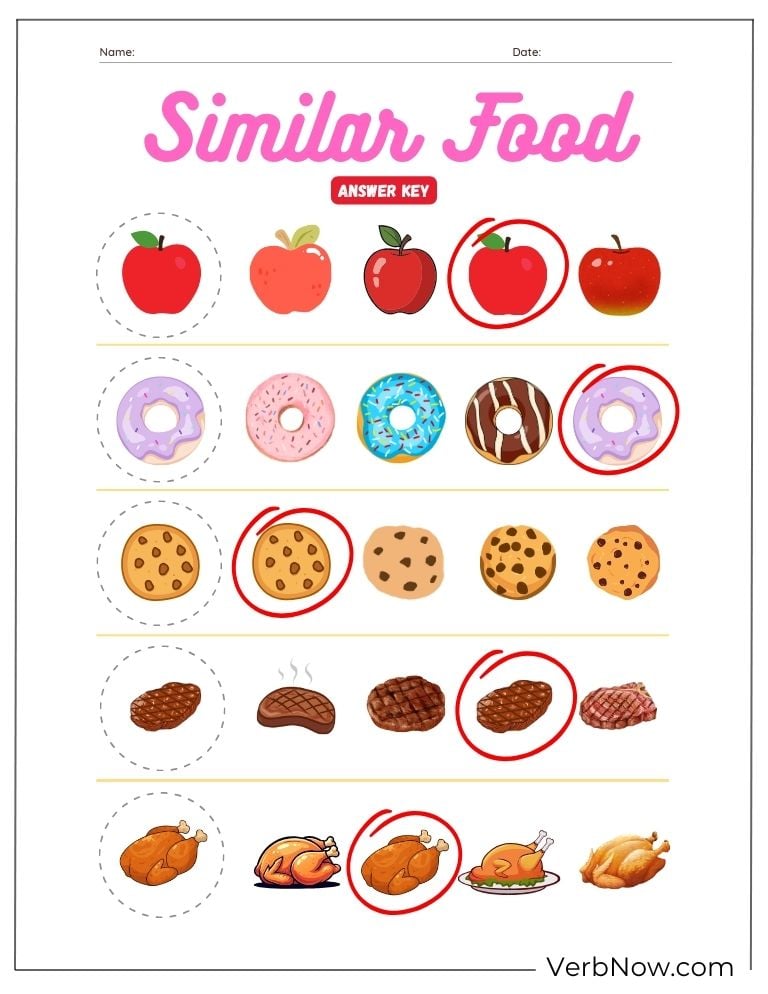
A matching food puzzle is perfect for beginners. This usually involves cards where you have to find pairs. You might compare a slice of watermelon to a whole watermelon. Or, you could find two identical images of a taco.
I found this to be the best way to improve visual and mental coordination. A child who struggles with plain memory games often does better with a matching puzzle built on food they already recognise. He wanted to find the other cookie card. It is a simple game for kids that quietly trains their short-term memory.
Word Search Food Puzzle
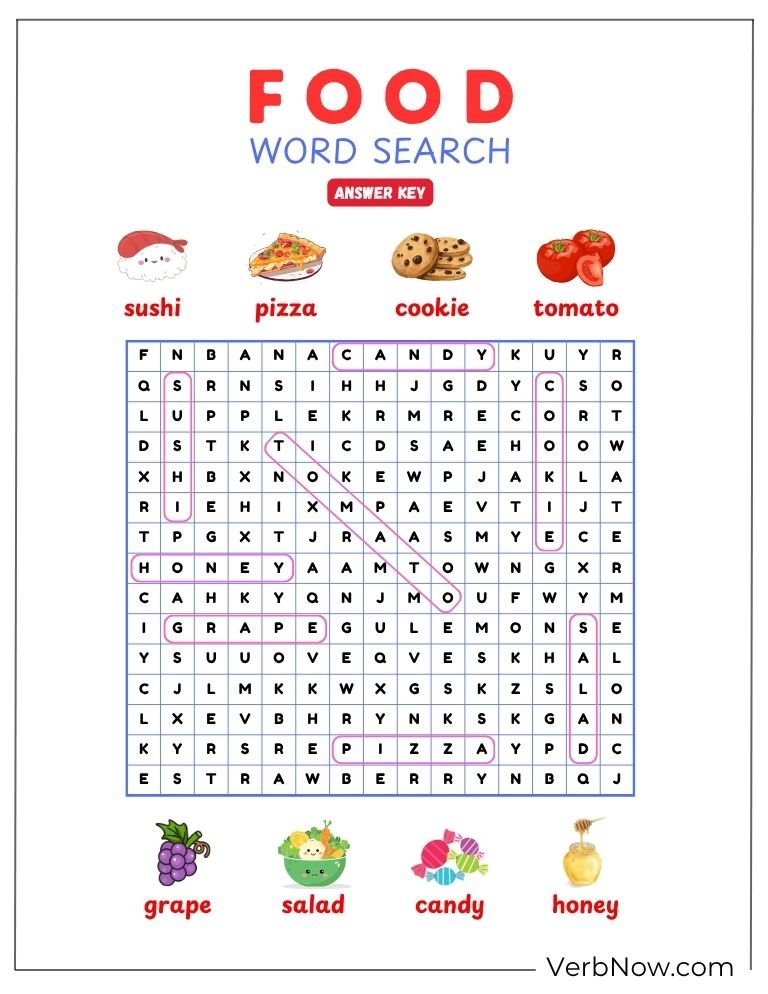
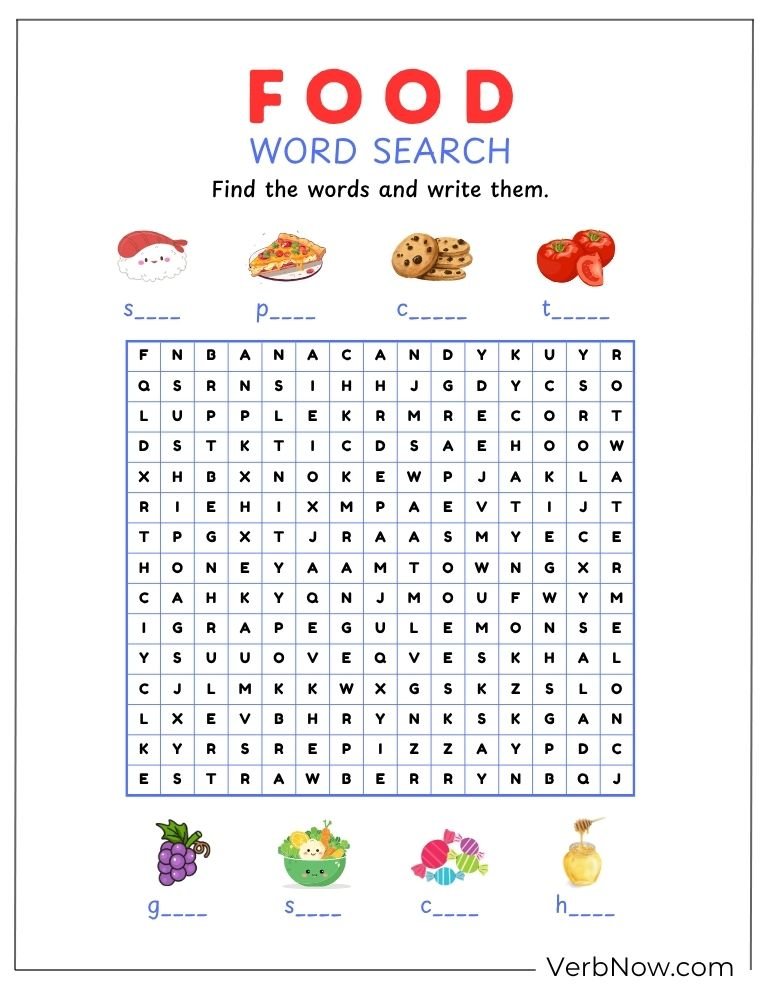
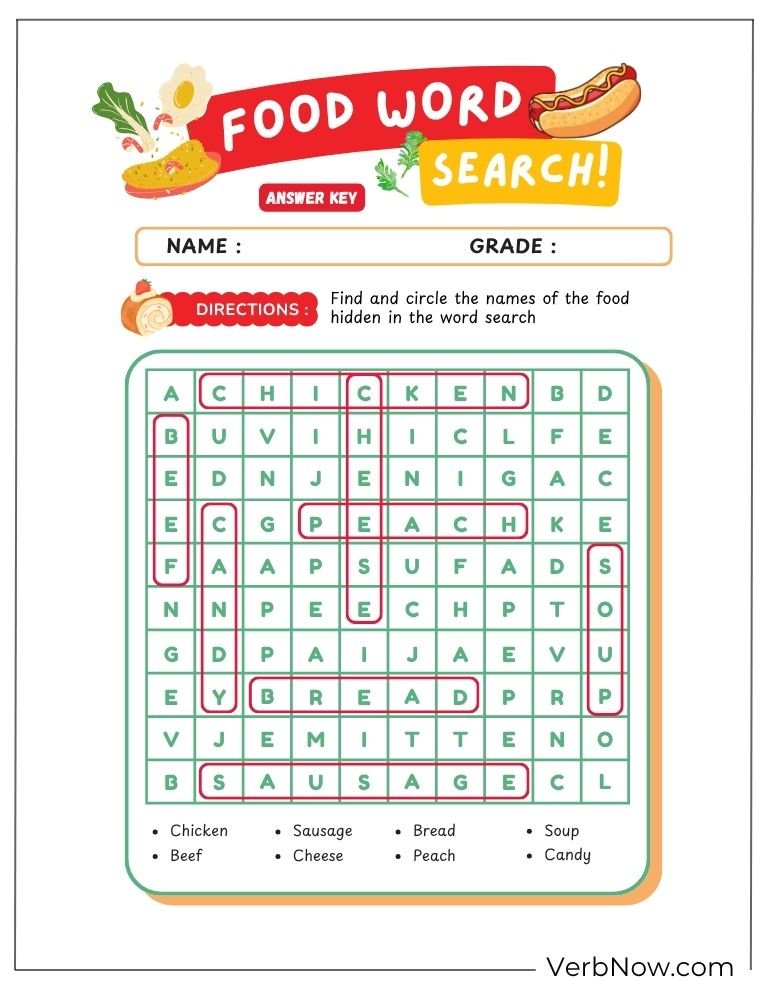
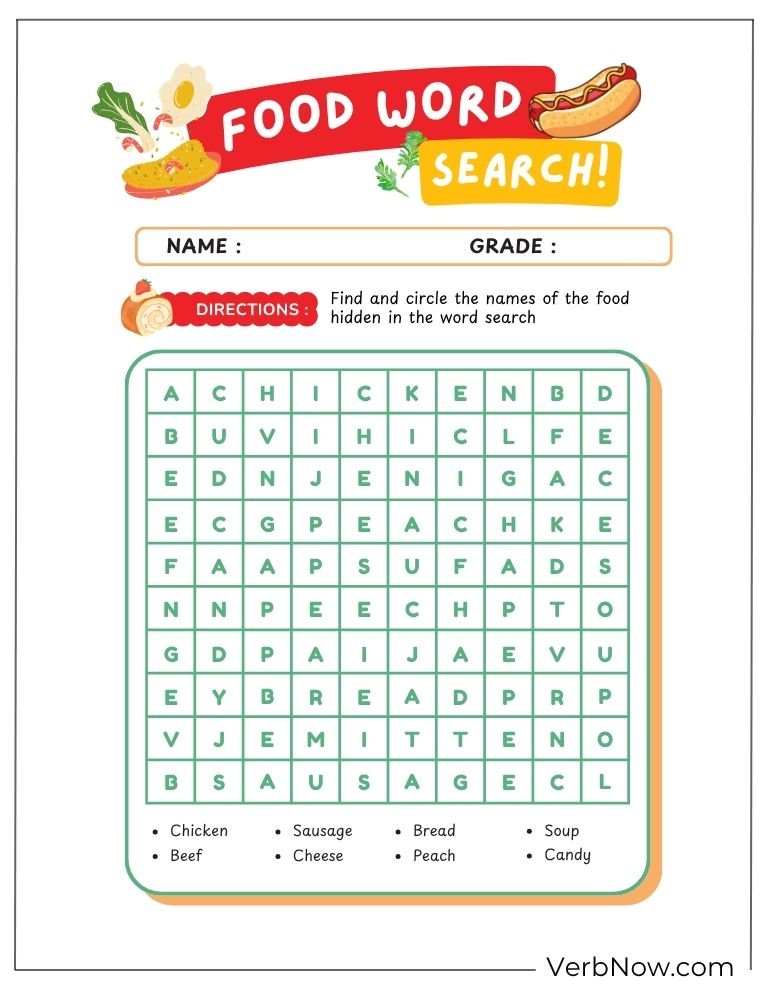
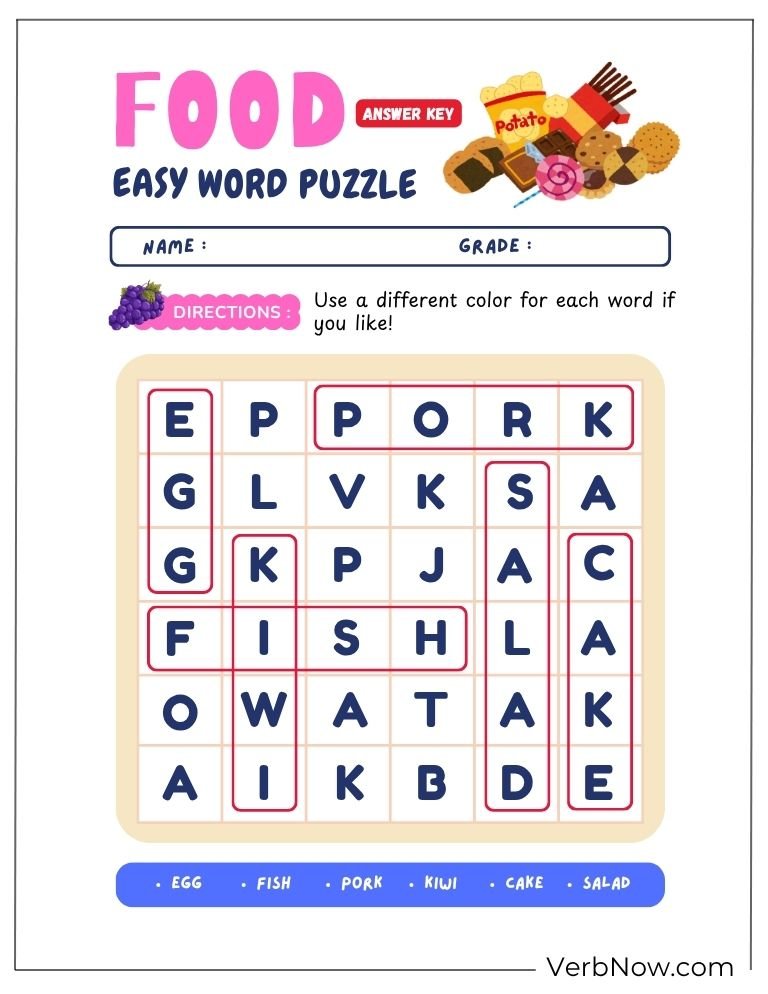
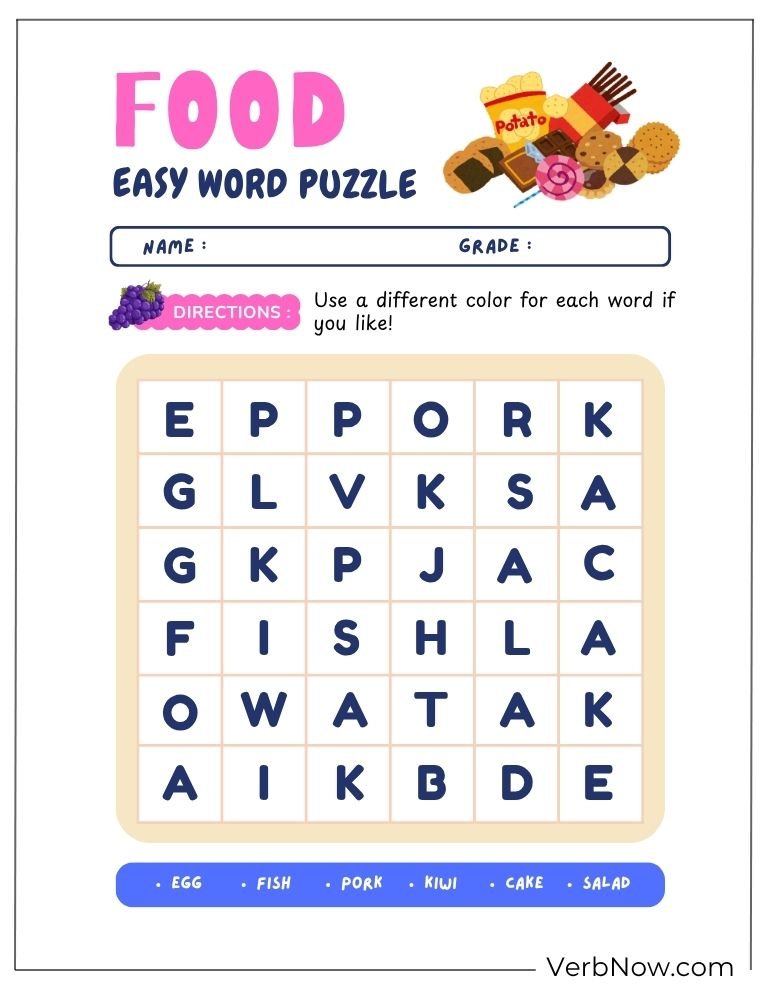
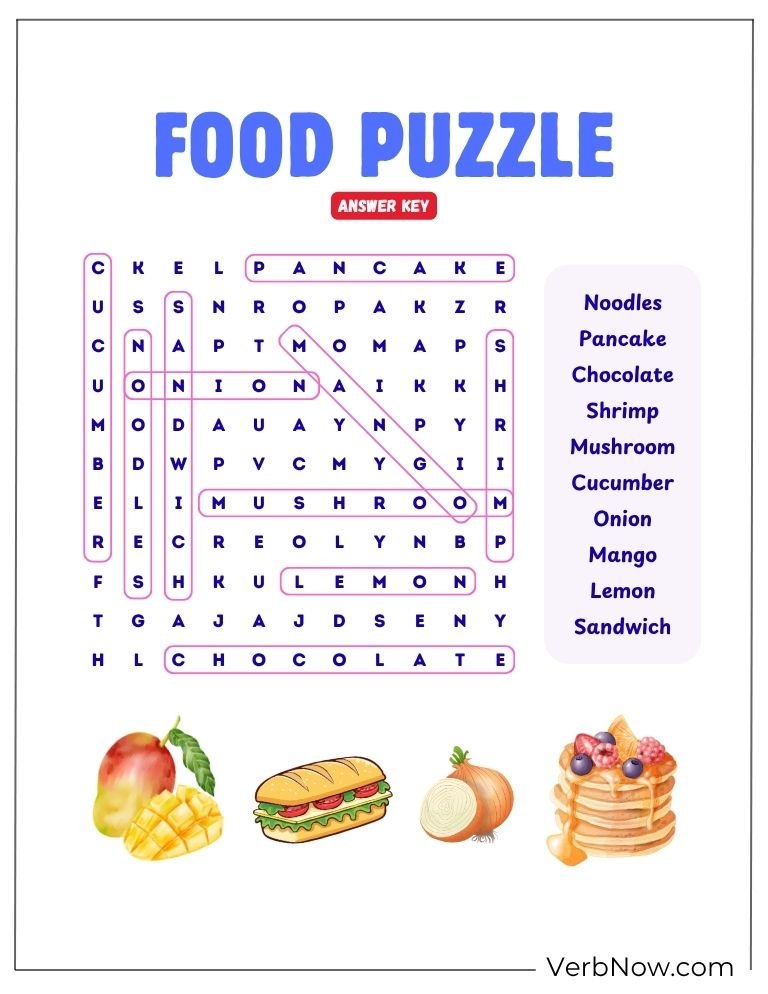
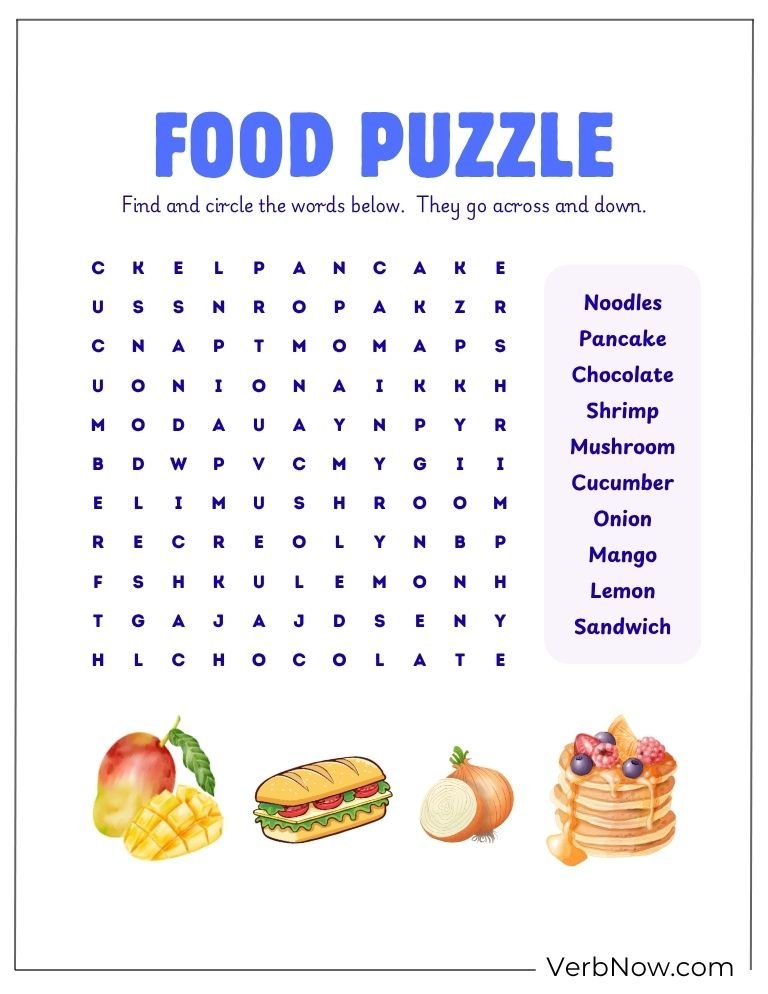
For older kids who are starting to read, word search food is a lifesaver. This is a grid of letters hiding names of foods.
I recommend this for reading practice because the words are usually simple. Words like “EGG,” “HAM,” or “MILK” are easy to spot. It builds confidence. I made the mistake once of giving my child a generic word search with long, complicated words, and he gave up.
With a word search food puzzle, the success rate is higher. It reinforces spelling and pattern recognition in a stress-free way.
Mystery Meal Maze
These are the printed puzzles where you have to draw a line through a maze. The theme is usually “Help the chef get to the kitchen” or “Help the bunny find the carrot.”
These food puzzles add fun problem solving elements to drawing practice. It requires fine motor control to keep the pencil within the lines.
It also teaches planning because the child has to look ahead to see if something blocks the path. It is a classic brain teaser that feels like an adventure.
Food Crossword for Kids
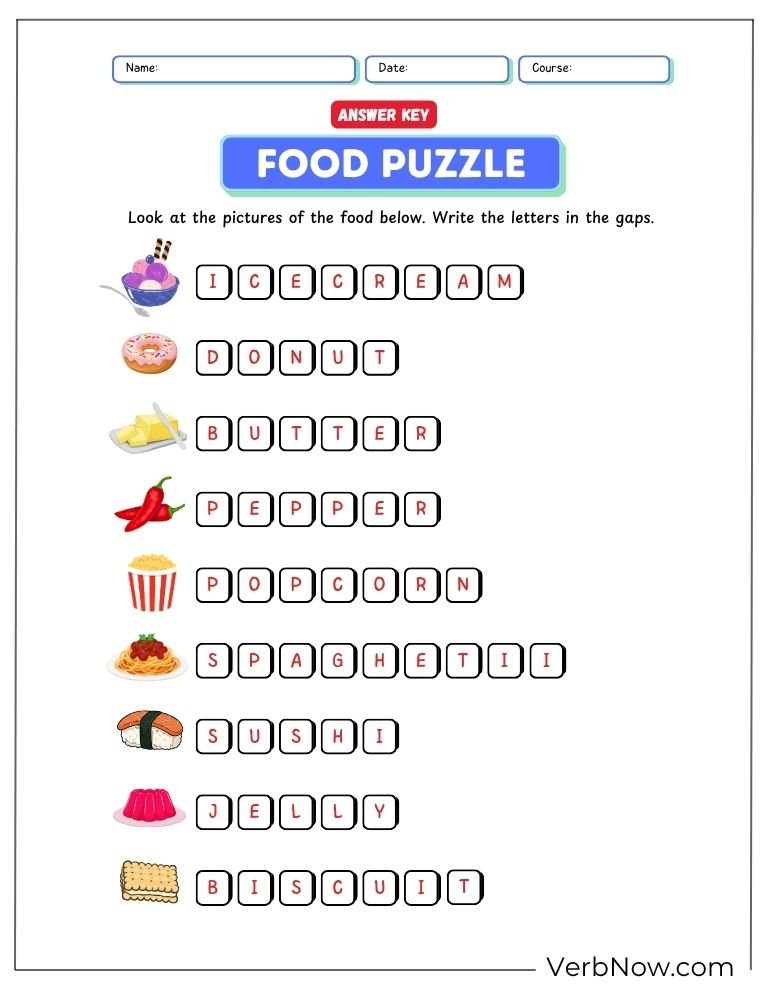
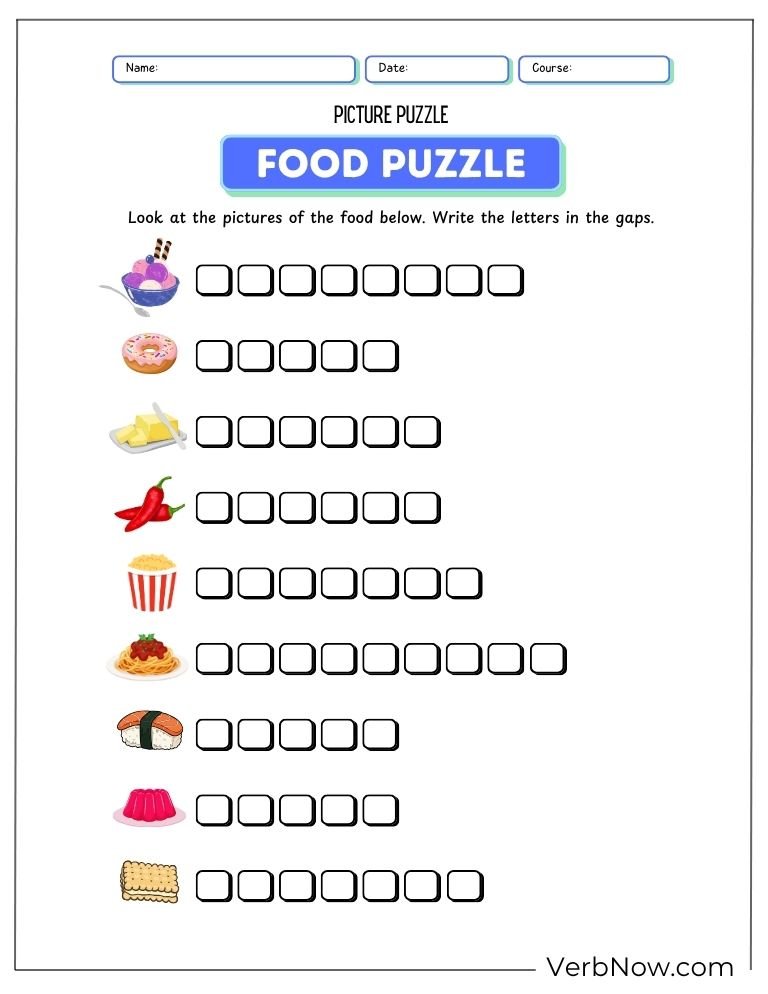
Similar to word search, a crossword builds reasoning skills. The clues are usually simple descriptions, like “A yellow fruit that monkeys eat.” The child has to figure out the answer (Banana) and spell it.
This is a step up in difficulty. It challenges their general knowledge and spelling simultaneously. I use these as “quiet time” activities.
It is an educational toy made from a piece of paper. It costs very little but offers great value.
4. Fun Ways to Use Food Puzzles at Home or School
Brain Training: Morning Warm-Up
We would sit down in front of the television and have breakfast, which would slow down everybody. Today I placed a simple matching puzzle concerning food or a maze on the table.
It wakes up their brains. It is a soft type of brain training, which activates the neurons in advance of school. We are competing to see who will complete their puzzle. It transforms the morning energy, which was passive, to active.
Quiet-Time Activity
You know the afternoon slump, if you have a toddler that does not nap. I rely on these puzzles about food as an assigned silent task. I have a special box of puzzles which I only draw out at this time.
The puzzles are new and exciting since you do not spend all day with them. It provides me with twenty minutes of relaxation as they participate in a sensory activity that is safe.
Group Puzzle Races
Food game puzzles are also nice in groups, in case you are a teacher or playdating. I print word search food puzzle and hand them to every child. The winner of the first one to find the words all receives a small prize (typically a sticker).
It promotes positive competition. It also promotes teamwork by allowing them to work in pairs. They must exchange and share the tangible objects or the paper. It makes it a social game among children.
As a Resource in a Lesson on Nutrition
It is a down-to-earth parenting trick. I apply puzzles regarding food to discuss healthy food. When we are doing a puzzle with vegetables I will say, “Which of these veggies do you run fast? ” or “Which one is crunchy?”
It provides an avenue of talking about nutrition without preaching. Children will be more eager to discuss broccoli when they have a puzzle of the given vegetable. This is not just to stare at it on their dinner plate. It links cognitive development of the puzzle with health practices in the real world.

5. Hands-On DIY Food Puzzle Ideas
Cut-and-Glue Fruit Plates
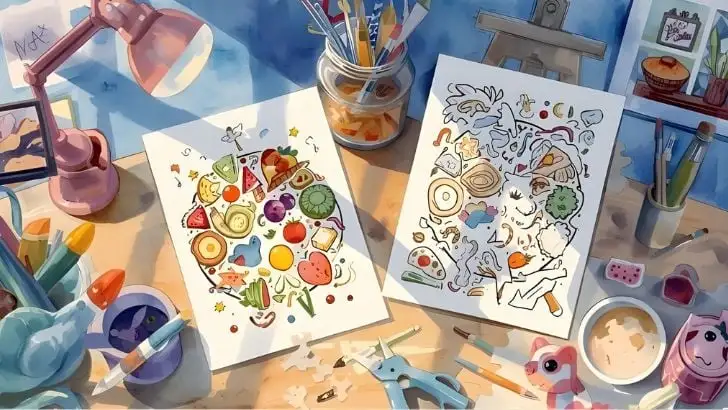
This is my go-to rainy day activity. I give the kids paper plates and old grocery store circulars (the ads with pictures of food). They have to cut out the food pictures and glue them onto the plate to make a “meal.”
Then, we cut the paper plate into four or five pieces. Suddenly, they have a custom jigsaw puzzle. They have to reassemble their meal. It combines art, scissor skills, and problem solving.
Build-Your-Own Burger Puzzle
I draw the separate parts of a burger (bun, lettuce, tomato, patty, bun) on cardboard from a cereal box. I cut them out. The challenge is to stack them in the right order.
This is a logic puzzle. You can’t put the top bun on the bottom. It teaches sequencing. It is a simple hands-on activity that costs zero dollars.
Healthy Lunchbox Matching Game
I use index cards and sketch basic food objects on them. I make two of each. Then we turn them and play a memory game.
To go to the extent of making it a food game of nutrition, I will challenge them to pair a protein with a veggie. It makes them think about food groups. It is a personalized learning toy, which fits in your purse when you are out at restaurants or waiting rooms.
Use Real Snack Packaging
The following is a practical tip that one can use: one should not discard empty boxes of cereals or snack crackers. Remove the upper part of the box. Another time I saw that panel cut in puzzle shapes.
Children would like this since they are familiar with the brand. Their favorite cereal box is a puzzle that is immediately hilarious and interesting to them. It is the final recycled brain teaser. It is effective, free and durable.
Food Puzzles Make Smart Playtime Delicious
Electronic toys that promise to make children smarter rarely deliver on it. In reality, the humble food puzzle offered much more practical value. It provided a way to practice focus, memory, and logic in a way that felt like fun, not work.
So don’t wait any longer and download these free puzzle games now at VerbNow!